menu
Close

GET IN TOUCH
Check what other game developers say about working with RocketBrush Studio:

BLOG
It’s common to view weapons for their obvious function — game characters use them as tools to deal damage to enemies. But from the point of view of game designers and artists, a weapon carries a much more complex meaning. In an RPG game, a weapon is an extension of the character’s identity just as much as their look or costume is. Beyond that, it reflects the progression structure and moment-to-moment gameplay rhythm.
In this article, we will explore what are weapons in video games, how they serve the story, and most importantly, how we create them to enhance the narrative.
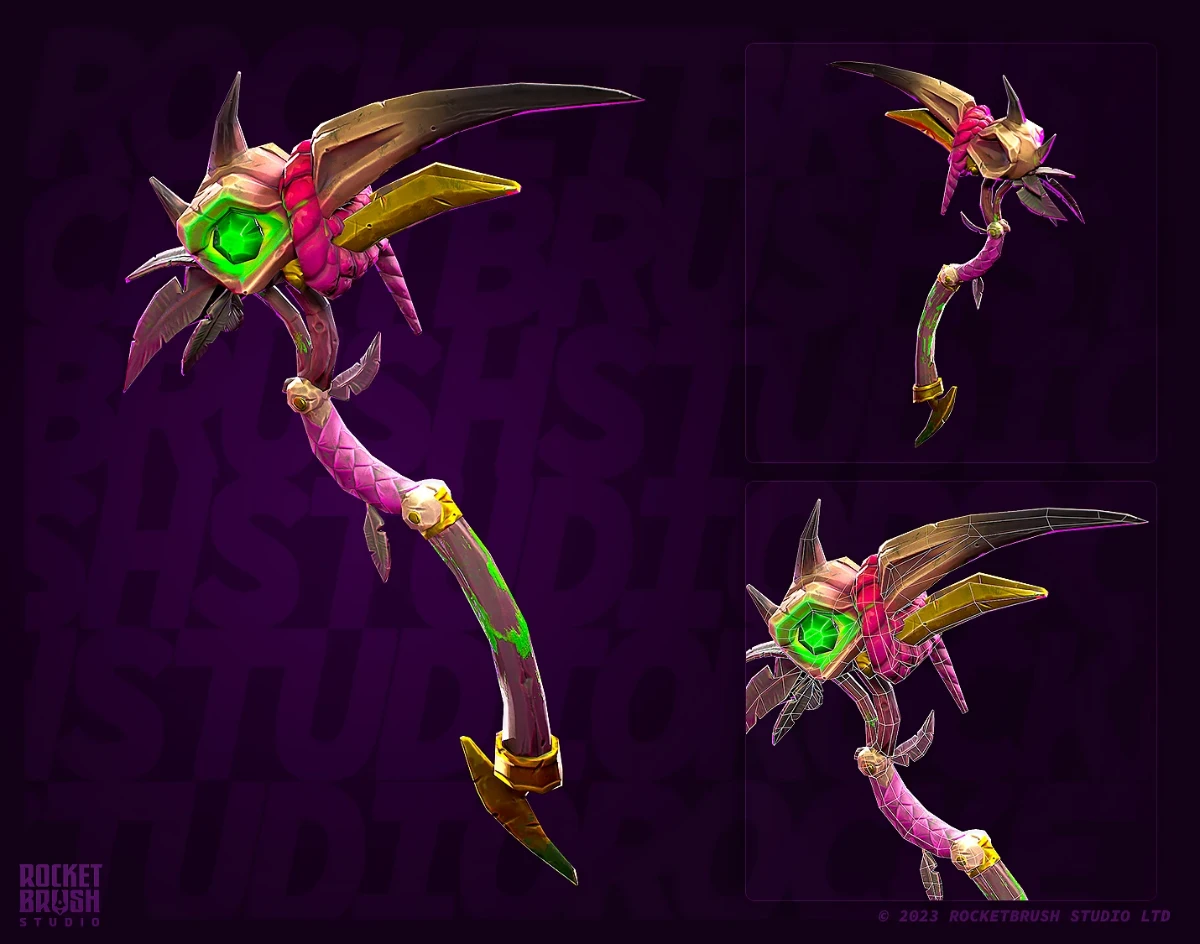
An RPG weapon is, first and foremost, a structured gameplay instrument. In many ways, it defines how a character interacts with combat systems, enemies, and even the in-game world itself. A sword in this context would define range, timing, animation logic, and player decision-making, a bow would change positioning, while a staff changes spell cadence and risk exposure.
This is why the purpose of weapons in video games is better explained through systems thinking: they are interaction models disguised as objects.
At the production level, RPG weapons are also assets. They must align with animation rigs, inventory systems, combat balancing rules, and sometimes even narrative lore constraints. In modern development, a single weapon often passes through concept art, modeling, rig testing, VFX integration, and gameplay tuning before it feels real.
Treating weapons solely as visual objects instead of gameplay systems can lead to issues down the line during production.
If you are developing a game and looking for a team to create a weapon system, reach out to us at RocketBrush.
[[cta:Need game art for your next project?:Tell us about your game, and we'll assemble a production-ready art team with a pipeline tailored to your style, platforms and deadlines.]]
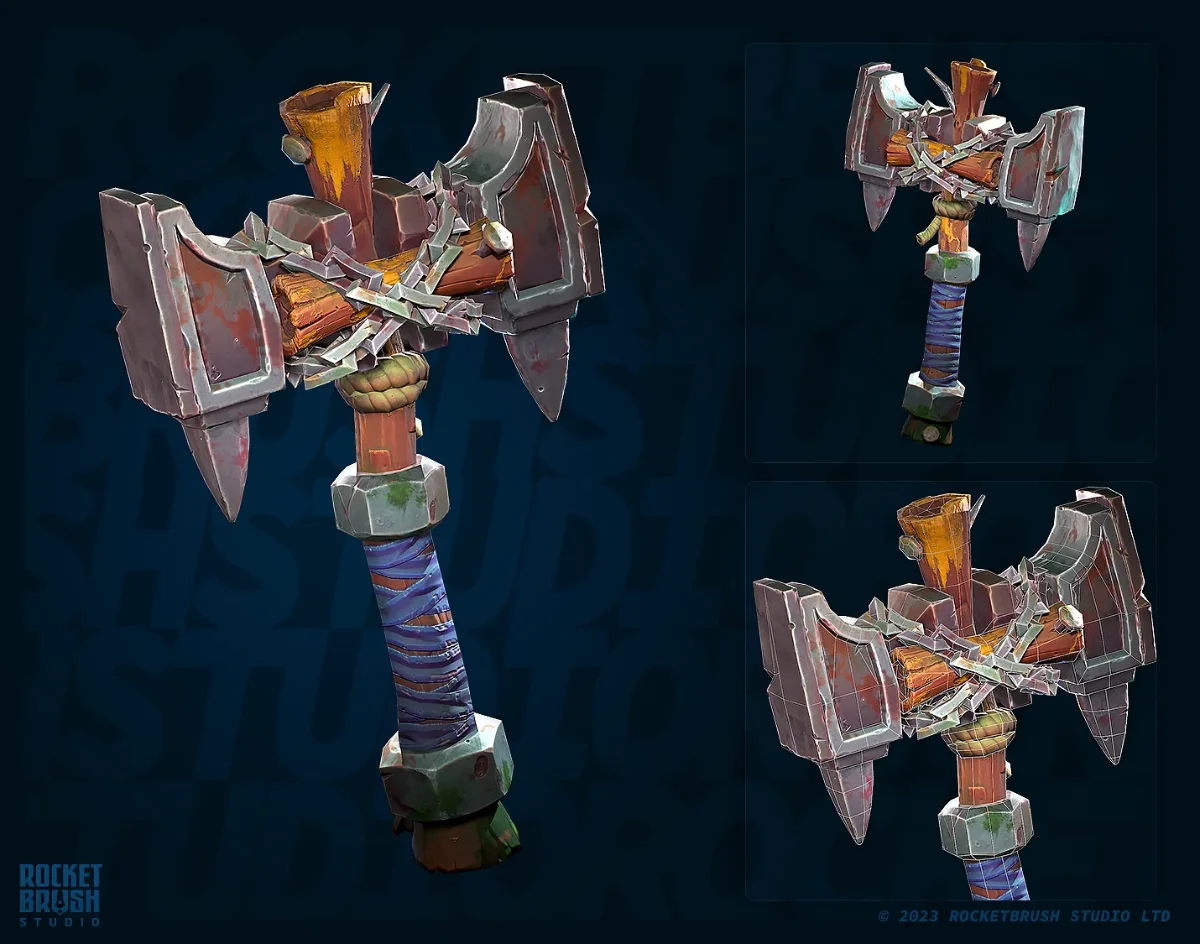
The simplest way to analyze types of RPG weapons is to break them into functional families rather than purely aesthetic categories. Most RPG systems rely on a few core archetypes that define nearly all combat interactions.
The RPG weapon types listed below determine pacing, positioning, and player identity.

Melee weapons are the closest-range category and include swords, axes, daggers, hammers, and spears. A sword typically represents balance and versatility, while axes often emphasize slower, heavier damage. Daggers focus on speed and critical hits.
From a gameplay perspective, melee systems rely heavily on timing, spacing, and animation readability. A poorly designed melee weapon can feel either unresponsive or visually unclear, breaking combat flow.
Production considerations include:
Melee is often the most “honest” combat type — mistakes in design are immediately visible to the player.
Our team has experience with fantasy settings where weapons define each character’s combat style. Reach out to us to translate that into clear, distinctive visual design.
[[cta:Need weapon art for your next RPG game?:Let us know more about the project, and we'll assemble a production-ready art team that suits your style.]]
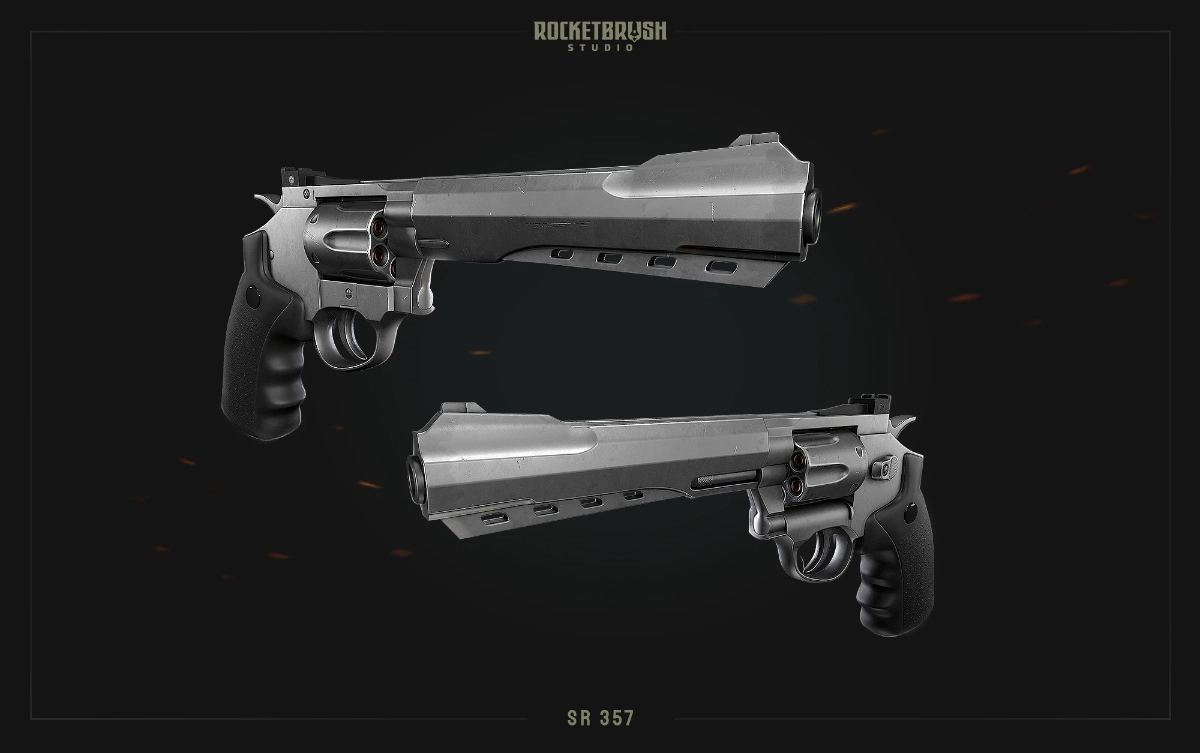
Ranged systems include bows, crossbows, guns (in hybrid RPGs), and throwing tools. A bow remains one of the most iconic RPG representations because it naturally introduces distance-based strategy.
Ranged combat shifts focus from timing to positioning. Players must manage spacing, aiming windows, and environmental awareness.
Production considerations include:
In many modern RPGs, ranged systems define exploration pacing just as much as combat itself.
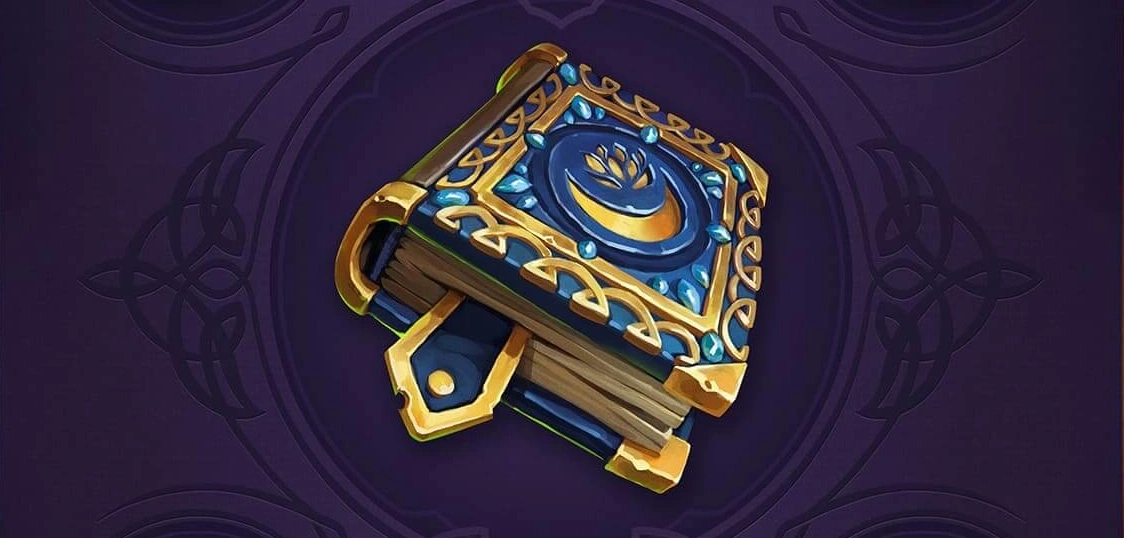
Magic-based tools — staves, grimoires, enchanted relics — form the core of spellcasting systems. A staff is usually tied to cooldown systems, elemental trees, or resource management.
Magic systems are where designers often push identity expression the furthest. Unlike melee or ranged, magic does not always obey physical logic. This creates freedom, but also complexity.
Production considerations include:
Magic systems often define the most iconic RPG weapon types because they visually and mechanically stand apart.
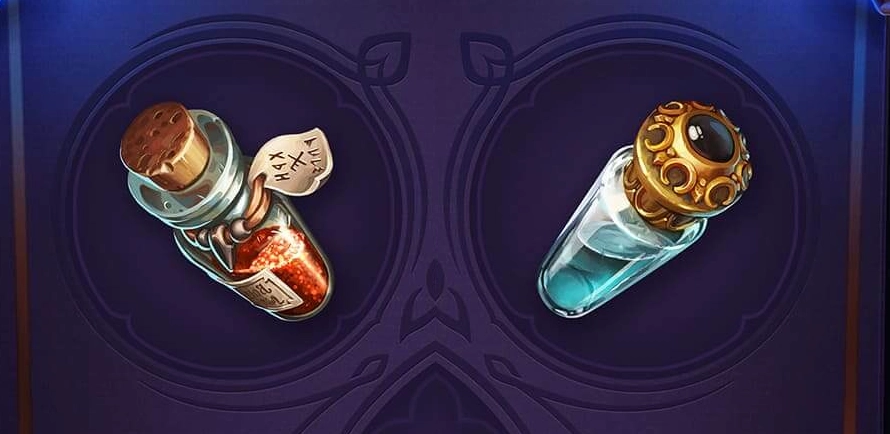
Throwables include grenades, daggers, bombs, chakrams, and consumable combat items. These are usually secondary systems but can define tactical depth.
They introduce short bursts of control rather than sustained combat loops. In many RPGs, they bridge melee and ranged interactions.
Production considerations include:
Throwable systems are often underestimated, but they can significantly impact encounter design pacing.
This category includes cursed weapons, shapeshifting tools, living weapons, or hybrid systems that break standard logic. These are often used to reinforce lore and uniqueness.
They are also the most dangerous to balance, because they often break established rules of the combat system.
This is where broader fantasy weapon types require design that prioritizes identity over standardization.
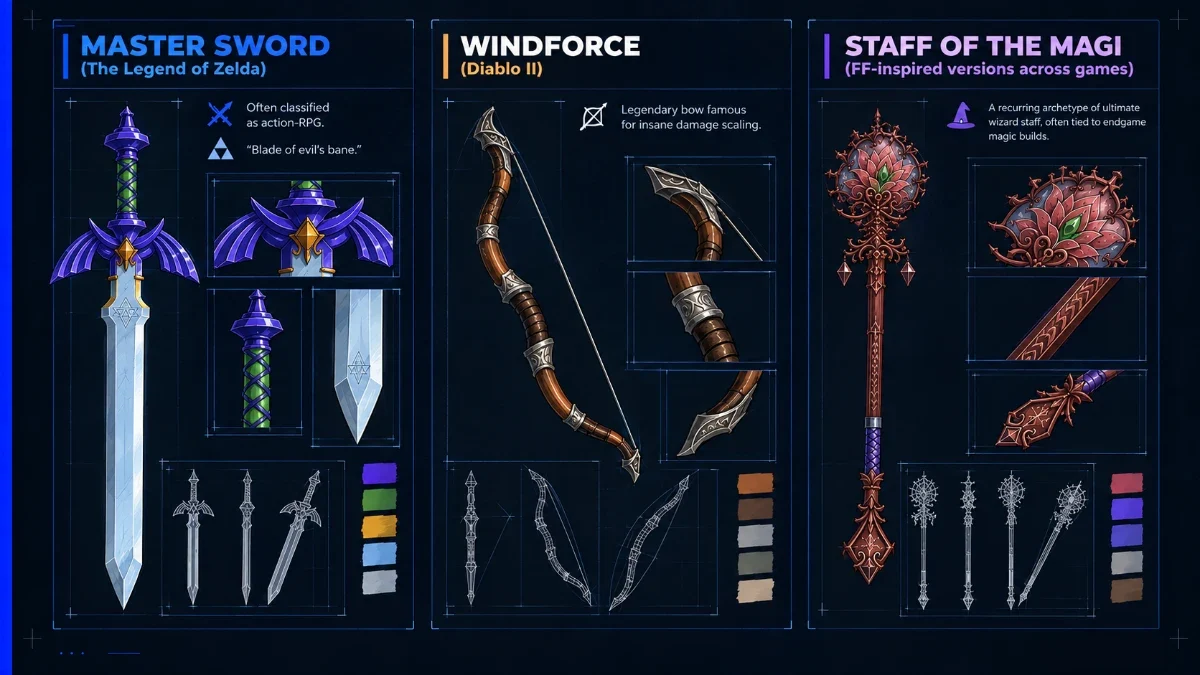
Across RPG history, certain weapons become iconic because of their identity and context. These weapons are instantly readable, they signal the character’s power level and combat style, while their impact on game storytelling is heavy.
The Master Sword from The Legend of Zelda stands as the iconic “blade of evil’s bane,” symbolizing purity and the hero’s role in defeating darkness, even in its action-RPG hybrid roots. In contrast, Windforce from Diablo II represents raw endgame power — a legendary bow known for its exceptional damage scaling and dominance in high-level builds. Completing the trio, the Staff of the Magi, seen across Final Fantasy and other RPG-inspired systems, embodies the ultimate spellcaster weapon, typically tied to late-game progression and designed to amplify magical mastery.
In successful RPGs, players often remember weapons more than characters. This happens because weapons become behavioral anchors — we remember how the character fought.
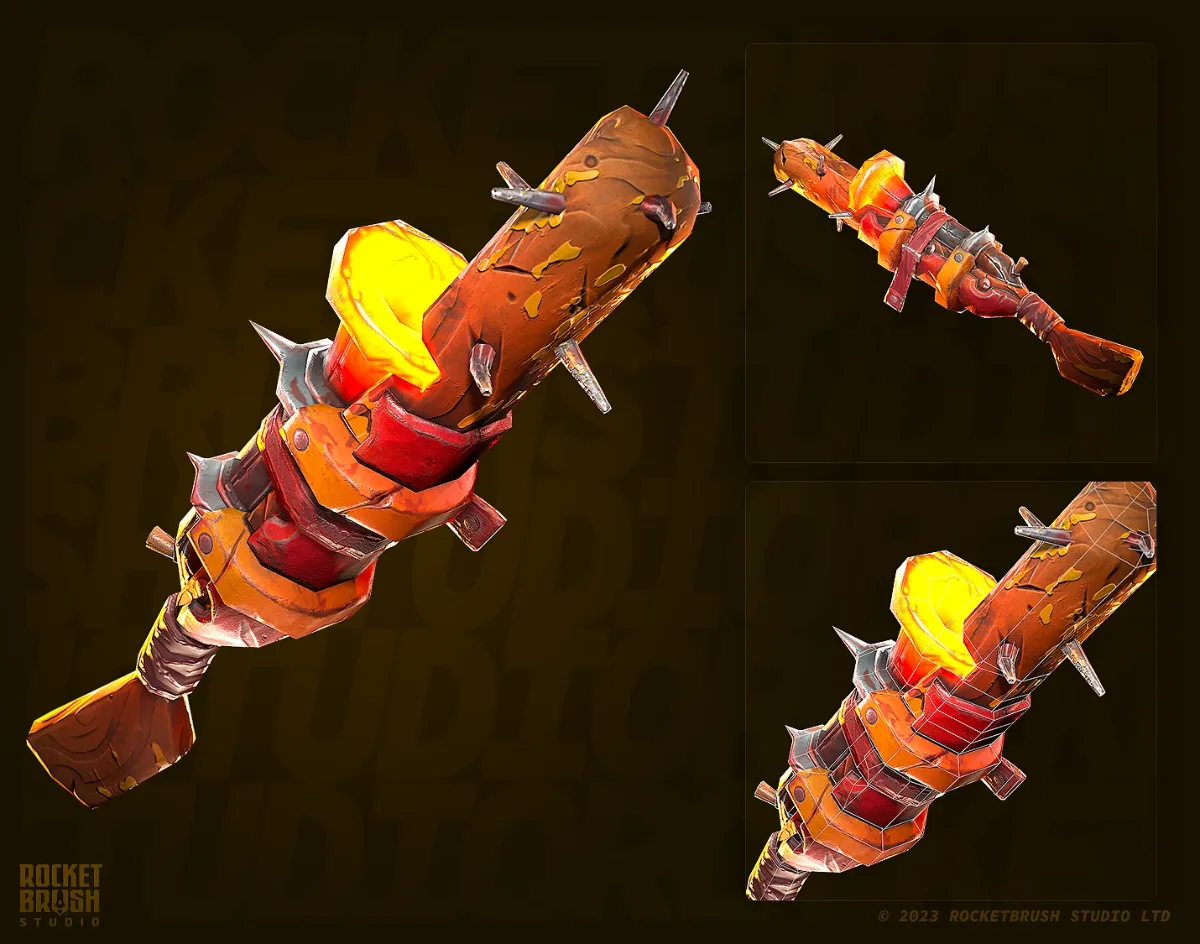
An RPG weapon is one of the strongest identity tools in game design. It determines not only how a character fights, but how they are perceived by the player and an opponent.
Weapon choice affects:
This is why designers often treat weapon types as identity classes rather than simple equipment. In practice, this means that a sword or an axe-user feels grounded and adaptable, a bow-user feels tactical and positional, while a mage feels high-impact but resource-dependent.
This identity layering is also why we explain weapons through referencing gameplay systems. Weapons are not separate from character — they work like an extension of the character. From a production perspective, every weapon also defines animation sets, combat VFX requirements, sound design direction and even enemy design constraints. Thus, weapon design is inseparable from character design.
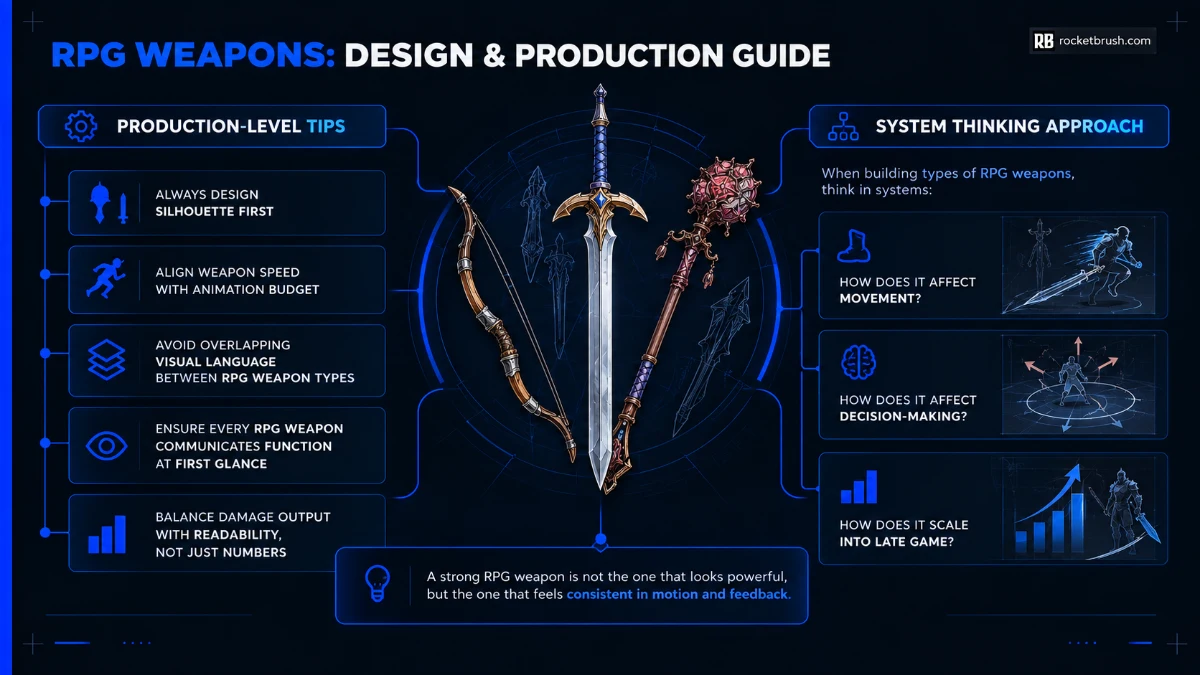
Designing effective RPG weapons requires balancing three layers: visual clarity, gameplay function, and production feasibility.
On the production level, weapons rely on silhouettes, speed of attack, and visual language that has to align with the weapon type. Additionally, ask how it affects movement, decision-making, and how it stays relevant as the game progresses.
A strong RPG weapon is not the one that looks powerful, but the one that feels consistent in motion and feedback.
Below is a structured breakdown of practical design principles:
This is where many teams fail — they design weapons as isolated assets instead of gameplay drivers.
Even experienced teams struggle with weapons because they are deceptively complex systems.
Common issues include:
Another frequent issue is misunderstanding what are weapons in video games at a systemic level. When weapons are treated only as damage tools, they lose depth and fail to support long-term engagement.
At RocketBrush, weapon design is treated as full production systems, not isolated illustrations. The process starts from gameplay logic and expands into visual identity, animation feasibility, and engine-readiness.
Weapon design is developed through:
This ensures every weapon is not only visually strong, but also technically viable for implementation.
The goal is simple: turn design ideas into functional assets that support gameplay, not disrupt it.