Weapons do more than fill an inventory slot. In an FPS, a rifle may occupy a large part of the screen for hours; in an RPG, a legendary sword can communicate a character's identity, progression, and place in the game's world. Good weapon design must balance visual appeal with silhouette readability, mechanical logic, animation requirements, and the visual language of the wider arsenal.
Choosing a studio for weapon concept art therefore requires more than finding attractive renders. Some teams specialize in realistic firearms and hard-surface engineering, while others offer broader game art production, including fantasy weapons, sci-fi equipment, and finished 3D assets. The right partner depends on whether a project needs early visual exploration, production-ready design sheets, a consistent family of weapons, or a complete concept-to-engine pipeline.
Our top choices for weapon design:
RocketBrush — A practical option for game teams looking for weapon design within a broader art production pipeline, from visual development to supporting game assets.
Echo Lima — A specialist choice for hard-surface concepts and functional, near-future weapons, particularly for realistic shooters.
Nasty Rodent — A strong fit for teams that want weapon concepts connected directly to 3D production, with technical documentation and finished game-ready assets available.
Weapon concept art studios compared
The following comparison focuses on each studio's publicly presented services and portfolio. Most studios do not publish standardized rates for concept art, so the price column indicates the availability of pricing information rather than inventing a quote.
Studio
Specialization
Published Studio Hourly Rate (USD)
RocketBrush
Game art production, concept art, 2D and 3D assets
$35–39/hour (RocketBrush)
RenderDock Studio
Hard-surface design, weapons, and technical concepts
Not publicly listed
Echo Lima
Senior-led hard-surface and weapon concept design
Not publicly listed
Nasty Rodent
Weapon concepts, 3D weapons, props, and vehicles
$25–49/hour (Clutch)
Pingle Studio
Game concept art, weapon and equipment design
$25–49/hour (Clutch)
Artvostok Studio
Weapon and vehicle design and 3D modeling
Not publicly listed
Kevuru Games
Large-scale game art production and 3D weapons
$25–49/hour (Clutch)
Room 8 Studio
Realistic weapon concepts and large-scale game art services
Not publicly listed
Keep in mind:
The published hourly rates cover broader game art and development services. They are not necessarily the rates charged specifically for weapon concept art.
Weapon design costs depend on the required deliverables. A single concept illustration, a detailed design sheet with orthographic views and a complete game-ready 3D weapon involve different amounts of work. Make sure the quoted scope matches what your production team needs.
1. RocketBrush Studio
Founded: 2016
Location: Limassol, Cyprus
Team size: 150+ artists and specialists.
Specialization: Game art outsourcing, concept art, 2D and 3D art, animation, UI/UX, and supporting production assets.
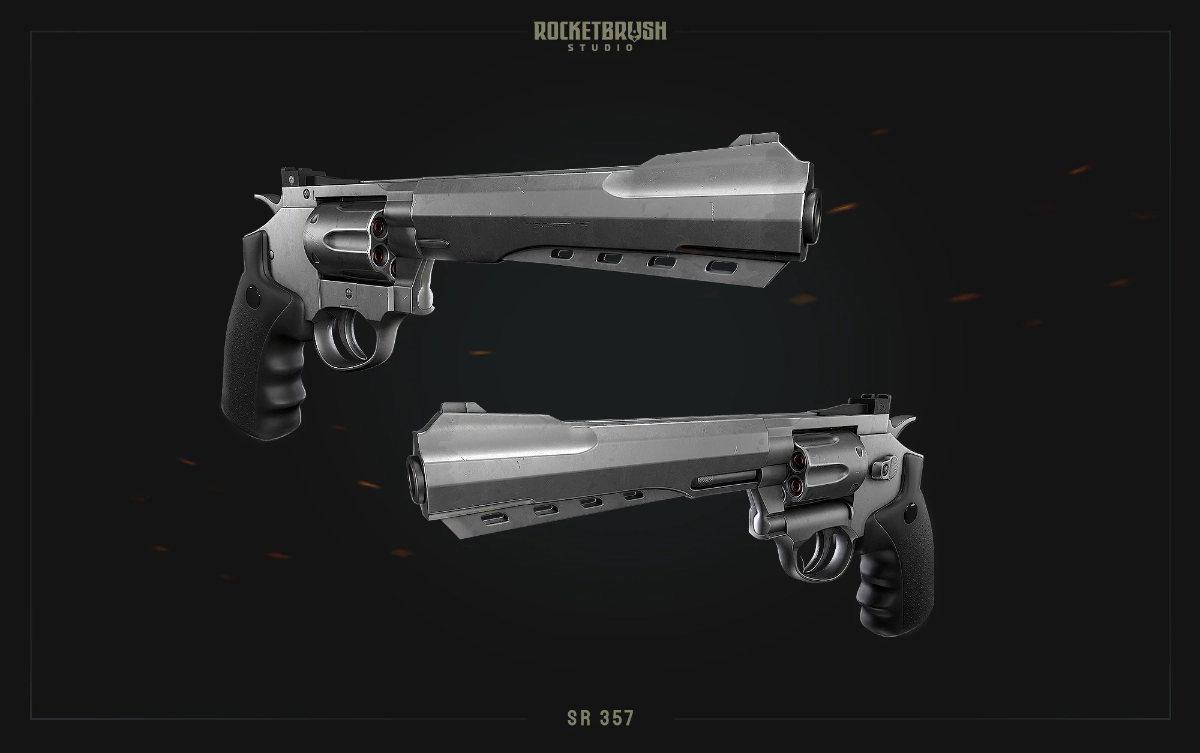
A hard-surface modeled modern stylized firearm.
RocketBrush is a good option when weapon design needs to fit into a wider game art production process. The studio provides game art services spanning concept art, 2D and 3D assets, characters, environments, props, animation, and UI/UX. This broader scope can be useful when a weapon must match an established visual direction, complement character equipment, or remain consistent with the game's other production assets.
For a team developing a fantasy RPG, sci-fi shooter, or stylized action game, the important question is how the proposed weapon will work within the overall art direction. Silhouette, materials, ornamentation, and color coding need to distinguish weapon classes without making the arsenal feel as though it was designed by several unrelated artists. RocketBrush's broader production capabilities provide a basis for coordinating these visual requirements across multiple asset types.
“We can think up and model virtually anything but it always comes down to what makes sense for the project. Weapons are complicated in this sense, because you have to make sure that every element is aesthetic-accurate. There are things you expect from a sci-fi setting and something that fits better in fantasy, there are details that work in 2D but look out of place in 3D. Our experience in different styles allows us to quickly make these decisions.” – Concept Artist at RocketBrush.
The studio's wider game art offering is also relevant to projects that need more than one hero weapon. A team can discuss the relationship between weapon concepts and supporting props, character equipment, or other assets instead of managing each visual element as an entirely separate assignment. For live-service games, that coordination can help preserve a recognizable style across new content releases.
Key services:
Concept art and visual development
2D and 3D game assets
Character and prop art
Art production support across multiple disciplines
Strength
Potential limitations
Broader game art capabilities help coordinate weapon visuals with the rest of art direction.
Suitable for discussing weapon concepts alongside other production asset requirements.
Orthographic sheets, callouts, modular attachments, and turnaround views need to be explicitly included in the agreed deliverables.
Can be considered for projects that need support beyond a single illustration.
A narrowly scoped, one-off design may not need the coordination benefits of a broader outsourcing partner.
RocketBrush is best suited to game teams seeking a flexible art production partner that can connect weapon design with a wider visual pipeline.
2. RenderDock Studio
Founded: 2018
Location: Slovakia
Team size: Approximately 11–50 people
Specialization: Hard-surface art, weapon concepts, technical concepts, and vehicle-related design.
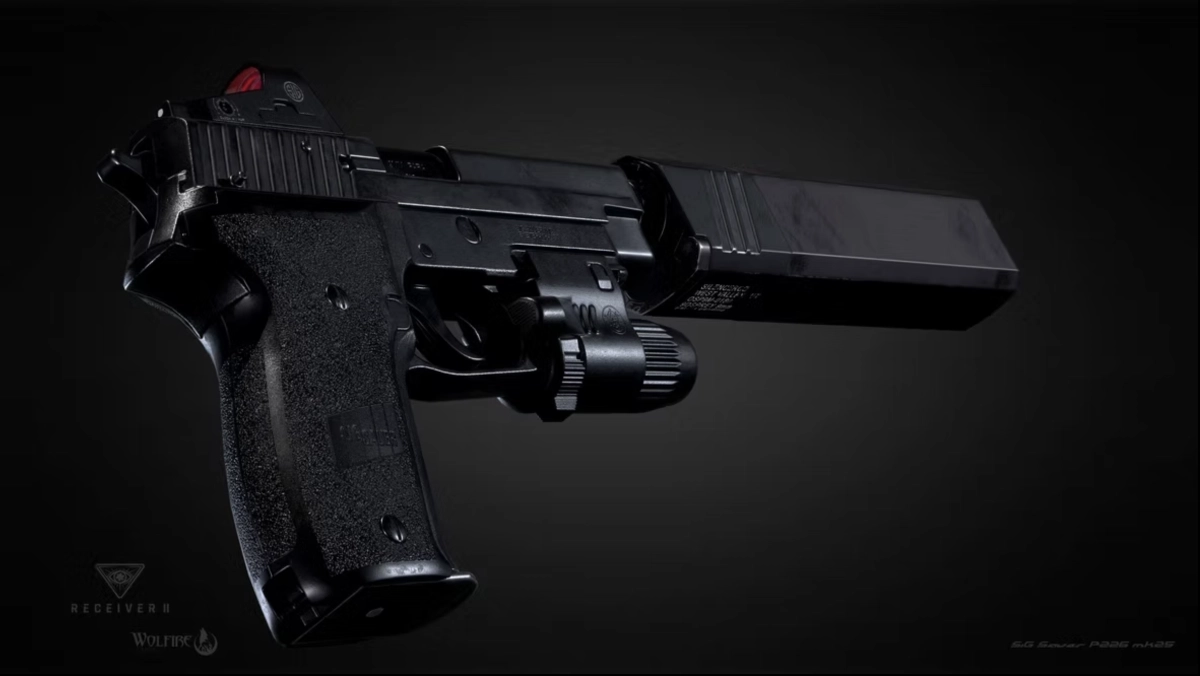
A render of a hard-surface realistic 3D weapon.
RenderDock Studio is a strong candidate for teams prioritizing hard-surface design, technical concepts, and the visual development of weapons or equipment. This specialization is particularly relevant when a weapon's appeal depends on the relationship between its silhouette and mechanical detail rather than decorative rendering alone.
RenderDock focuses strongly on the way hard-surface concepts communicate how components fit together. A strong portfolio demonstrates how the studio’s artists resolve the sides, proportions, and component relationships that a 3D modeler will need to reproduce.
Key services:
Weapon and equipment concepts
Hard-surface design exploration
Technical views and callouts
Vehicle and mechanical concept work
Strength
Potential limitations
Hard-surface focus is relevant to realistic weapons with mechanical components and attachments.
The precise scope of production documentation should be confirmed rather than inferred from finished portfolio renders.
Potential fit for technical equipment and vehicle designs that share a mechanical visual language.
Fewer examples across genres. Technical-looking designs do not automatically demonstrate expertise in stylized fantasy or readable gameplay silhouettes.
A smaller team may offer a more focused working relationship.
Lower capacity for large weapon batches and backup coverage.
RenderDock is best suited to teams seeking focused hard-surface exploration for weapons, equipment, and related technical designs.
3. Echo Lima
Founded: 2018
Location: New Jersey, United States; remote team
Team size: A flexible senior-freelancer network
Specialization: Weapon concepts, hard-surface design, and near-future equipment
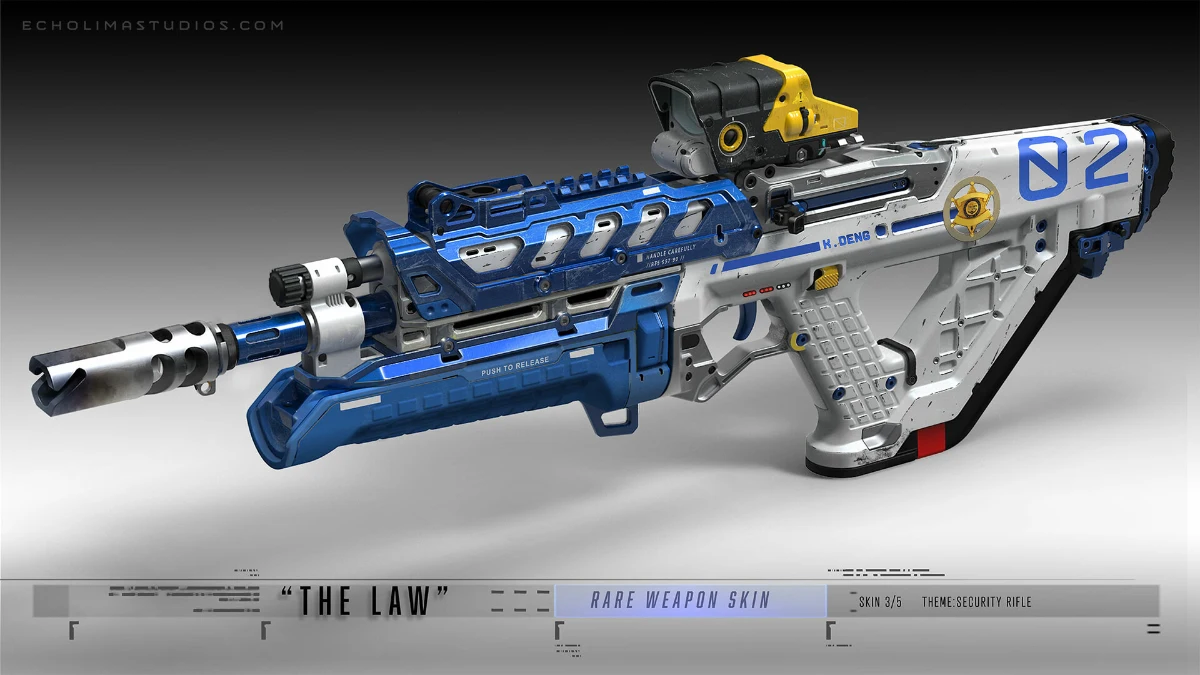
A reskin of an in-game hyper-realistic weapon.
Echo Lima is a specialist concept studio focused on weapons and hard-surface problem-solving. Its public ArtStation profile describes a fully remote team built around senior freelance talent and founded by Eliott Lilly, a hard-surface specialist with more than 20 years of experience in games and entertainment. The studio specifically highlights functional, near-future weapon concepts.
That focus makes Echo Lima particularly relevant to realistic and near-future shooters, where a weapon must look distinctive while retaining believable mechanical relationships. The design challenge is not simply adding vents, rails, screws, and complex surface details. It is making those elements feel purposeful and ensuring that the overall form remains readable from the player's perspective.
Key services:
Hard-surface weapon concepts
Near-future firearm design
Mechanical and equipment design
Concept development for shooter projects
Strength
Potential limitations
Hard-surface focus and senior-led approach are relevant to technically demanding weapon concepts.
Studio may not cover the entire 3D asset pipeline.
Publicly described experience includes work associated with AAA franchises.
Teams developing highly stylized fantasy or cartoon weapons should request directly comparable samples before selecting the studio.
A remote network can offer access to experienced artists without requiring a large permanent team.
Availability and capacity depend on the team assembled for the engagement, so scheduling and continuity need to be discussed.
Echo Lima is best suited to teams developing realistic or near-future shooter weapons that require experienced hard-surface design judgment.
Well-designed weapons can elevate any game, but for tabletops, they are only an element of broader design. Discover top board game art studios in our guide.
Specialization: Concept art, 3D weapons, props, vehicles, characters, and environment art.
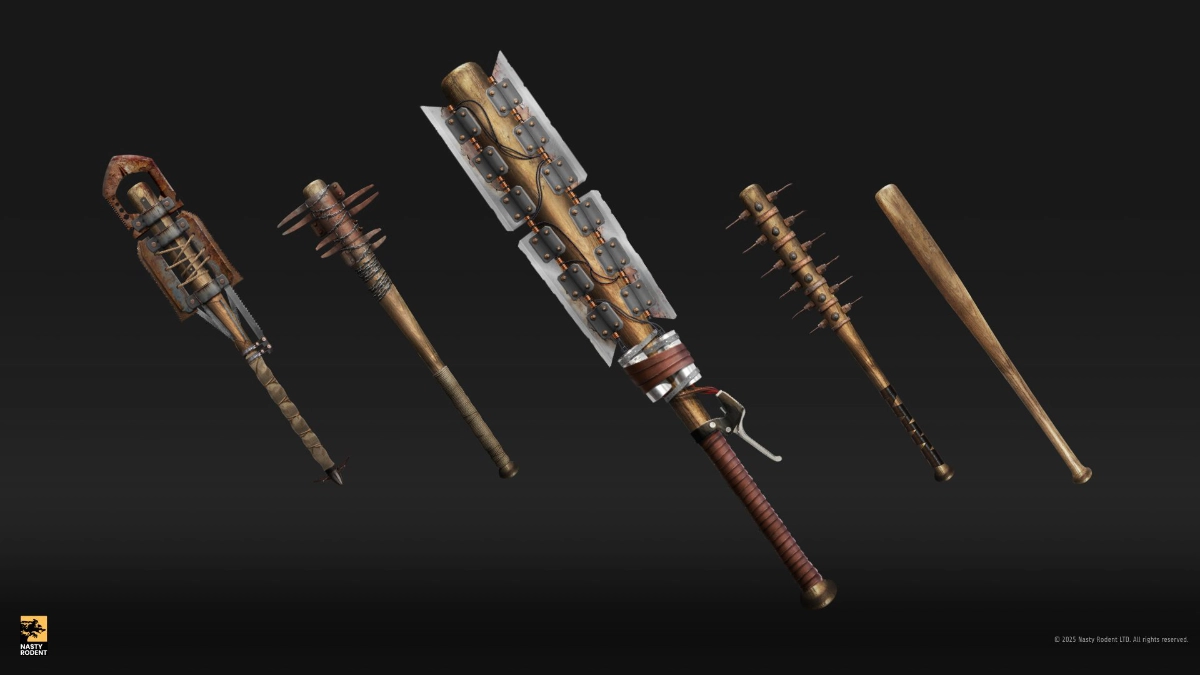
Historical fantasy weapons designed with different textures.
Nasty Rodent offers a more direct connection between weapon design and finished game assets. Its published services cover concept art and 3D weapons, including firearms, melee weapons, sci-fi designs, and fantasy weapons. The studio also describes production workflows involving modeling, retopology, UVs, PBR texturing, LODs, collision meshes, attachment sockets, and integration for Unreal Engine or Unity.
The studio's own concept art service describes deliverables such as orthographic views, material and color callouts, scale references, and turnarounds intended to give 3D artists a workable production document. The portfolio offers relevant examples of a consistent approach to realistic equipment.
Key services:
Realistic and stylized weapon concepts
Firearms, melee weapons, and sci-fi designs
Orthographic views and production callouts
3D modeling, texturing, and optimization
Attachment systems and game-ready asset delivery
Strength
Potential limitations
Publicly documented concept-to-3D services.
A full production package may be unnecessary for teams that only need early exploration or a presentation render.
Relevant examples of realistic military weapon and skin work.
Teams should verify whether the proposed scope includes all requested technical deliverables and engine integration.
Covers both firearms and melee or sci-fi weapon categories.
Detailed, realistic weapons and modular attachment systems can increase cost and review time.
Nasty Rodent is best suited to projects that need weapon concepts connected to 3D production, especially realistic shooters and games with substantial equipment or weapon sets.
A weapon set has to work as a family, not just as a collection of attractive renders. Discuss your visual references, asset scope, and production requirements with RocketBrush to determine what kind of art support fits your project.
[[cta:Need weapons concept and art for your project?:Tell us about your game, and we'll assemble a production-ready art team with specialization in weapon design.]]
5. Pingle Studio
Founded: 2007
Location: Ukraine/UK
Team size: 200-500 specialists
Specialization: Game development and art services, including concept art.
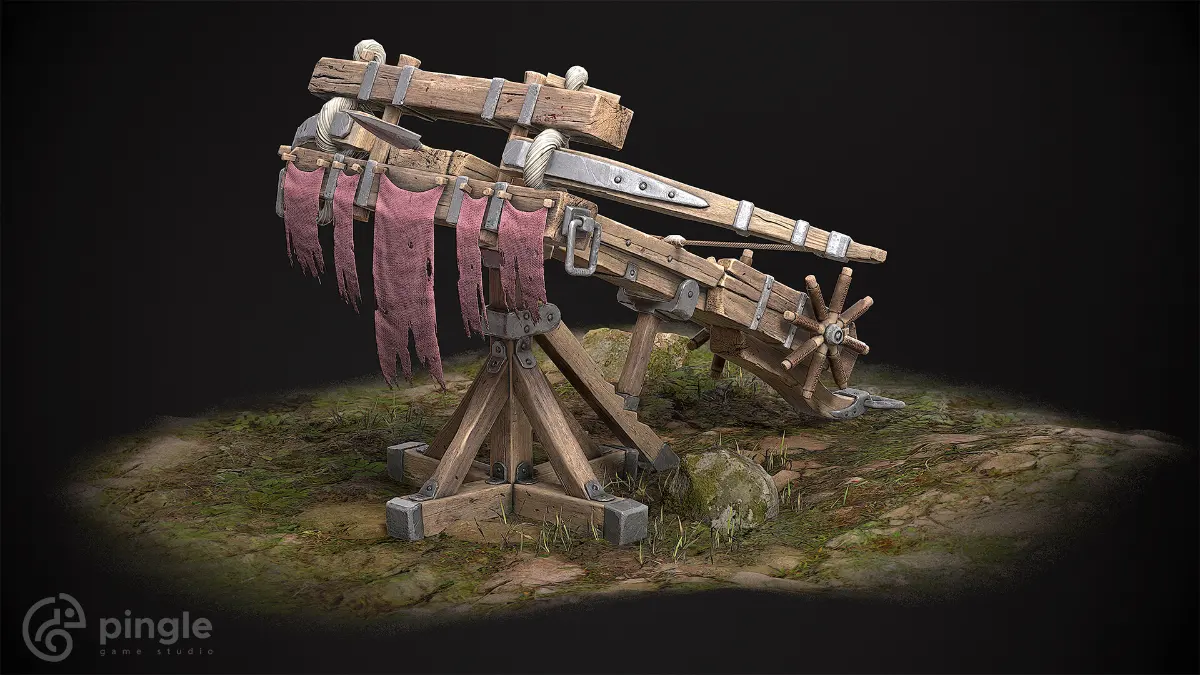
A render of a large historic weapon in 3D.
Pingle Studio provides game concept art as part of its broader game development and art services. Its concept art offering makes it worth considering for teams that need weapon design to align with a larger visual development process, particularly when equipment is being designed alongside characters, environments, or other game assets.
Pingle's broader production services may be useful when concept art is one stage of a larger development engagement. However, clients should establish whether the proposed team includes a dedicated weapon artist and whether technical documentation is part of the scope.
Key services to discuss
Weapon and equipment concept art
Visual development and style exploration
Character and environment concepts
Coordination with wider game art production
Strength
Potential limitations
Broader concept art services can help coordinate weapons with a game's characters and setting.
A dedicated weapon-art portfolio should be requested to verify expertise in the target genre.
Advanbtageous when weapon design is part of a larger art assignment.
Deliverables need to be confirmed.
May suit projects with several interconnected visual development needs.
A team commissioning only a few highly technical firearm concepts may prefer a more narrowly specialized provider.
Pingle Studio is best suited to game teams seeking weapon design within a broader concept art or game production engagement.
Successful weapon design depends heavily on the set environment. Discover the best studios for environment design from our guide.
Specialization: Weapon and vehicle design and 3D modeling.
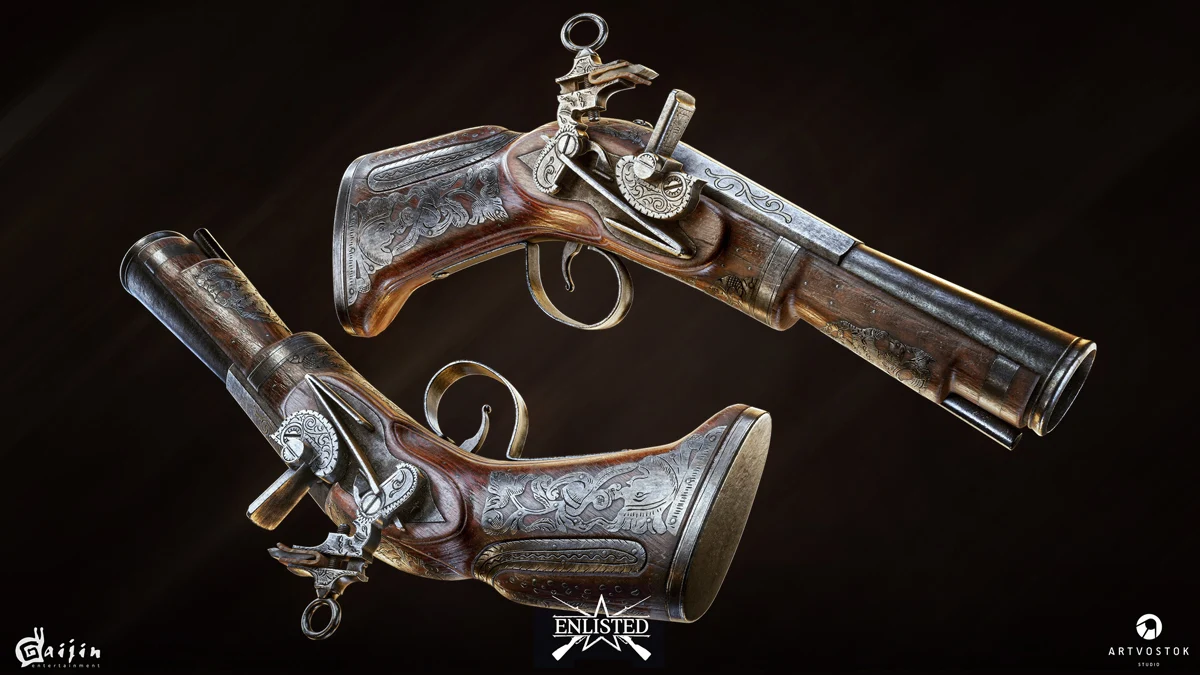
Hyper-realistic guns designed and rendered in high resolution.
Artvostok Studio is included for its reported focus on weapon and vehicle design and modeling. This combination is relevant to games where weapons are part of a larger hard-surface ecosystem: military shooters, vehicle combat games, science-fiction settings, or projects built around technological progression.
The studio acknowledges the relationship between weapons and vehicles as part of visual consistency. Artvostok offers a wide portfolio of weapon sets, showing both the initial design and its final modeled counterpart.
Key services:
Weapon design and modeling
Vehicle concepts and 3D assets
Hard-surface props
Technical documentation and asset handoff
Strength
Potential limitations
Relevant to games requiring consistent mechanical design across several asset categories.
The size of the overall company does not establish how many specialists are dedicated to weapon concepts.
Potential fit for projects that combine equipment design with 3D production.
Fewer examples of weapon-specific technical sheets.
A larger production organization may be able to support broader asset requirements.
Smaller assignments might not receive dedicated art direction.
Artvostok is best suited to teams seeking weapon and vehicle art within a broader hard-surface production assignment.
7. Kevuru Games
Founded: 2011/12
Location: Poland/US
Team size: 350 to 400+ specialists and developers
Specialization: Game art production, 3D weapons, concept art, characters, environments, and other game assets.
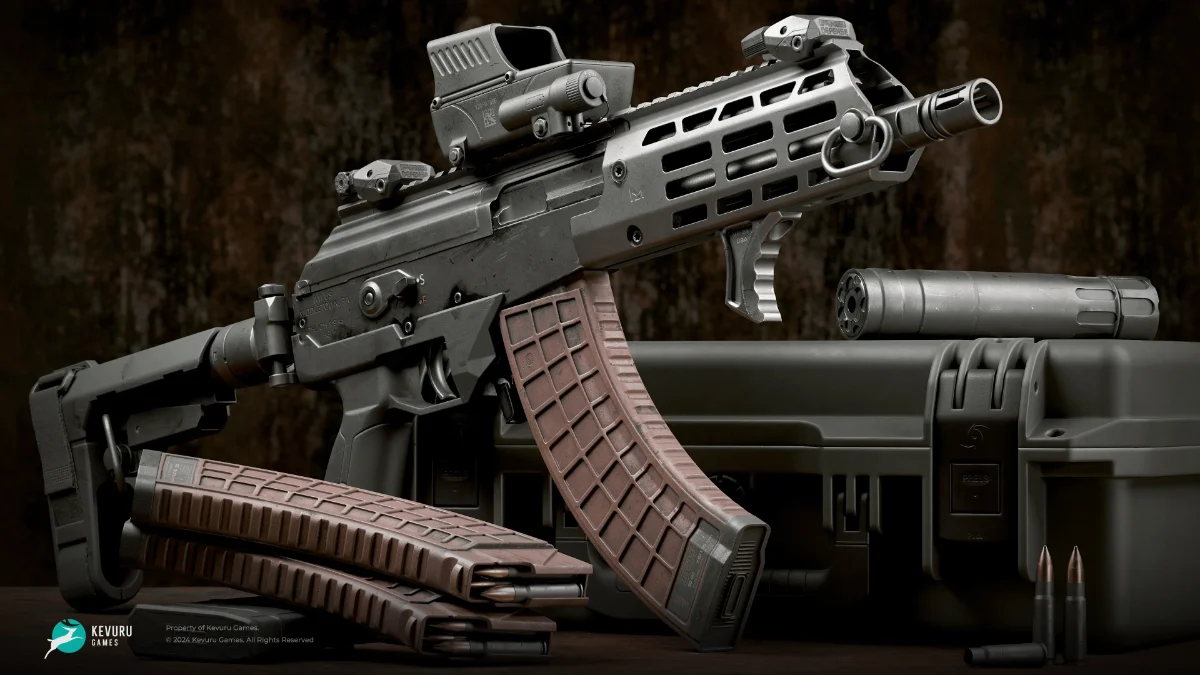
A finished render of a realistic 3D weapon.
Kevuru Games is a larger game art production company with a publicly presented 3D weapons portfolio. Its examples include realistic firearms and stylized weaponry, while its published services cover 3D art, concept art, and wider game production.
Kevuru's public materials also discuss realistic weapon modeling and stylized realism. This makes the studio relevant to projects that need multiple weapon categories or a larger production team. However, a 3D weapons portfolio should not be treated as proof that every assignment includes orthographic concept sheets or design exploration. Those deliverables need to be specified separately.
Key services:
Realistic and stylized 3D weapon production
Weapon concepts for game projects
Hard-surface modeling and texturing
Supporting character, environment, and prop art
Strength
Potential limitations
A substantial weapon portfolio covers realistic firearms and stylized designs.
The published 3D portfolio does not establish the exact scope of concept art documentation available in every package.
Cases demonstrates concept-to-model work for a fictional weapon set.
Larger-scale production capacity may be unnecessary for a small, exploratory assignment.
Wider art services can support projects with several related asset requirements.
Number of artists suggests a confirmation of which artists will be assigned and their specific expertise.
Kevuru Games is best suited to larger projects that require a broad weapon asset pipeline, multiple weapon types, or coordinated 2D and 3D production.
Weapons are more associated with competitive games, so for a list of top casual game art studios, check our dedicated article.
[[ref:top-casual-game-art-services-studios]]
8. Room 8 Studio
Founded: 2011
Location: Cyprus/Ukraine
Team size: Over 1,100 specialists globally
Specialization: Game development, game art production, and realistic weapon concept art.
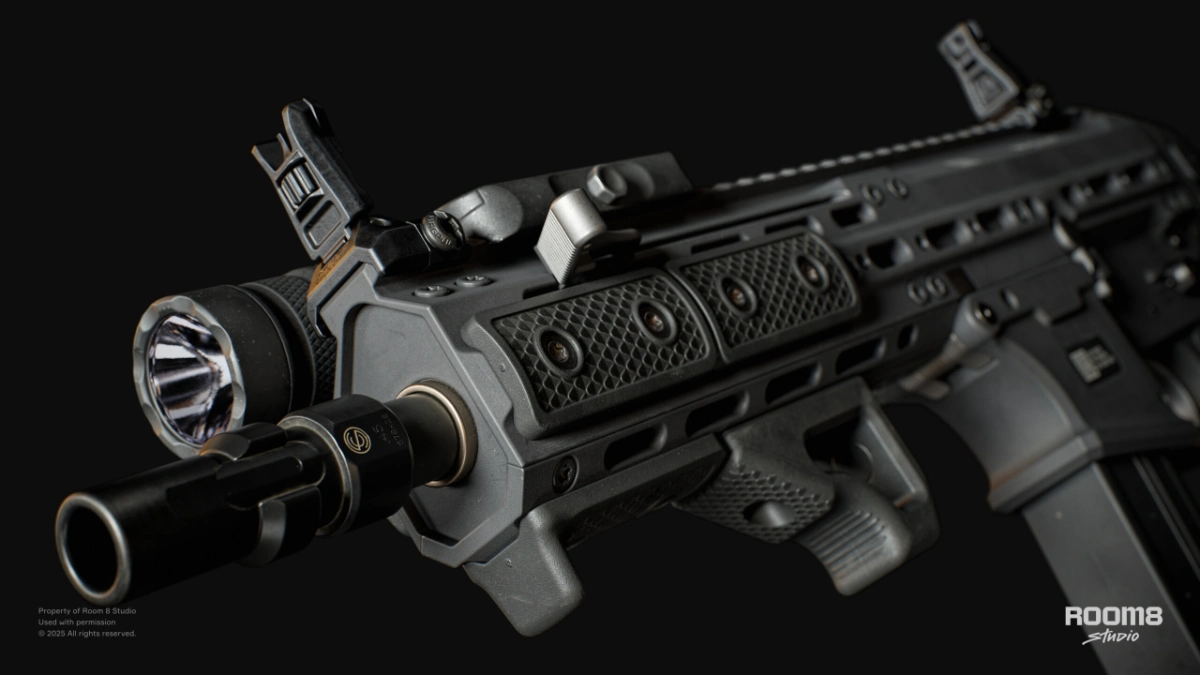
A detailed render of a firearm designed in 3D.
Room 8 Studio is a large game art and development partner with a dedicated portfolio page for realistic weapons concept art. Its published material emphasizes the role of detailed weapon design in making game encounters feel convincing.
For weapon-specific work, Room 8 portfolio reflects the difference in approach between realistic firearm concepts and fantasy or highly stylized sci-fi weapons. The studio offers multiple successful cases of collaboration with AAA projects, where the scope covers design exploration, mechanical callouts, and the variations needed for the game.
Key services:
Realistic weapon concept art
Weapon and equipment visual development
Production-ready design sheets
Coordination with other game art disciplines
Strength
Potential limitations
A dedicated realistic weapons concept art portfolio.
Fewer examples of highly stylized fantasy or cartoon designs.
Large scale will suit projects with interconnected art disciplines and broader production needs.
Not necessarily suitable for small and indie projects.
Can be considered for weapon design within a larger art production scope.
The public portfolio alone does not confirm the availability of specific technical views, revision allowances, or delivery schedules.
Room 8 Studio is best suited to larger productions seeking weapon concepts from an established partner that can also support broader game art requirements.
For outsourcing companies that offer services beyond weapon design, check out our article about the top key art studios.
[[ref:top-studios-video-game-key-art-promo-art]]
How to Choose a Weapon Concept Art Studio
A sketch and a finished 2D design of a stylized fantasy weapon.
Choosing the right vendor is a matter of expectation. You should communicate clearly what the design must accomplish once it leaves the concept stage. In this regard, four criteria are especially important.
Evaluate silhouette and gameplay readability across portfolio. A weapon needs to remain recognizable at the size and distance at which players encounter it. Ask the studio for examples of silhouette explorations and thumbnail tests alongside finished renders. For a weapon family, check whether pistols, rifles, heavy weapons, and melee options remain visually distinct without losing the game's overall style.
Define the technical handoff. For hard-surface designs, establish whether the deliverables include orthographic views, turnarounds, material callouts, scale references, and details of moving or detachable parts. The required documentation depends on the assignment.
Look for consistency across weapon families. Evaluate how the studio handles variations. Upgrades, skins, rarity tiers, and attachments should preserve the underlying design language while giving players meaningful visual differences. A useful test is to commission a small group of related designs or ask for examples of an existing weapon family.
Match the studio to the genre and production stage. Realistic firearms for a tactical shooter require a different skill set from magical staves for a fantasy RPG. Sci-fi weapons need enough mechanical logic to feel convincing, but they also need distinctive shapes and visual effects that communicate their function.
Finally, while making a choice, you should distinguish between concept-only work and full production. If your internal team handles modeling, a specialist concept studio may be sufficient. If you need game-ready assets, confirm that the provider can cover the additional stages or coordinate with your modeling team.
FAQ: Weapon concept art and production requirements
Do weapon concept art packages include orthographic views and callouts for 3D artists?
Not automatically. Some concept packages focus on presentation renders, while production-oriented packages may include front, side, and top views, turnarounds, material callouts, scale references, and notes on mechanical components.
Specify the views your modelers need and whether the studio must document moving parts, detachable attachments, or internal construction. Agree on these requirements before work starts so the concept does not require additional rounds of clarification later.
How do studios make sure a weapon design is readable in gameplay, not only good-looking?
A useful process begins with silhouette exploration and simplified shapes before progressing to detailed renders. Artists can test the weapon at its intended on-screen size, against representative backgrounds, and in the camera perspective used by the game.
For first-person shooters, the team should also consider aiming, reloading, weapon sway, and animation. For RPGs and isometric games, the design must remain recognizable from the typical gameplay camera. Art direction should balance detail with clarity rather than relying on surface complexity alone.
Can a studio design a whole weapon family or skin set in one consistent style?
Yes. This is a common type of assignment, but it should be scoped as a family rather than a collection of unrelated designs.
The brief should define shared shape language, materials, color rules, and the elements that can change between models. For skins, specify whether the variations are primarily cosmetic or require geometry changes. For upgrade systems, establish which components can be replaced and how the weapon's silhouette evolves across tiers.
Is weapon concept art priced per weapon, per variation, or per final render?
Pricing depends on the studio and the deliverables. A quote may be structured around individual concepts, a set of related weapons, artist time, or a broader production package.
A simple stylized weapon explored from a single angle will generally require less work than a detailed hard-surface design with multiple views, mechanical callouts, attachment variations, and revision rounds. 3D modeling, texturing, and engine integration are separate potential cost drivers.
For comparable quotes, provide each studio with the same weapon count, target style, required views, number of variations, revision expectations, and delivery format. Ask for concept art and 3D production to be itemized separately where applicable.
Key Takeaways
The best choice depends on the balance between weapon-specific expertise, technical documentation, and production capacity.
RocketBrush is worth considering when weapon design needs to fit into a broader game art pipeline.
Echo Lima is a specialist option for realistic and near-future hard-surface concepts.
Nasty Rodent stands out for teams looking to connect weapon concepts with 3D production. RenderDock Studio is worth investigating for hard-surface and technical design.
Pingle Studio may suit broader concept art engagements.
Artvostok Studio is a candidate for projects combining weapons and vehicles.
Kevuru Games offers a substantial 3D weapons portfolio and wider production capacity.
Room 8 Studio is worth considering for realistic weapon concepts within larger art production requirements.
Before selecting a provider, verify the relevant portfolio, the scope of technical deliverables, the proposed team, and the quote for your actual asset list. If you are planning your next game and looking for weapon design, reach out to us at RocketBrush.
Create with us
Contact us, and we'll craft the perfect game art for your project