Left

BLOG

The Best Studios for Game Environment Outsourcing and Environment Concept Art

A convincing game world starts long before its buildings, props, and materials reach a 3D engine. Environment concepts establish the visual language of a location and its relationship to gameplay. For developers, the challenge is finding a partner that can do more than produce attractive landscape paintings. The strongest teams understand how concept art feeds level design, blockouts, modular kits, asset production, and eventually the finished game environment.

‍

This is particularly important when outsourcing several locations or biomes. A studio needs to preserve the same visual rules across different artists and environments while still giving each location its own identity. Here are our top 3 choices: 

  • RocketBrush is a strong all-round choice for studios that need environment concepts to connect with wider 2D/3D production. It combines concept development with production-oriented game art and publishes indicative rates for both environment concepts and 3D locations.
  • Pixune Studio is worth considering for smaller teams looking for a relatively compact partner covering both 2D concepts and 3D environment production. Its published pricing and turnaround ranges also make initial budgeting easier.
  • Room 8 Studio is the better fit for large AAA-scale pipelines requiring substantial environment capacity, formal art direction, and a path from look development through engine integration.

All the studios on this list were selected based on the publicly available information, portfolios, and reviews. 

Comparison of the Top Studios

Depending on specialization, the scope of services, and the available prices, we’ve created a simple comparison table. 

Studio Specialization Published Studio Hourly Rate (USD)
RocketBrush 2D/3D environment concepts, 3D environments, game art production $35–39/hour (RocketBrush)
Pixune Studio 2D/3D environment design, concept art, game assets $40/hour (DesignRush)
Leartes Studios 3D environments, props, Unreal Engine production Not publicly listed
Argentics 2D environment art, concept art, 3D environments, tech art $25–49/hour (Clutch)
Devoted Studios Embedded environment art, technical art, end-to-end production $50–99/hour (Clutch)
VSQUAD Concept art, environment design, AAA game art $25–49/hour (Clutch)
Kevuru Games Concept art, environment design, 2D/3D game art $25–49/hour (Clutch)
Room 8 Studio AAA concept art, 3D environments, art direction, engine integration Not publicly listed

Keep in mind:

  • The hourly rates reflect the studios' broader services, which may include concept art, 3D production, technical art and game development. They are not fixed rates for environment art alone.
  • Environment projects vary considerably in scope. A single 2D concept, a modular asset set and a complete 3D location require different workflows and production time. When comparing quotes, check whether modeling, texturing, lighting, optimization and engine integration are included.

RocketBrush Studio

Location: Limassol, Cyprus

Founded: 2016

Team: 90+ artists and specialists

Focus: Game art outsourcing, concept art, 2D/3D environments

Best suited for: Indie, AA, mobile, and teams needing scalable art production
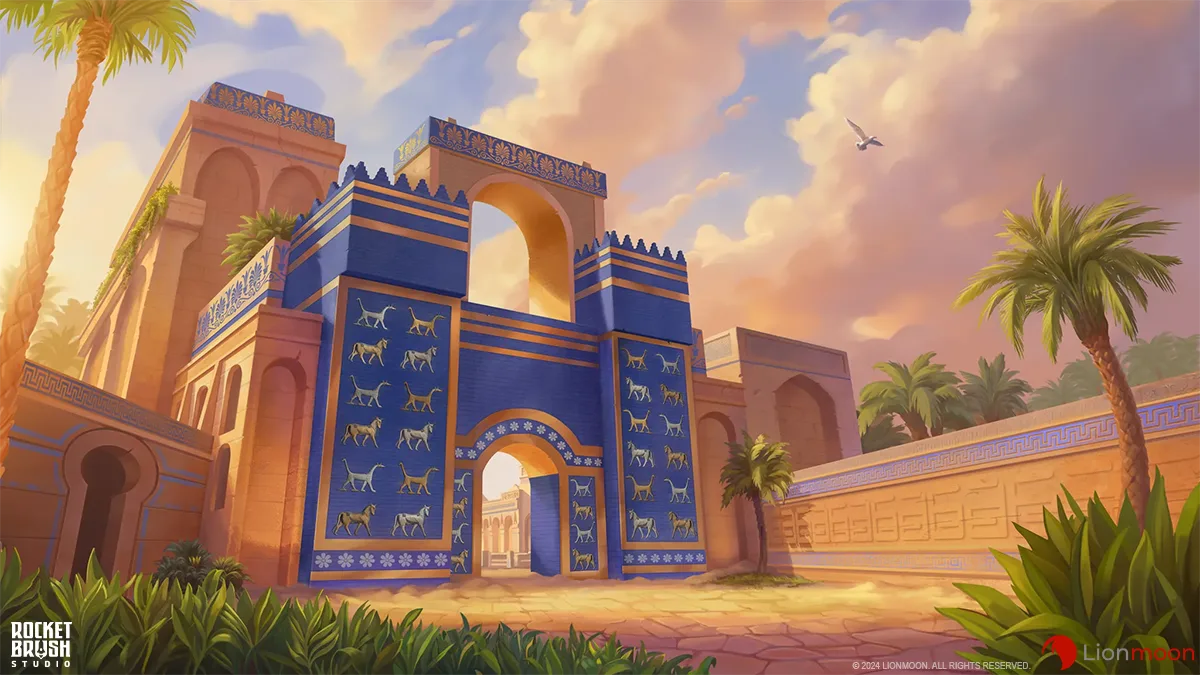
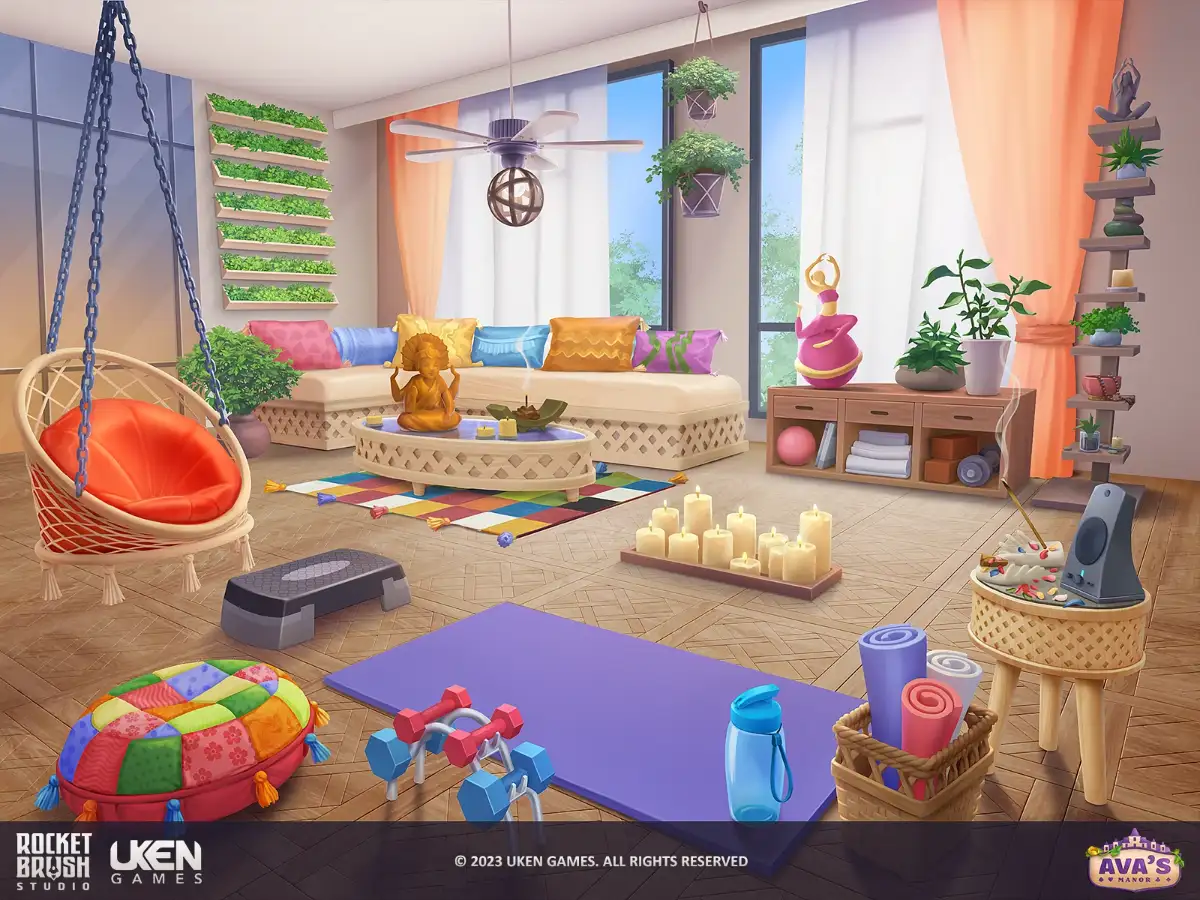
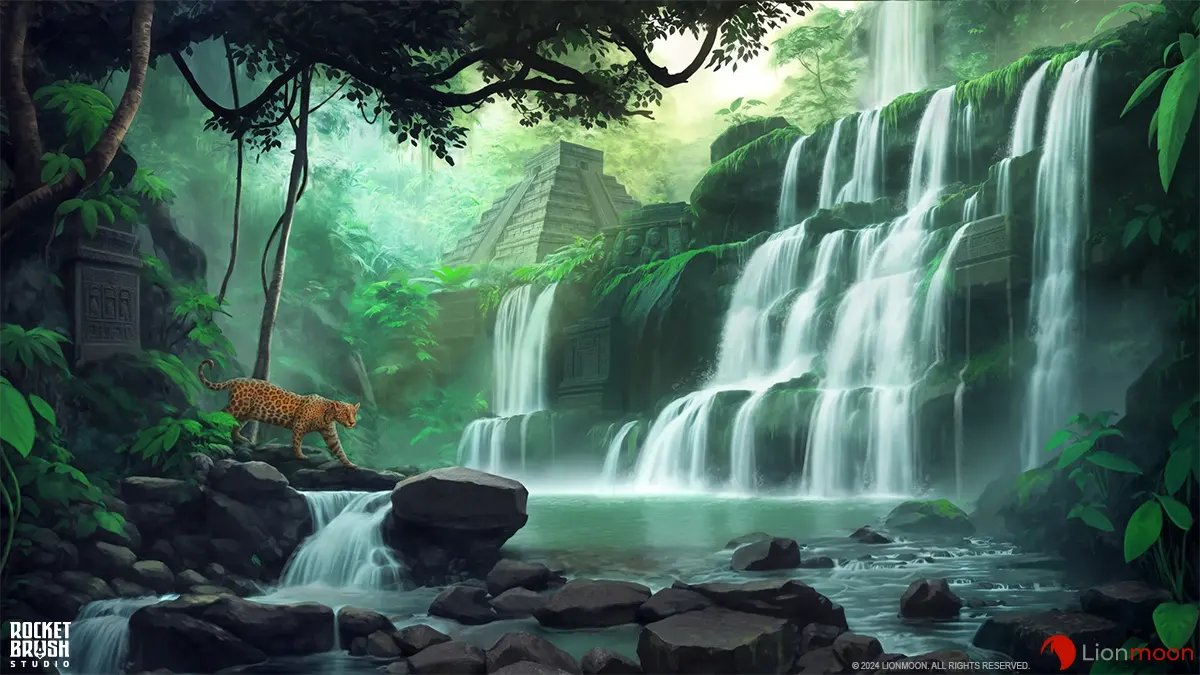
A 2D environment art designed by the team at RocketBrush.
Contrast, color temperature, and shadows can define the atmosphere of the scene.

RocketBrush is a particularly practical option when environment design needs to remain connected to the rest of the art pipeline. The studio provides concept art, 2D environment work, 3D environment design, and production assets, making it possible to move from an initial visual direction toward game-ready deliverables without handing the work off between unrelated teams. 

‍

This approach is useful for projects where environments need to support more than visual appeal: locations have to establish atmosphere, communicate scale and function, accommodate gameplay, and translate cleanly into assets that a 3D team can build and reuse.

‍

“There is the question of what comes first, character or environment. Truth is, it’s a hen-and-egg issue, where both sides have to be developed simultaneously to compliment each other. That’s why we find it vital to coordinate art teams and make sure that there is consistency between the two.” – Art Director at RocketBrush 

‍

The company's public portfolio covers various visual directions, from cartoon and stylized worlds to more realistic environments, as well as multiple platforms, including mobile, PC, and console. RocketBrush focuses on creating environments that respond to the project's gameplay and production requirements, whether that means developing a distinctive location for a narrative game, establishing a consistent visual language across several biomes, or preparing concepts that can serve as a reference for subsequent 3D production. 

‍

The studio can also support the next stages of the pipeline with props, modular assets, and full 3D environments, which helps keep the original concept aligned with what ultimately appears in the game.

‍

Key services include:

  • Environment concept art and keyframes
  • 2D environment and location art
  • 3D environment design
  • Props and asset production
  • Art direction and production support
Strengths Potential limitations
Concept-to-asset workflow across 2D and 3D Portfolio depth may vary by environment type
Transparent indicative pricing The clearest environment case study is a studio-led project
Flexible stylized and realistic production Fewer examples of early concepting

Game environment concept art can serve as an example of what the studio can offer to board game developers as well. learn about the top board game art outsourcing studios from our guide.

[[ref:top-board-game-art-services-illustration-studios]]

Pixune Studio

Location: Warsaw, Poland

Founded: 2020s

Team: Around 20 at an earlier published milestone

Focus: Game art, concept art, animation, 2D/3D environments

Best suited for: Indie and smaller AA teams needing a compact full-service partner
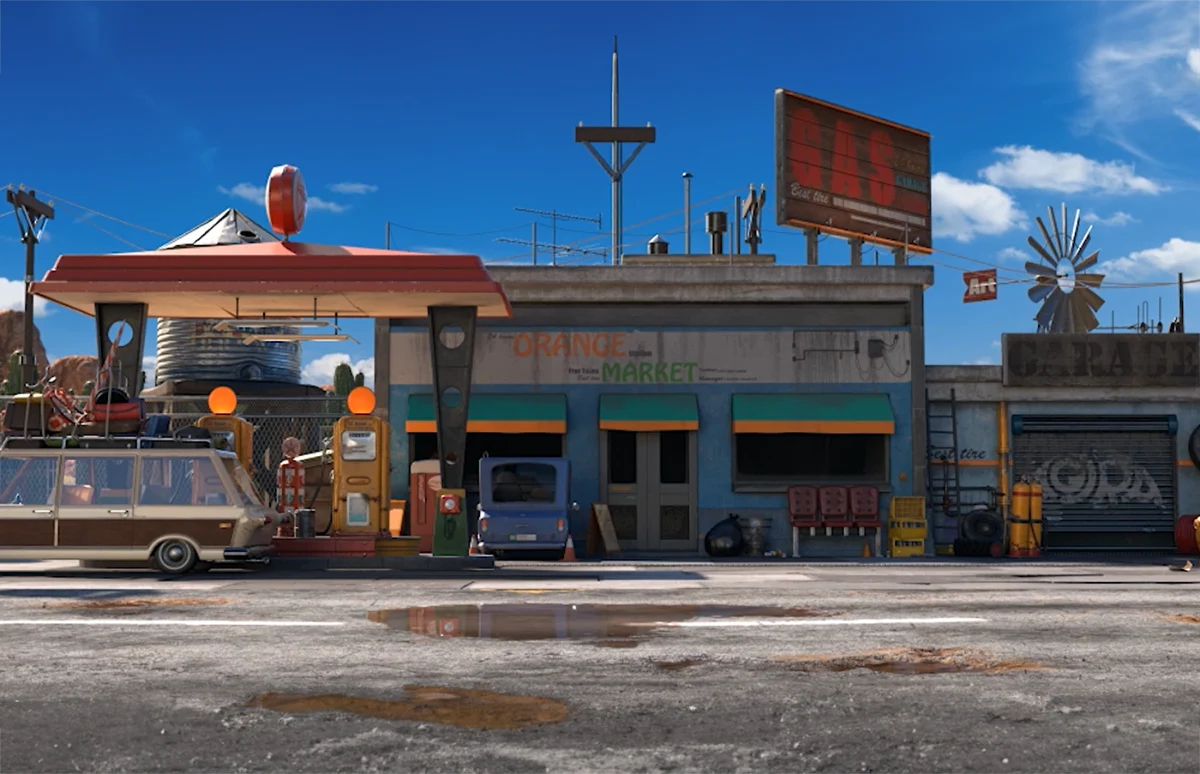
A screenshot of a semi-stylized 3D environment created using a modular approach.  
In 3D environment design, reusable elements help maintain consistency across locations.

Pixune approaches environment work from both the visual-development and production sides. Its environment services cover 2D concept art, matte painting, asset creation, 3D modeling, lighting, and game environment design. The studio prepares engine-ready assets and utilizes common tools for 3D and 2D art, such as Blender, Adobe Creative Suite, 3ds Max, Maya, and others. This makes the studio a sensible match for teams that want a relatively compact vendor capable of taking an environment beyond the initial painting.

‍

Its published figures are unusually useful for early planning: Pixune estimates roughly three to six days for simpler 2D environments and one to two weeks for more complex 3D work, although actual schedules vary by brief.

‍

Key services include:

  • Environment concept art
  • 2D and 3D environment design
  • Matte painting
  • 3D asset creation
  • Asset optimization
Strengths Potential limitations
Covers concept development through 3D production Smaller team than major AAA vendors
Public pricing and turnaround guidance Very large parallel location programs may require additional planning
Supports stylized and realistic environments Broader service portfolio means it is not environment-only

Leartes Studios

Location: Istanbul, Türkiye

Founded: 2019

Team: 200+ artists in published company information

Focus: 3D environments, props, lighting, game-ready assets

Best suited for: Realistic/AAA-style environments and Unreal Engine production
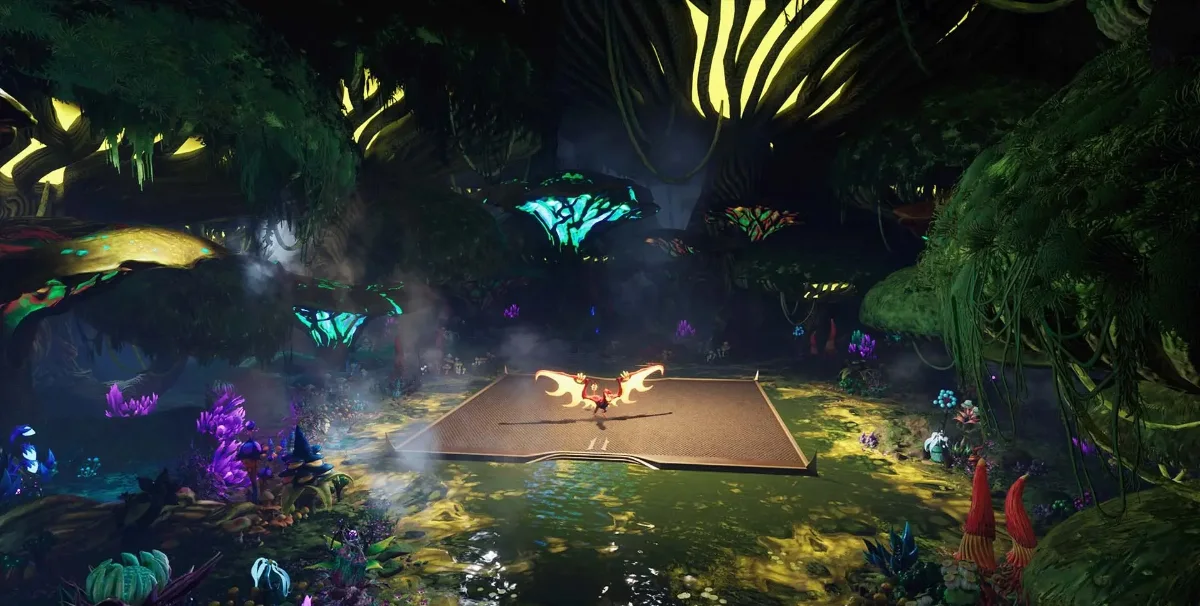
An image of a stylized, fantasy-themed 3D game environment.
Matching camera angles, scale, and spatial relationships helps create a believable scene.

Leartes is most compelling when the requirement moves toward 3D environment production rather than purely illustrative concept development. Founded in 2019 in Istanbul, the studio specializes in game-ready environments and works with Unreal Engine, Unity, and other real-time tools. Its public work demonstrates a strong emphasis on realistic architecture, modular construction, materials, lighting, and technically optimized scenes.

‍

The studio's environment work provides a useful indication of its production mindset. Recent examples include modular architecture, master materials, Nanite, Lumen, LODs, and large sets of game-ready meshes. Its public asset catalog also shows extensive experience with reusable environment kits rather than one-off background illustrations.

‍

Key services include:

  • 3D environment art
  • Modular environment kits
  • Props and architectural assets
  • Lighting and materials
  • Unreal Engine environment production
Strengths Potential limitations
Strong real-time environment specialization More 3D-production oriented than 2D-first concept work
Experience with modular, optimized environments May be more than a small project needs
Strong Unreal Engine focus Public pricing is primarily quote-based

Game environment often dictates further asset design, such as weapons. Discover the top weapon art outsourcing studios from our article.

[[ref:top-studios-weapon-concept-art-design-games]]

Argentics

Location: Global/Remote

Founded: 2017

Team: 80+

Focus: 2D/3D game art, environments, concept art, tech art

Best suited for: Teams needing concept-to-production support across several art disciplines
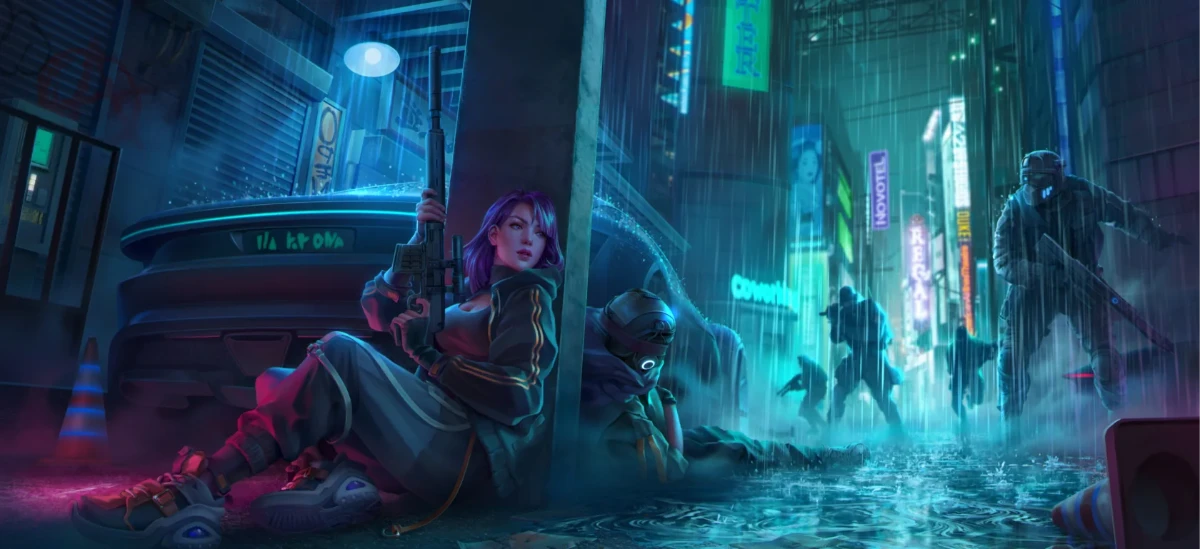
A cinematic, painterly game art that includes the character and the environment. 
Controlled shifts in hue, saturation, and value give each area a recognizable identity.

Argentics takes a broader game-art approach, but environment design is a substantial part of its 2D and 3D offering. Its 2D team produces environments for fantasy, sci-fi, medieval, and other settings, while its 3D service extends from concept art to finished models. The studio also has technical-art specialists who help bridge creative work and implementation.

‍

That combination makes Argentics particularly relevant when a project needs environment concepts that eventually become a coherent asset set. Its published company information lists a team of 80+ people, while the studio describes dedicated art teams supervised by experienced leads and flexible engagement models.

‍

Key services include:

  • 2D environment design
  • Environment concept art
  • 3D environment production
  • Props and assets
  • Technical art
Strengths Potential limitations
Connects 2D concepts with 3D production Broader game-art focus rather than environment specialization
Technical-art support Custom pricing makes early comparison harder
Can scale dedicated teams Larger scope may involve more production management

‍

Whether you choose a stylized or realistic environment, it becomes one of the defining features of the project. Our team can help bring your vision to life through concept art as well as developing engine-ready assets. 

[[cta:Need environment art for your next project?:Tell us about your game, and we'll assemble a team that specializes in your style of choice.]] 

Devoted Studios

Location: US-headquartered, distributed globally

Founded: 2018

Team: 250+ core team; 300+ stated in current careers material

Focus: Art production, co-development, technical art, engineering

Best suited for: AA/AAA teams needing embedded or scalable production support
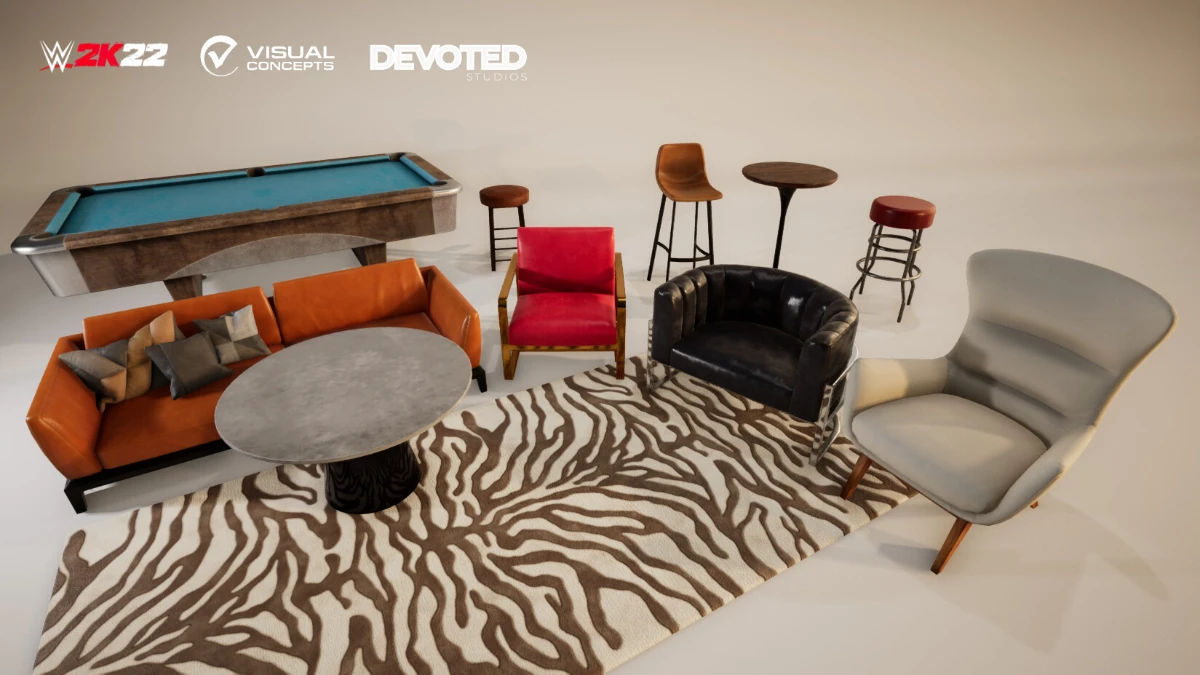
3D furniture designed for an in-game environment.
Clear views of materials and key props help 3D artists turn a visual direction into a consistent, game-ready environment.

Devoted Studios is structured less like a conventional art vendor and more like an external production team. Founded in 2018, it now operates with 250+ core team members across 15+ countries and supports art production alongside engineering, technical art, production, and co-development.

‍

For environments, that model matters when the work needs to sit inside an existing development pipeline. Devoted says its art engagements can range from focused teams of four to eight artists to multi-discipline groups of 10–20+ people, while its case studies include long-running environment production partnerships.

‍

Key services include:

  • Environment art
  • Concept and 3D art
  • Technical art
  • Lighting and integration
  • Long-term embedded teams
Strengths Potential limitations
Strong integration with client production teams More infrastructure than a small concept-only job requires
Can scale multidisciplinary teams Pricing is custom and engagement-based
Strong AAA/co-development orientation Better suited to ongoing production than isolated artwork

VSQUAD

Location: Ukraine/Poland

Founded: 2018

Team: 50+ professionals and remote specialists.

Focus: Full-cycle game development, porting, remastering, game art, VFX

Best suited for: Visual development, stylized worlds
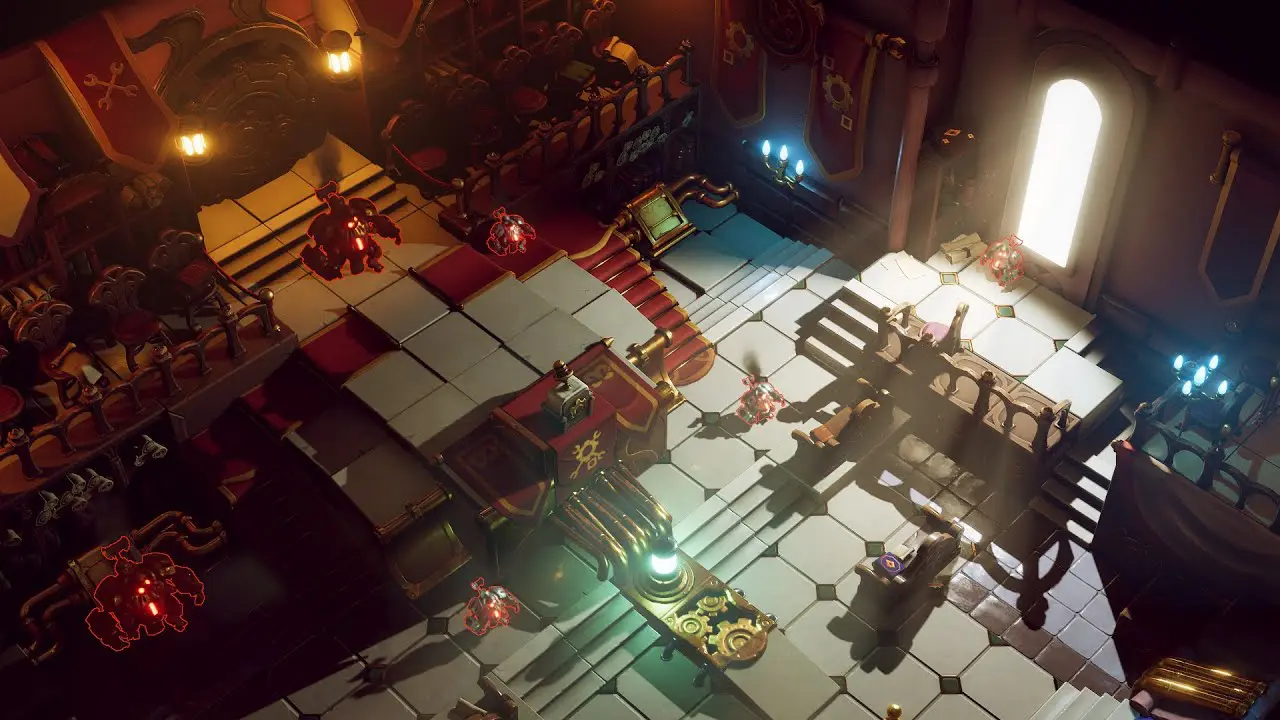
Environment art for a fantasy game with a top down camera view.
Surface wear, roughness, and texture contrast make environments feel distinct while preserving the overall art style.

VSQUAD is a game art outsourcing studio offering concept art, 2D and 3D art production, character design, and environment-related services. Its capabilities make it relevant to projects that need to establish a visual direction and develop it into assets for game production. 

‍

For environment work, the studio is worth considering when a project requires atmospheric location concepts, world-building, and a consistent visual language that can carry through to the finished game. Its suitability for a particular environment pipeline depends on the portfolio examples, level of detail, and production deliverables required.

‍

Key services include:

  • Environment concept art and visual development
  • Environment design and world-building
  • 2D and 3D game art
  • Character and prop design
  • Production-ready game assets
Strengths Potential limitations
Clovers a wide scope from visual exploration to game-ready locations. Less environment-production focused than dedicated art vendors
Extensive experience confirmed by portfolio A limited overview of various styles in the available portfolio
Emphasizes modular assets, reusable environment kits, and engine-aware optimization for real-time production. Fewer examples of innovative concepts.

In casual games environment plays a core role. Learn all about the best casual game art outsourcing studios.

[[ref:top-casual-game-art-services-studios]]

Kevuru Games

Location: Global/Distributed production

Founded: 2011

Team: 300+

Focus: Game development, 2D/3D art, concept art, environments

Best suited for: Larger projects needing substantial production capacity
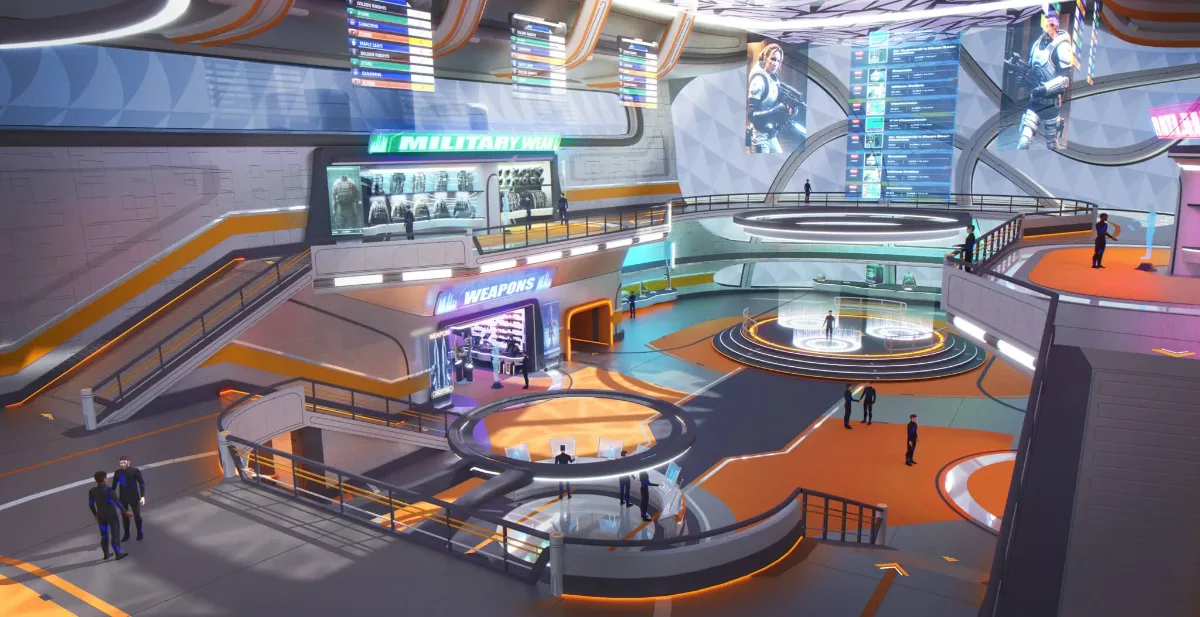
A concept art for a futuristic sci-fi space. 
Concept art should translate into practical production references.

Kevuru Games occupies the larger end of the market and offers a broad art pipeline spanning concept development, 2D and 3D art, environment design, and AAA game art. Its environment service covers both large landscapes and smaller interior spaces, with an emphasis on lighting, texture, detail, and atmosphere.

‍

The studio reports a team of 300+ professionals and more than 100 shipped titles. It also publishes indicative environment-asset pricing of roughly 800-6,000, although a full location or concept-to-environment package can be substantially different.

‍

Key services include:

  • Environment concept art
  • Environment design
  • 3D environments and props
  • AAA game art
  • Technical art and optimization
Strengths Potential limitations
Large multidisciplinary production capacity Potentially oversized for a small concept batch
Covers concept through 3D implementation Broader service offering means environment art is one part of a large pipeline
Experience across AAA and mobile Final pricing requires project scoping

Room 8 Studio

Location: Global/ Europe, North America, South America

Founded: 2011

Team: 700+ in Room 8 Studio; 1,100+ across Room 8 Group

Focus: AAA art production, concept art, 3D environments, technical integration

Best suited for: Large AAA/AA productions and long-term art pipelines
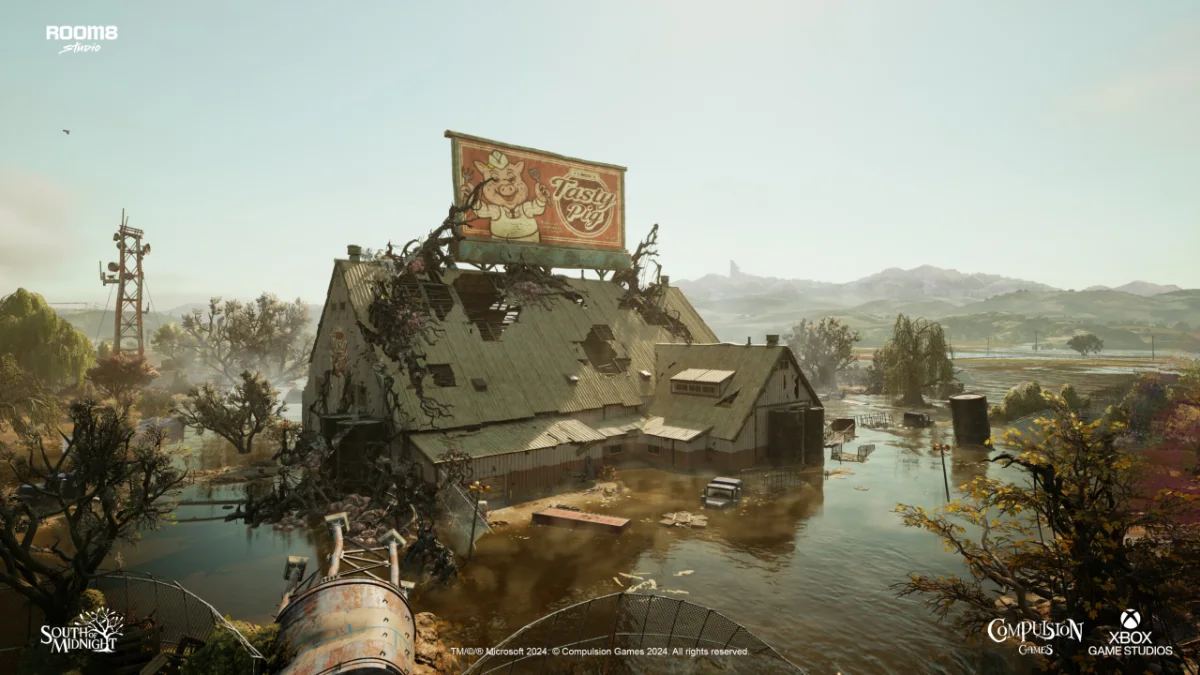
A 3D game scene featuring a detailed environment. 
Every scene has to account for the player's movement and in-game objectives. 

Room 8 Studio is the strongest fit on this list for teams operating at major AAA scale. As the art division of Room 8 Group, it provides look development, creative exploration, environment design, benchmarking, art-bible creation, production guidelines, 3D environment work, and engine integration.

‍

Its environment concept experience is also directly documented in projects such as Shrapnel, where an initial four-to-five-person environment concept team developed the project's visual direction and mood references before the work expanded into 3D rendering. Room 8 Group currently reports around 1,100 professionals overall, while Room 8 Studio itself has been reported at 700+ specialists.

‍

Key services

  • Environment concept art
  • Look development
  • Art bibles and production guidelines
  • 3D environment production
  • Engine integration and live ops
Strengths Potential limitations
Extensive AAA environment experience Less practical for very small projects
Formalized art direction and production systems Larger vendor structure can mean more onboarding
Concept-to-engine pipeline Custom engagement rather than published per-asset pricing

If you are interested in studios that can not only create environments, but support the project all the way to marketing stage, check out our comparison of the top key art studios.

[[ref:top-studios-video-game-key-art-promo-art]]
‍

How to Choose an Environment Art Outsourcing Studio

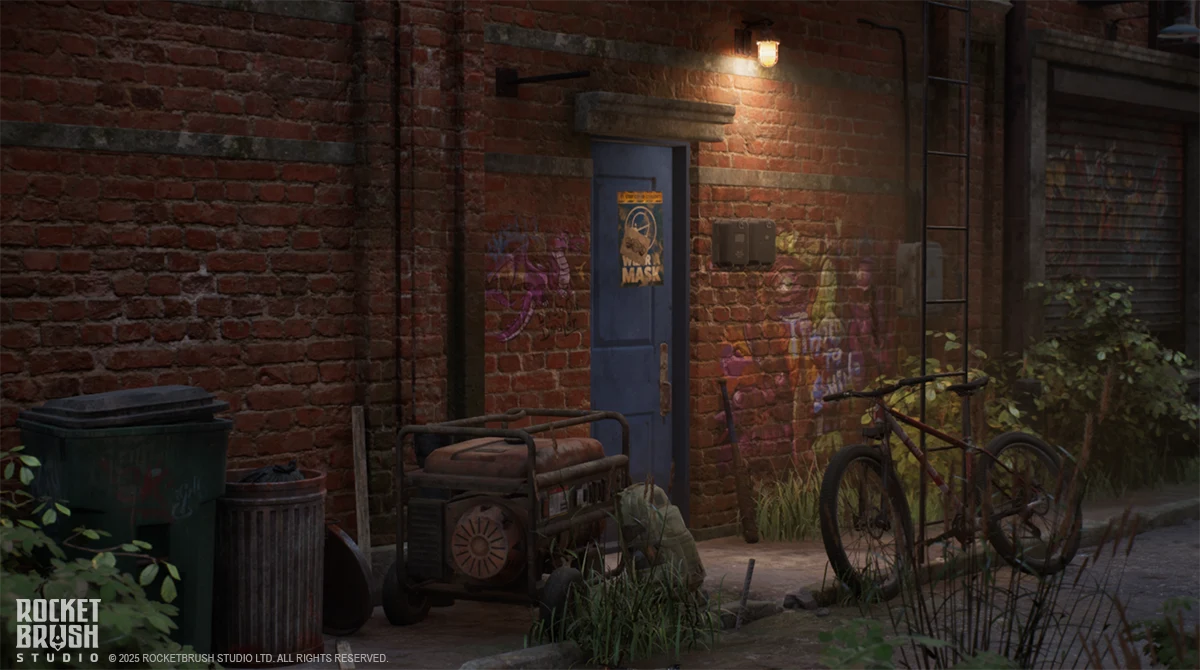
An image of post-apocalyptic New York 3D environment created by artists at RocketBrush.
Details and additional props make an environment realistic and give it a lived-in feel. 

When it comes to environment and concept art, the right partner should be selected based on several aspects. A single quality image is good but it matters more what happens after that image is approved. Here are some recommendations on choosing a vendor to work for your project. 

‍

  • Check whether concepts can become production assets.
    An environment concept should communicate more than mood. For game production, it may need enough information about architecture, materials, proportions, props, modularity, and camera perspective to guide a blockout and later asset production. Ask whether the studio can provide production-ready breakdowns, modular kits, prop sheets, or direct 3D follow-through.
  • Match the studio to the actual design problem.
    A narrative game may prioritize atmospheric paintings, cinematic composition, and visual storytelling. Multiplayers or open-world projects may need stronger emphasis on readable routes, landmarks, gameplay spaces, and repeatable environment systems. These are different skills, even when both portfolios are labeled “environment art,” so match the studio to the task at hand.
  • Look for consistency across locations.
    One excellent concept does not prove that a team can establish a world. Ask how the studio handles an art bible, color script, lighting rules, material language, and recurring architectural or natural motifs. This becomes especially important when several artists work simultaneously on different biomes.
  • Test production capacity before committing to a large batch.
    For ongoing development or live ops, ask how many locations or environment sets the team can support concurrently and how quickly it can add artists. A small test batch is useful not only for judging quality but also for measuring feedback cycles, communication, revision volume, and the studio's ability to preserve the established style as production scales.

‍

Choosing a studio is a task heavily tied to the specifics of the project. Always make sure that you communicate your expectations clearly and the vendor has the capacity to meet them.

FAQ: Environment Concepts, Production, and Outsourcing

What is the difference between environment concept art and 3D environment production?

Environment concept art defines how a location should look and feel before the final assets are built. It establishes composition, architecture, landscape, lighting, atmosphere, palette, and visual direction. 3D environment production turns that direction into actual geometry, materials, textures, props, lighting setups, and engine-ready assets. In a well-integrated pipeline, the concept acts as a production reference rather than an isolated final image.

Can a studio build modular environment kits from approved concept art?

Yes. Many environment-focused teams can translate approved concepts into modular buildings, terrain pieces, props, materials, trim sheets, and other reusable components. This is particularly useful for open-world and live-service games, where a single location needs to generate many variations without every asset being created from scratch.

How do studios keep a consistent art style, lighting, and palette across different locations?

The usual approach is to establish shared visual rules before production expands. An art bible can define shape language, materials, architectural motifs, lighting behavior, color relationships, vegetation, atmospheric effects, and reference standards. A color script can then help maintain progression and contrast between locations while preserving the overall identity of the game world.

How long does it take to produce a set of environment concepts for a new location?

There is no universal production time because the answer depends on whether the team is producing thumbnails, blockouts, detailed keyframes, or a complete environment package. A simple 2D environment can take several days, while a complex location with multiple variations, technical breakdowns, and production-ready references can take weeks. Pixune, for example, publishes estimates of three to six days for simpler 2D environments and one to two weeks for more complex 3D environment work.

Key Takeaways: Which Studios Fit Your Project Best

Choosing an environment art outsourcing studio means finding a team that can translate visual concepts into production-ready game environments while maintaining a consistent art style across locations. 

  • RocketBrush is a strong all-round choice for all types of projects, from AAA to mobile. But it’s also affordable for indie and AA projects that need a connected concept-to-asset workflow across 2D and 3D. 
  • Pixune Studio suits smaller teams looking for a compact partner with published pricing and turnaround estimates. 
  • Leartes Studios is best for realistic, modular 3D environments and Unreal Engine production. 
  • Argentics fits projects that need environment concepts, 3D assets, and technical art support. Devoted Studios is a good match for AA/AAA teams requiring embedded artists or scalable, long-term production support. 
  • VSQUAD stands out for full-cycle services, thus production driven visual development. 
  • Kevuru Games offers substantial production capacity for larger projects spanning concept art and 3D environments. 
  • Room 8 Studio is a good fit for large AAA productions that require formal art direction, extensive environment teams, and a pipeline from look development to engine integration.

‍

Ultimately, the choice comes down to expectations and the studio's experience. Which doesn’t necessarily mean that if the company has less experience with large titles, it can’t handle them. It’s important to set production goals early on and make sure that the studio can scale along. At RocketBrush, we account for the scaling and potential of every project. If you’re looking for environment art for your next game, reach out to us. 

‍

Create with us
Contact us, and we'll craft the perfect game art for your project
Get In Touch
See also:
Up