Game animation, be it 2D or 3D, is where creative intent collides with production realities. Animation could look great but if it doesn’t read in gameplay, breaks in-engine, or can’t scale across assets, it’s a liability rather than a win.
Teams choosing an outsourcing partner typically struggle with three things: pipeline compatibility, consistency, and scalability. In this article, we discover the top 10 2D and 3D animation studios for outsourcing. But before we get into details, let’s take a look at our top picks.
Top picks depending on your needs:
RocketBrush Studio — best balanced option for production-ready animation pipelines with a focus on consistency, repeatability, and integration into game engines. See full breakdown below.
Nuare Studio — strong choice for deeply integrated animation systems, especially when animation must tightly align with gameplay and technical constraints. See section below.
Room 8 Studio — best suited for large-scale AAA production, where mature pipelines and team size matter more than stylistic experimentation. See section below.
All the information for the comparison is based on company websites, public portfolios and client reviews available at the time of research.
1. RocketBrush Studio
Founded: 2016
Headquarters: Limassol, Cyprus
Team size: 150+ artists and specialists
Projects: 210+ projects for 128+ client teams
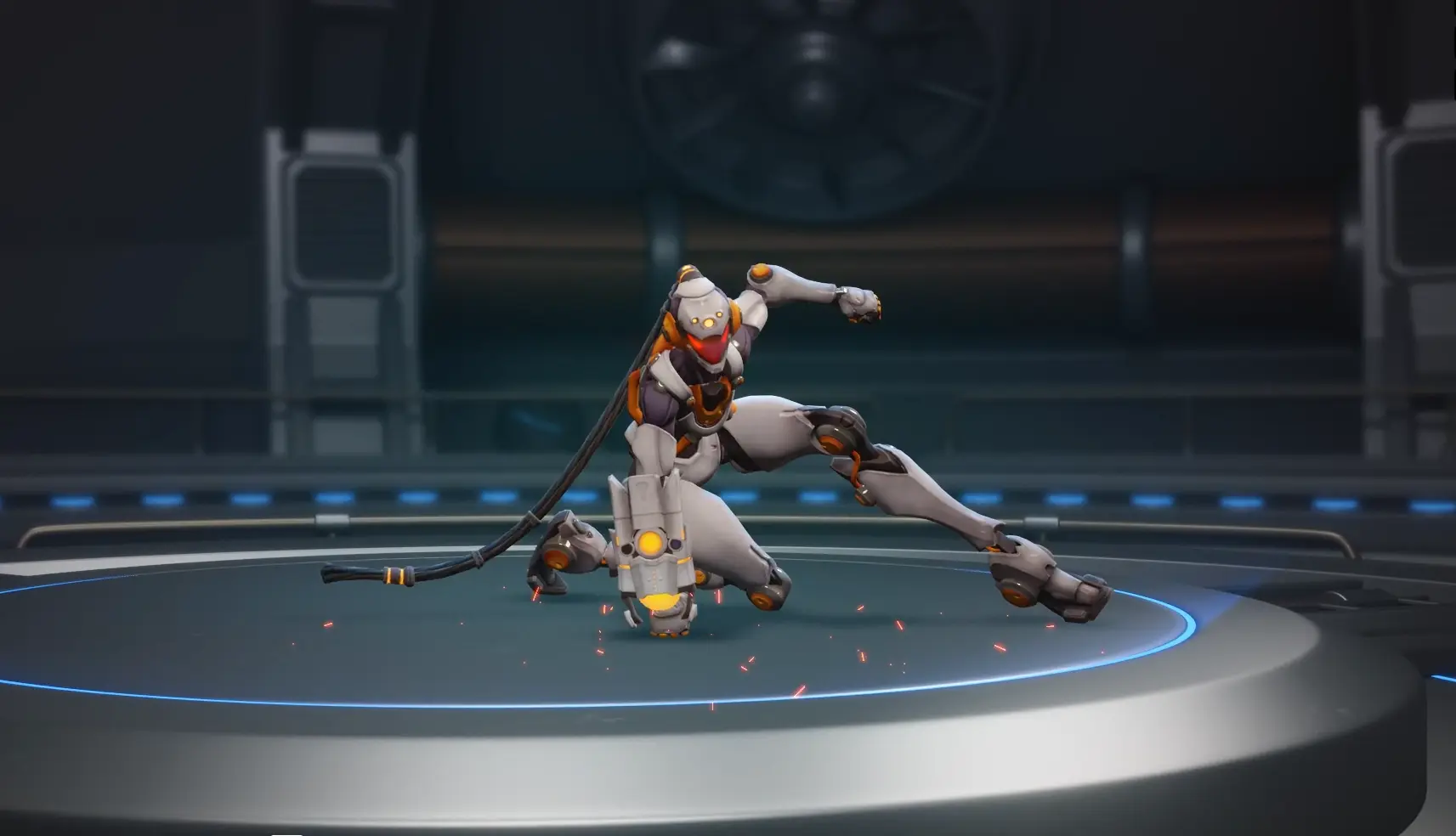
The team at RocketBrush Studio approaches 2D and 3D animation as a production pipeline problem rather than just an asset creation task. The studio’s work spans gameplay animation, UI motion, character loops, and LiveOps content, with a strong focus on how animation behaves inside the engine, as opposed to focusing on pretty previews.
The studio puts noticeable emphasis on rig validation, animation tests, and internal review cycles before client delivery, which reduces back-and-forth but also requires clearer upfront alignment. Their 2D animation (including Spine-ready pipelines) and 3D animation (Maya/Blender rigs, engine-ready states) are structured around real production constraints like state machines, loops, and performance budgets.
Key Services:
2D game animation
3D game animation
Animated cutscenes
Cinematic trailers
Animation integrated with 2D and 3D asset production
Strengths and Limitations
A key strength of RocketBrush Studio is the transition from style exploration to repeatable production rules, where rigs, timing, and constraints are defined early to avoid inconsistencies across large batches.
While this process-driven approach may feel less flexible for teams looking for rapid experimentation without defined constraints, RocketBrush has proven with their own projects that the team is prepared to try new tools and techniques. Because of that, it suits both projects where animation must scale without compromising consistency and those where creativity takes the lead.
Strengths
Potential Limitations
Proven experience with recurring animation production
Focuses on art and animation production rather than full-cycle game engineering
Can combine animation with concept art, 2D/3D assets and UI/UX
Teams looking for engineering, QA and other non-art development services may require additional vendors
More than 85% of current work comes from returning clients
Pricing and production capacity are confirmed during project scoping rather than presented as fixed public packages
“For animation outsourcing, we align not only on visual references but also on rig requirements, engine constraints, file structure and review stages. A short test or rough animation pass helps both teams validate timing, deformation and feedback flow before scaling production.” — Art Director, RocketBrush Studio
Overall, RocketBrush fits best when animation is part of a long-term production system, not a standalone deliverable.
2. Nuare Studio
Founded: 2006
Headquarters: Kelowna, Canada
Team size: 30+
Nuare is included for its clear focus on animation as part of a technical production pipeline rather than standalone content. Its work emphasizes in-engine validation, gameplay responsiveness, and integration with rigging, mocap cleanup, and real-time VFX—making it particularly relevant for teams building animation systems that must hold up under gameplay conditions.
Key Services:
Gameplay and in-engine animation (2D/3D)
Rigging and technical animation
Motion capture cleanup
Real-time VFX integration
Cinematic and first-person animation
Strengths
Potential Limitations
Strong focus on in-engine validation and performance
May be less suitable for marketing-driven or trailer-focused animation work
Deep integration with rigging, mocap, and VFX pipelines
Portfolio emphasizes production systems over stylized “showpiece” animation
Experience with gameplay-driven animation systems
Smaller team size may limit scalability for very large AAA productions
Overall, Nuare Studio is strongest when animation must fit tightly into gameplay systems and technical constraints, rather than exist as isolated assets.
3. Wow-How Studio
Founded: 2009 (approx.)
Location: Kyiv, Ukraine
Wow-How is considered a good choice because of its specialization in clear, stylized 2D animation used in marketing, explainer content, and trailers. Its work stands out in communication-driven animation rather than gameplay systems, making it relevant for studios needing strong visual storytelling outside core gameplay.
Key Services:
2D animation (trailers, ads, explainers)
Motion design and marketing visuals
Storyboarding and concept development
UI/UX animation for presentations
Strengths
Potential Limitations
Strong expertise in stylized storytelling and explainer animation
Less focused on gameplay animation or real-time engine integration
Well-suited for trailers and marketing content
Limited emphasis on 3D animation pipelines compared to game-focused studios
Clear visual communication and narrative structure
May require additional vendors for full game animation production pipelines
Wow-How is best used when animation is communication-driven (marketing, UI explainers, trailers) rather than systemic gameplay motion.
Gameplay animations can be complex. They have to respond to the action, character, and style of the title. Reach out to our team at RocketBrush if you’re ready to start working on your next game.
[[cta:Need animation for your project?:Tell us about your game, and we'll assemble a production-ready art team with a pipeline tailored to your preferred technique, platforms and deadlines.]]
4. Dream Farm Studios
Founded: ~2010s
Location: Ukraine
Dream Farm is included for its dual 2D/3D animation structure and strong focus on character-driven, stylized content. Its experience in series, commercials, and trailers translates well into narrative-heavy or cinematic game production.
Key Services:
2D animation (cut-out and classical)
3D character animation
Cinematics and trailers
Commercial and series animation
Strengths
Potential Limitations
Flexible across 2D and 3D animation styles
Pipeline is less explicitly focused on game-engine integration
Strong character animation and storytelling focus
May require additional technical support for gameplay systems
Experience with cinematic and narrative content
Less emphasis on live ops or systemic gameplay animation pipelines
Dream Farm is a good fit for stylized storytelling and character animation, less so for systemic gameplay animation or live ops pipelines.
5. Stepico
Founded: 2014
Location: Lviv, Ukraine
Team size: 200+
Stepico is included for its full-cycle approach to animation within game development, covering gameplay, cutscenes, and VFX across platforms. Its focus on optimization and cross-platform delivery makes it particularly relevant for mobile and live-service projects.
Key Services:
Gameplay animation (2D/3D)
Cutscenes and cinematics
VFX and motion design
Cross-platform optimization
Strengths
Potential Limitations
Strong alignment with game production and cross-platform pipelines
Animation may prioritize functional production needs over niche specialization
Experience with mobile optimization and performance
As a full-cycle studio, animation is one of several service areas
Scalable team for ongoing and live-service projects
Highly stylized or experimental animation may require additional direction
Stepico is a solid middle-ground vendor for teams needing reliable, scalable animation across multiple platforms, especially in live-service or mobile-heavy pipelines.
2D animation is a later production step that comes after concept design and creating game art. For a specialized list of 2D game art and character design studios, check our dedicated article.
SunStrike is included for its ability to deliver animation as part of a broader art production pipeline. Its services span from concept to UI and marketing, making it relevant for teams seeking a unified visual production partner.
Key Services:
2D and 3D animation
Concept art and modeling
UI/UX design
Marketing visuals
Strengths
Potential Limitations
Broad art pipeline covering multiple production stages
Less visible specialization in advanced animation systems (e.g., mocap-heavy pipelines)
Suitable for consistent art + animation packages
Animation is not positioned as a deeply specialized standalone service
Flexible across styles and project types
May require additional technical animation expertise for complex gameplay systems
SunStrike is best suited for projects needing consistent art + animation packages, particularly in stylized or mid-core production.
7. RetroStyle Games
Location: Kyiv, Ukraine
Team size: ~150
RetroStyle Games is included for its focus on stylized, mid-scope production that combines outsourcing with internal game development. Its animation work is closely tied to asset production, making it a practical option for indie and AA pipelines.
Key Services:
2D/3D animation for games
Asset production and integration
Stylized character and environment animation
Game-ready art pipelines
Strengths
Potential Limitations
Strong fit for stylized and mid-scope productions
Animation is less prominently specialized compared to larger vendors
Integration with asset production pipelines
Limited emphasis on advanced AAA animation systems
Experience across outsourcing and internal development
May be better suited to indie and AA projects than large-scale AAA pipelines
RetroStyle Games is a practical choice for teams needing cost-effective, stylized animation integrated with asset production, rather than cutting-edge AAA animation systems.
8. Kevuru Games
Founded: ~2011–2012
Location: Poland
Team size: 300+
Kevuru is included for its scale and focus on AAA-quality 2D and 3D animation services and pipelines, with experience across major IPs and genres. Its production model supports large volumes of animation with consistent quality across long development cycles.
Key Services:
2D and 3D animation
Character and environment animation
VFX and cinematic animation
AAA production pipelines
Strengths
Potential Limitations
Large team with AAA production experience
Larger pipelines may introduce more process overhead
Consistent output across high-volume projects
May be less flexible for small or short-term engagements
Experience with major IPs and complex pipelines
Engagement scope and pricing typically require detailed scoping
Kevuru Games is a studio best suited for projects requiring AAA-level animation consistency and volume, especially in long production cycles.
If you want to learn more about the differences between 2D and 3D animation, check out our dedicated article:
Juego Studios is included for its full-cycle development and co-development capabilities, where animation is integrated with engineering, porting, and live ops. This makes it relevant for teams seeking a single vendor across multiple production areas.
Key Services:
Gameplay animation
Asset creation and integration
LiveOps and post-launch support
Co-development and full-cycle production
Strengths
Potential Limitations
Strong integration with full-cycle development
Animation is not the sole specialization
Suitable for teams needing one partner across disciplines
Highly stylized or cutting-edge animation may require additional direction
Experience with live ops and ongoing production
May be better suited to integrated production than niche animation-only tasks
Juego Studios would be a good fit for teams looking for a single partner handling both animation and broader development tasks, rather than a niche animation expert.
If you are looking for 3D character modeling or game art in general, check out our list of top studios offering 3D services.
Room 8 is included for its scale and one of the most comprehensive animation pipelines in outsourcing, covering 2D, 3D animation services, rigging, mocap cleanup, and VFX. Its experience across AAA titles and large teams makes it a strong choice for complex, high-volume production.
Key Services:
2D and 3D animation
Rigging and mocap cleanup
Real-time VFX
Full-cycle art production
Strengths
Potential Limitations
Large-scale production capacity and mature pipelines
Large team structure may reduce flexibility compared to smaller studios
Comprehensive animation and VFX services
Pipelines prioritize consistency over experimental styles
Experience with AAA titles and multi-platform delivery
Engagement scope typically aligns with medium to large productions
Because of a comprehensive animation pipeline, covering 2D, 3D, rigging, mocap cleanup, and real-time VFX, Room 8 is a good choice for teams looking to outsource full-cycle production.
Studio Comparison Table
Each studio on this list has its stronger features that make it the best fit for a specific project. For a quick overview of what they have to offer, we have prepared a table that compares specializations and price tiers of these companies.
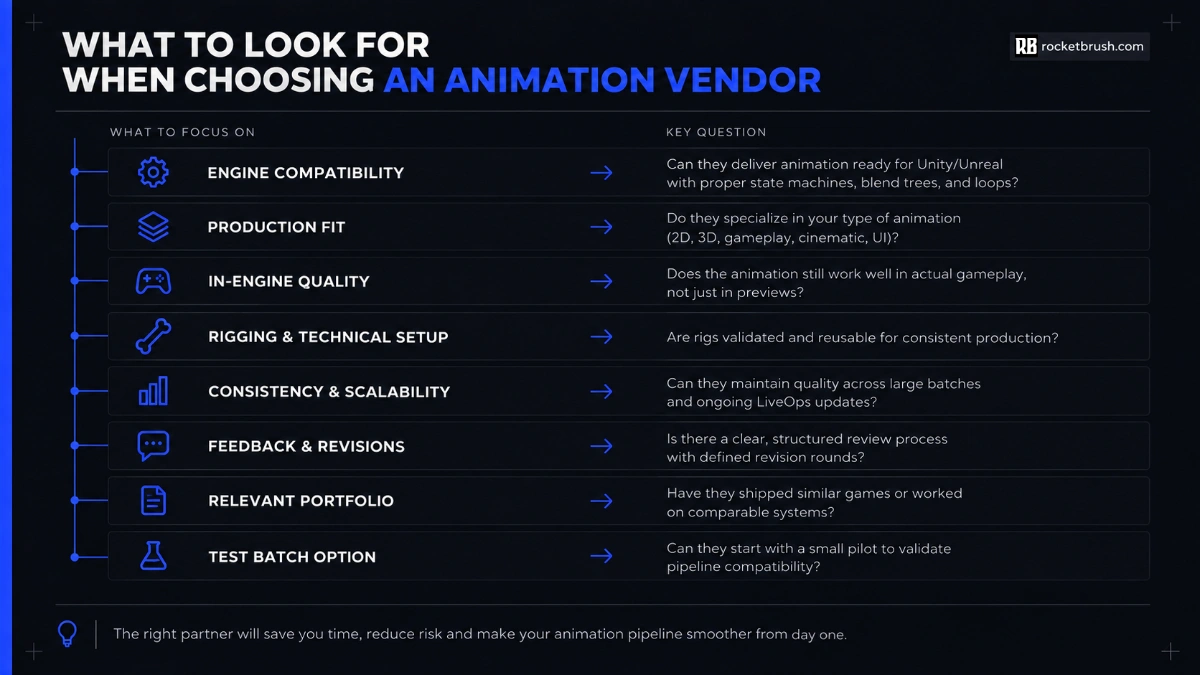
Choosing the right animation studio starts with production fit, not portfolio quality alone. The checklist below highlights the technical and workflow factors that determine whether a vendor can integrate into your pipeline and maintain consistent output as production scales:
Key criteria for evaluating a 2D or 3D animation vendor
Choosing a 2D animation services vendor must depend on your project’s needs and features. What works for a single-player indie game won’t necessarily suit an online multiplayer. That's why before approaching a vendor you need to define an animation format, target engine, production volume and expected collaboration model. Here are a few points to consider:
Animation type vs pipeline reality Frame-by-frame 2D, rig-based 2D (Spine), and 3D animation all behave differently in-engine. Studios that specialize in your exact format will reduce integration risk significantly.
Engine and tool compatibility Check whether the studio delivers animation already structured for Unity/Unreal (state machines, loops, blend trees), not just raw files.
Batch consistency and LiveOps readiness If you need regular live updates, prioritize teams that can maintain consistent animation quality across dozens or hundreds of assets, not just a single polished demo.
Feedback loop and revision structure Strong vendors reduce revision chaos by validating rigs, constraints, and motion early — not after full animation production.
If you want to know how to outsource game art of animation more efficiently, take a look at our guide.
[[ref:game-art-outsourcing-complete-guide]]
FAQ: Choosing the Right Animation Vendor
How do I choose the right animation outsourcing studio for my game?
Focus on how well the studio fits your production pipeline, not just visual quality. Teams that validate rigs, define animation rules early, and deliver engine-ready assets reduce integration risks and revision cycles.
What should I prepare before outsourcing game animation?
You should have a clear understanding of your animation type (2D frame-by-frame, rig-based, or 3D), target engine (Unity/Unreal), and gameplay requirements. Defining constraints like state machines, loops, and performance budgets early helps avoid rework later.
Can outsourced animation scale for LiveOps or ongoing content updates?
Yes, but only if the studio is set up for repeatable production. Consistency across batches, clear animation rules, and stable pipelines are essential for scaling animation across frequent updates.
What is the typical minimum order quantity (MOQ) for game animation outsourcing?
Most studios don’t define a strict MOQ in units, but in practice, projects below 1–2 weeks of work are often deprioritized or priced higher per asset. Many vendors recommend starting with a test batch (3–10 animations) to validate pipeline compatibility before scaling.
How do animation studios handle Non-Disclosure Agreements (NDAs) and IP security?
NDAs are standard and usually signed before any production begins. Larger studios also implement role-based access, secure file sharing, and internal compartmentalization to ensure that only relevant team members access sensitive assets.
Are animation revision rounds usually included in the initial project quote?
Yes, most studios include a fixed number of revision rounds tied to defined milestones (e.g., blocking → polish). Additional revisions outside scope are typically billed separately, which is why early alignment on style and constraints is critical.
How important is engine compatibility when outsourcing animation?
It’s critical. Animation that looks good in isolation can fail in-game if it’s not structured for engine use. Studios that deliver animation already integrated with engine systems (like blend trees or state machines) save significant production time.
Can an outsourcing studio animate directly in our proprietary game engine?
Some studios can, but most prefer to work in standard tools (Maya, Blender, Spine) and then export to engine-ready formats. Direct in-engine work is possible but usually requires access setup, documentation, and pipeline adaptation on both sides.
Key Takeaway: A Game Animation Partner for Scalable Production Pipelines
Across studios, the main differentiator is not raw artistic quality, but how well animation integrates into engine constraints, gameplay systems, and long-term production needs.
For gameplay-ready and live-service animation: Studios such as RocketBrush and Nuare emphasize in-engine readiness, rig validation and repeatable production rules, making them strong fits for gameplay-heavy and systems-driven projects.
For cinematic and stylized storytelling: Wow-How and Dream Farm focus more on trailers, marketing content and stylized animation. Their work may require additional technical integration before it can be used in gameplay.
For large-scale AAA production: Room 8 and Kevuru offer substantial capacity and mature pipelines designed for consistent output. However, their more structured processes may be less flexible for small or rapidly changing scopes.
Ultimately, successful outsourcing depends on whether a studio can maintain consistency across batches, support engine-specific animation structures (state machines, blend trees, loops), and scale without breaking gameplay readability. Teams that define constraints early and validate rigs before production tend to reduce rework, integration issues, and long-term cost.
If you are looking for a studio to handle 2D or 3D animation for your game project, reach out to our team at RocketBrush.
Create with us
Contact us, and we'll craft the perfect game art for your project