menu
Close

GET IN TOUCH
Check what other game developers say about working with RocketBrush Studio:

BLOG
Sculpting works like a digital version of working with clay: instead of carefully building geometry point by point, you shape a model by pushing and pulling its surface to form creatures, faces, or other complex objects. Artists use specialized 3D sculpting software to manipulate forms intuitively, Tools like ZBrush and Blender enable a more intuitive, form-driven workflow, where the focus is on volume, silhouette, and fine detail rather than technical topology.
In this article, we break down how the 3D sculpting software is used in production to create game assets, and where each approach fits in a game art workflow.
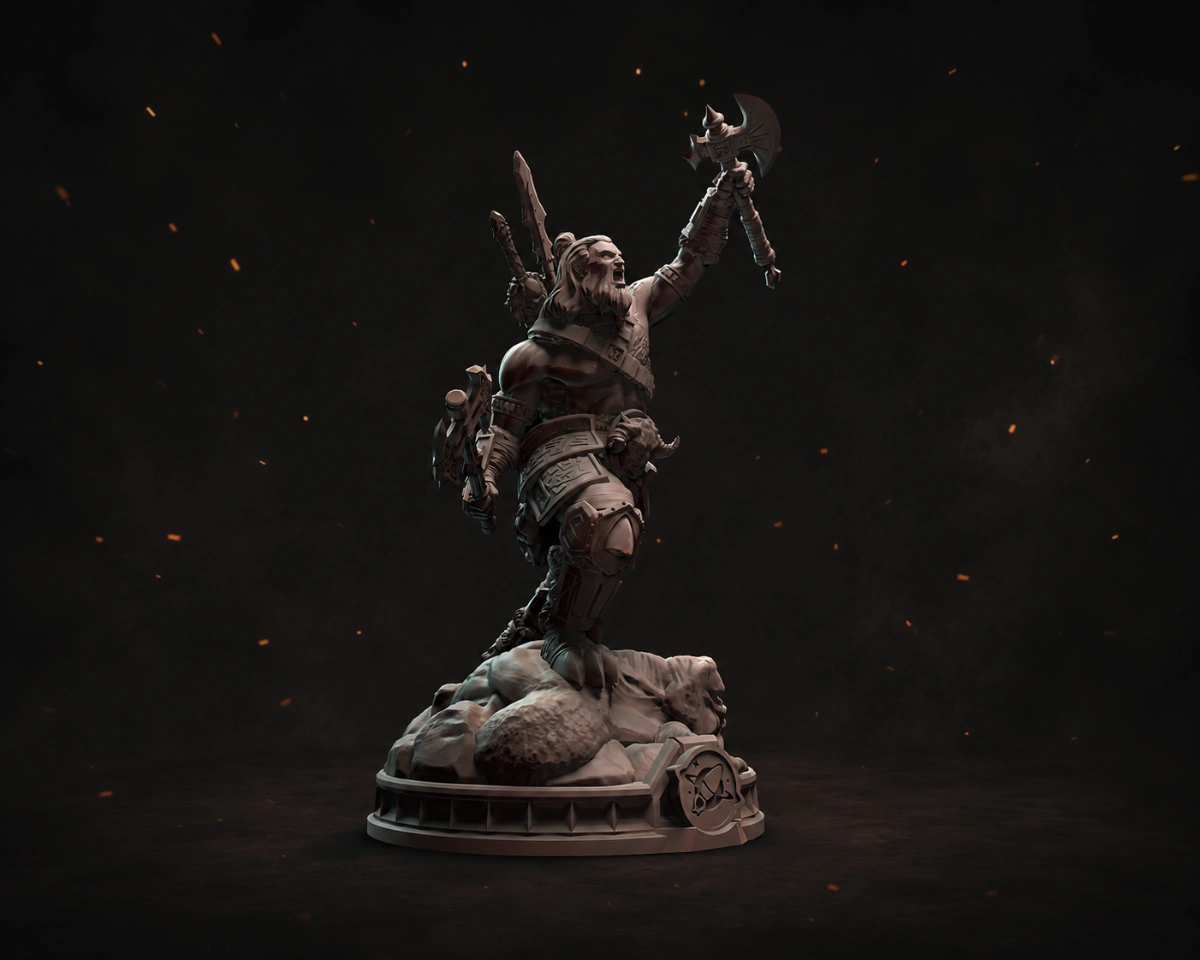
3D sculpting is a way of shaping a digital model by treating it like a lump of clay rather than a technical construction. Instead of placing individual vertices, edges, and faces one at a time, an artist works directly with the surface layering detail on top of a base form.
A 3D sculptor doesn't think in terms of clean edge loops first, they think in terms of volume, silhouette, and surface: defining muscles, folding cloths, shaping rocks.
That's why sculpting tends to feel closer to fine art than to technical drafting. It rewards an eye for anatomy, form, and gesture more than precision measurements, even though the final result still needs to work as a functional 3D asset.
This is also why digital sculpting has become a natural fit for game art specifically. Games increasingly rely on organic, expressive shapes — faces, creatures, worn environments — and those are exactly the kinds of forms that are hardest to build convincingly through traditional box-modeling.
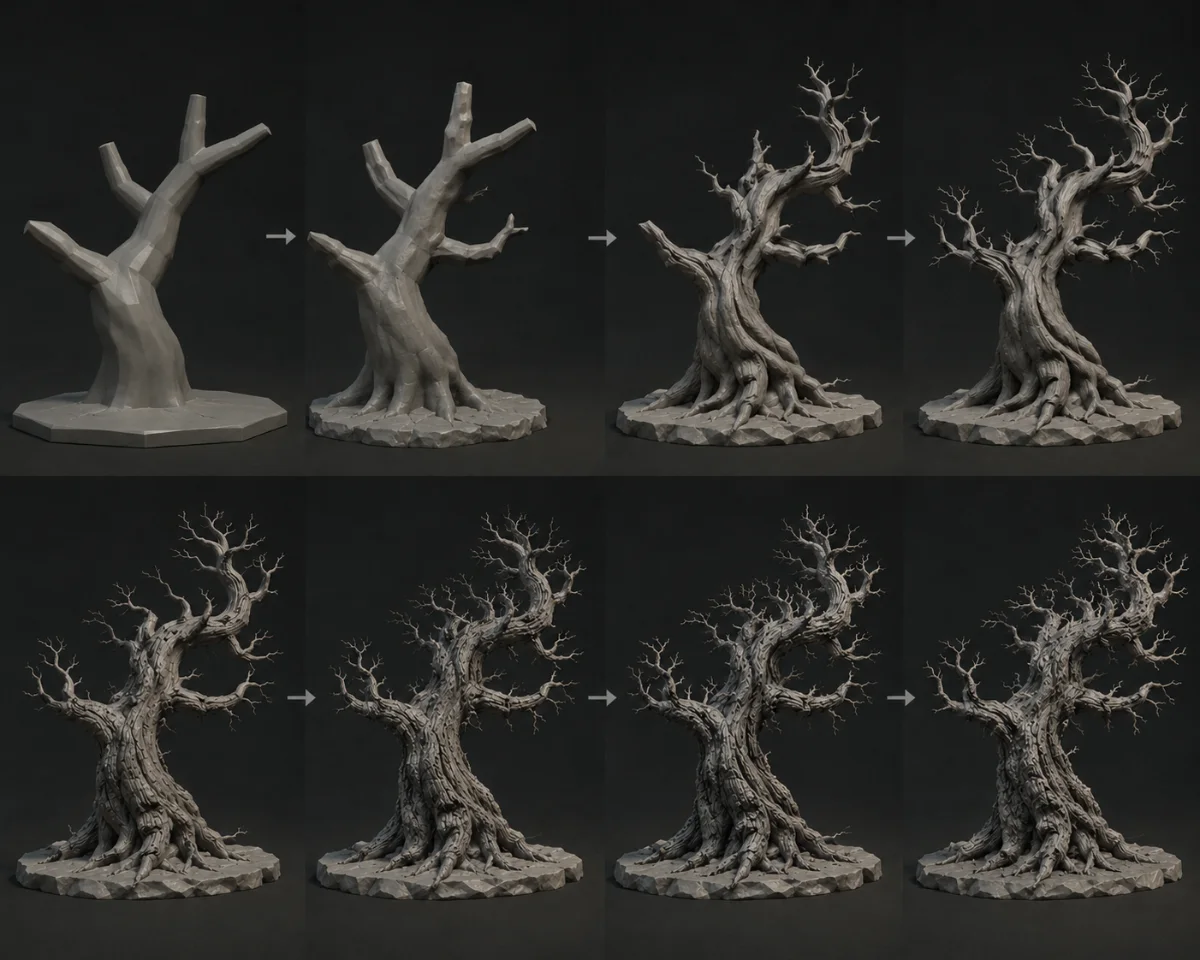
The main difference between digital sculpting and traditional modeling lies in a goal. Sculpting is about reshaping and refining an existing mesh until it reads as an organic, believable form. Modeling is about assembling geometry piece by piece and building clean, optimized geometry that a game engine can run.
Check out our article to learn more about how modeling works in character design.
[[ref:3d-character-modeling-create-3d-characters]]
It helps to think of sculpting and modeling as two different mindsets or stages in the same pipeline rather than competing methods.
The key point in this 3D modeling vs sculpting comparison is that neither approach replaces the other. A sculpted high-poly character usually still needs clean, game-ready topology before it can run in an engine, which is where modeling steps back in. The two are complementary stages of the same pipeline.
If you're planning a project that leans heavily on organic detail — characters, creatures, or richly textured environments — it's worth understanding not just what sculpting can do, but what it costs to bring into your pipeline. Our guide to 3D sculpting costs is a good next stop:
[[ref:sculpting-in-3d-costs-and-where-to-begin-today]]
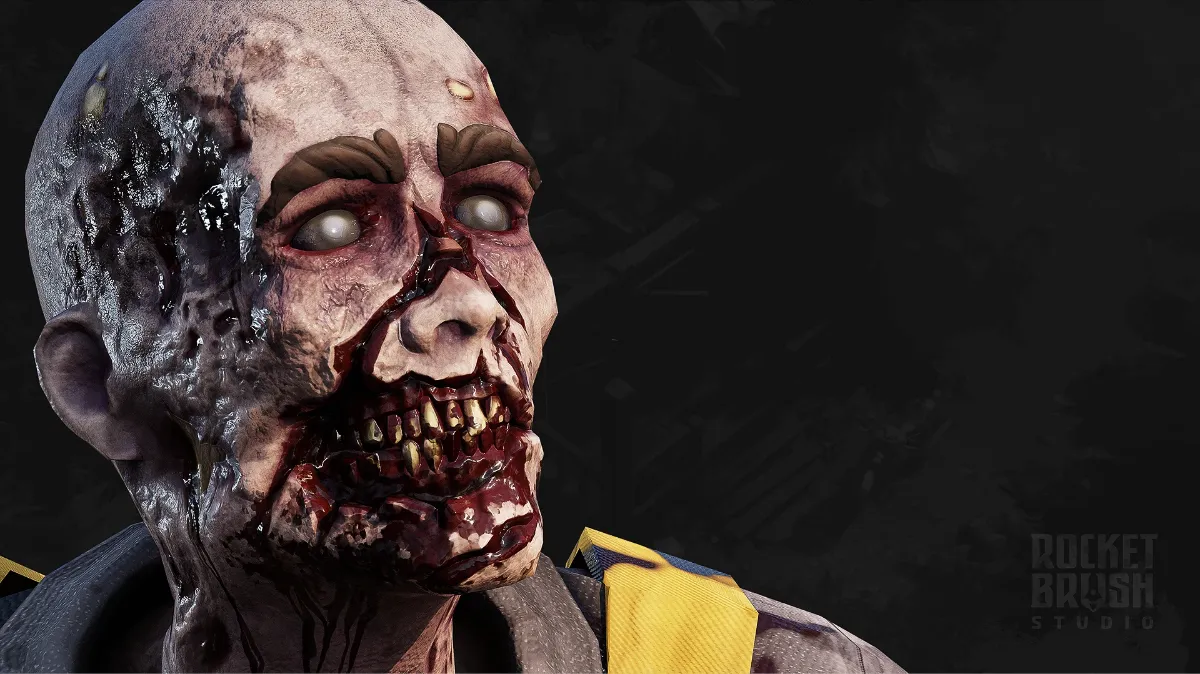
There's no shortage of 3D sculpting software on the market, but choosing the right type is all about how the sculpt fits into your production pipeline. In game development, sculpting rarely exists in isolation — it feeds into retopology, texturing, rigging, and engine integration. Some tools are optimized for high-density character work, while others prioritize flexibility across the full asset pipeline. The most widely used digital sculpting software reflects these different priorities.
Tools for sculpting differ not only in sculpting features, but also in how they fit into a game production pipeline. Some focus on high-detail sculpting, while others combine it with modeling, retopology, texturing, or animation tools. The table below compares the most common options by their strengths, limitations, and typical pipeline fit:
Other tools like Nomad Sculpt (mobile sculpting) exist for concepting and quick iteration, but they are typically used as complementary tools rather than core production solutions.
3ds Max and Maya are some of the most well-known 3D modeling tools. Check out our breakdown of their pros and cons when it comes to different production goals.
[[ref:3ds-max-vs-maya-what-to-choose]]
Below, we take a closer look at the main tools and where each one works best in practice.
Blender sculpting has evolved into a capable, all-in-one solution that covers most stages of asset creation. Its sculpt mode supports dynamic topology, multiresolution workflows, and a growing set of brushes suitable for both hard-surface and organic forms. For many teams, the main advantage is not just sculpting itself, but the ability to move directly into retopology, UVs, texturing, and even animation without leaving the software.
In production, Blender is often used for stylized assets, indie pipelines, and teams that need flexibility without adding extra tools. While it handles moderately dense meshes well, extremely high-resolution sculpting can still be less efficient compared to specialized tools. That tradeoff is usually acceptable when pipeline consolidation is more important than peak sculpting performance.
ZBrush remains the benchmark for high-end sculpting, particularly for characters and creatures. Its core strength lies in handling extremely dense geometry with minimal performance loss, allowing artists to push fine detail far beyond what most generalist tools can comfortably support. Features like subdivision workflows, custom brushes, and advanced detailing tools make it a standard in AAA pipelines.
In game production, ZBrush is typically used at the high-poly stage before assets are optimized for real-time use. It integrates well with other tools but is rarely used as a full pipeline solution on its own. Compared to more generalist software, its workflow can feel less unified, but for pure sculpting performance and detail control, it remains a primary choice.
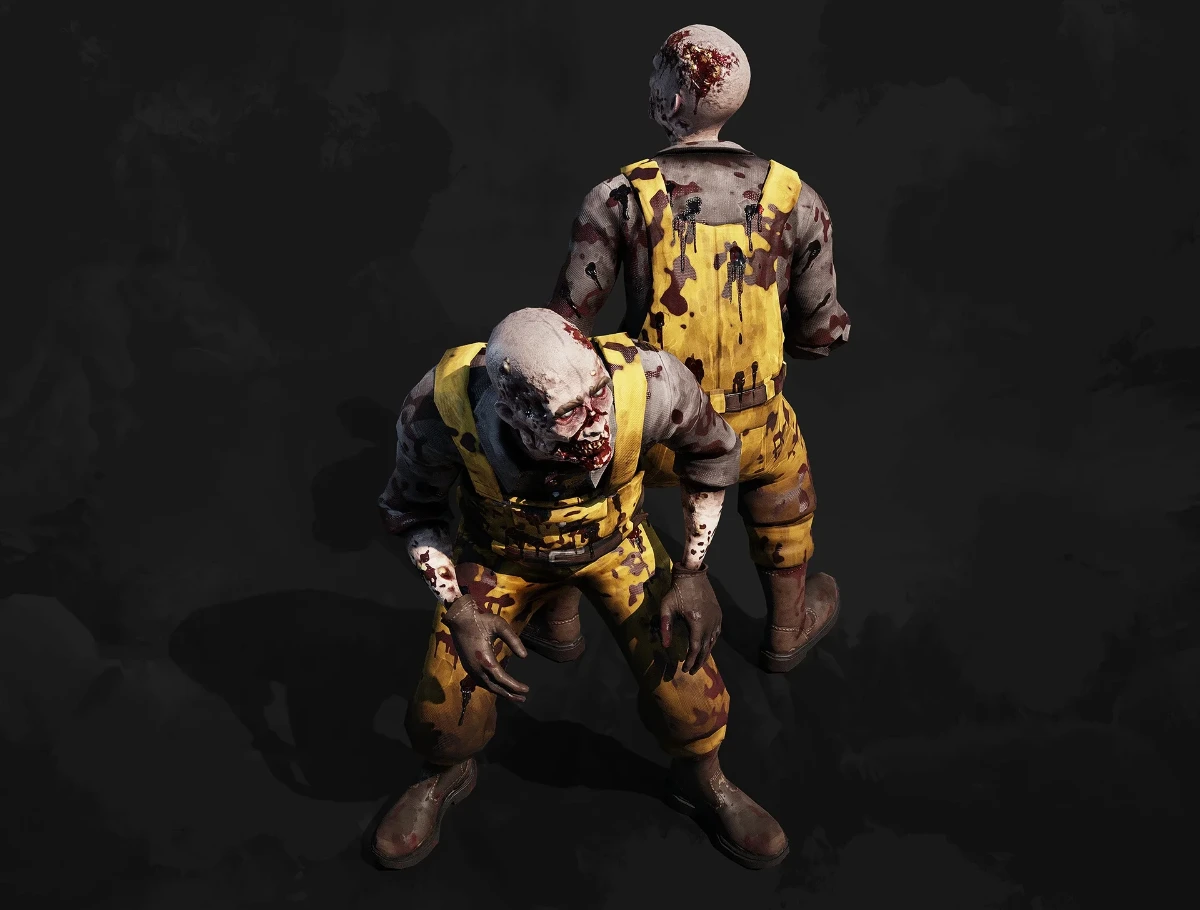
Sculpting is a necessary production step whenever the complexity of a form matters more than the precision of its geometry. Below are a few areas where it consistently shows up:
Across all of these cases, whenever a form is irregular, organic, or hard to predict in advance, sculpting gives an artist the freedom to discover the right shape by working directly with it, rather than planning every vertex ahead of time. It is, however, important to point out that clothing details and damaged surfaces are often created by using appropriate textures.
If you have a project in mind and are ready to start work on modeling, be it characters, props, or environments, our team at RocketBrush can provide support and art services on every step from concept art to engine-ready assets.
[[cta:Ready to sculpt your in-game world:Contact us with details about your project, and we'll select a production-ready team with the right skills to bring your project to life.]]
Most sculpting workflows follow a similar pattern, regardless of the software behind them.
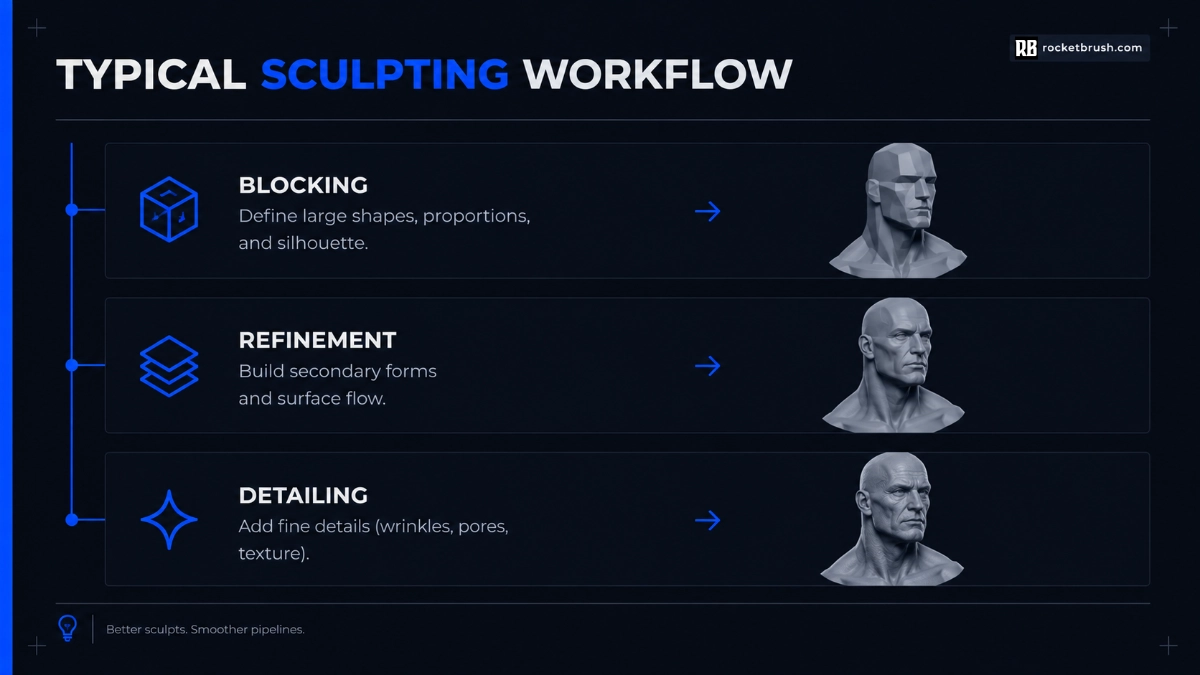
Underneath these stages, sculpting tools rely on one of two approaches: voxel-based workflows, which manage geometry dynamically as you add detail (useful for heavy reshaping without worrying about running out of resolution), and surface-based workflows, which sculpt directly on a fixed mesh and tend to offer more predictable performance for finer detail passes. Neither is strictly better — it depends on the stage of the sculpt and the artist's habits.
In day-to-day work, most artists move fluidly between the two: a rough 3D sculpt might start in voxel mode to establish big, flexible forms, then shift to a surface-based workflow once the shape is locked in and it's time to add permanent detail.
In practice, most game art doesn't call for a strict either/or decision — it's about knowing which approach to start with, and when to bring in the other.
Sculpting first tends to make sense for anything organic: characters, creatures, and clothing usually start life as a sculpt, where an artist can focus purely on form and anatomy without worrying about topology.
Modeling first is generally the better starting point for hard-surface work — weapons, vehicles, architecture, and props with defined mechanical edges, where precision and clean geometry matter from the very beginning. If you're weighing different approaches to building assets more broadly, our breakdown of types of 3D modeling covers how studios choose the right workflow for different asset types.
[[ref:types-of-3d-modeling-choosing-the-right-workflow-for-games]]
Hybrid workflows are the norm on most production pipelines. A character might be sculpted at high resolution and then retopologized into clean, game-ready geometry. From there, the sculpted detail is typically baked down into normal maps and textures, letting a lightweight, real-time-friendly model carry the visual richness of the original sculpt. It's worth remembering that a beautifully detailed sculpt isn't the finished game asset — it's the raw material the rest of the pipeline is built from.
Hard-surface assets sometimes borrow from this hybrid approach, too: a weapon or vehicle might be modeled with precise geometry first, then have damage, dents, or wear sculpted on top as a final layer of detail. It's a good reminder that the choice isn't always between sculpting or modeling but about knowing which tool to reach for at each stage of an asset's life.
Do you have a story and the look of the world in mind? If you are looking for art for your next game, reach out to our team. We will make sure your vision is maintained and brought to life.