Finding the right 2D game art style for a project is a complex decision. Visuals must balance genre, aesthetic, and gameplay, and like a book judged by its cover, a game’s first impression depends on its looks. While for players this is an aesthetic issue, for gamedevs it becomes a strategic one.
A mismatch between visuals and strategy can cause problems:
A realistic style in a content-heavy mobile game can get expensive and delay production.
An overly simple style in a premium narrative game may weaken immersion and retention.
Pre-production is the best time to lock in the 2D game art style, considering core gameplay, platform, and production constraints, with consistency at scale as a key factor.
How a 2D Game Art Style Impacts Production
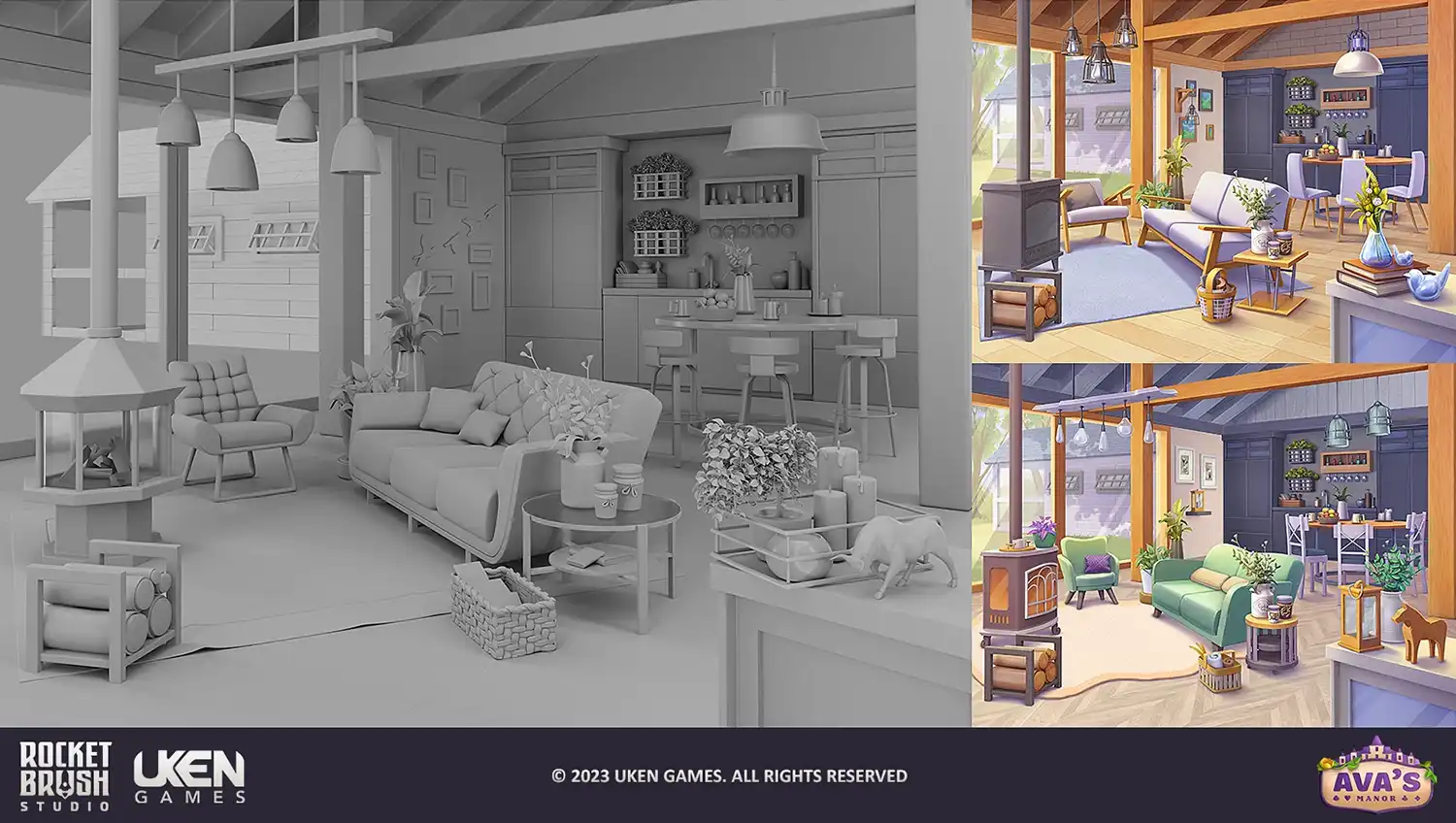
Semi-stylized living room environment designed for the game Ava’s Pet Cafe by RocketBrush Studio
Every visual style directly affects the production process: speed, cost, the ability to consistently update the game, all of these elements should be included in selecting the 2D art for a project.
Production Speed: Simpler casual art is usually faster to produce and easier to iterate on, while highly rendered or semi-realistic styles require more time for detailing, polishing, and consistency checks.
Cost: Realistic art is usually more expensive than casual art, due to its complexity. But, for casual art, cost would depend on detailing and production speed.
Scalability: Simpler styles are easier to produce consistently. Complex realistic and semi-realistic styles would require more time and can halt production.
Market Fit: Realistic styles are more popular for AAA PC and console titles, while semi-realistic and casual styles are more versatile.
This is where the distinction between visual style and technical execution becomes critical. Two games may look similar, but while one may rely on hand-painted assets, another uses modular vector systems or 3D-to-2D paint-overs, leading to different production costs and scalability.
Compared to 3D, where depth and lighting are handled by the engine, 2D art styles require artists to manually encode clarity, hierarchy, and interaction cues into every asset — this is why art style directly affects gameplay and UX.
Ultimately, what defines video game art styles aside from visuals is how well they balance aesthetic intent with production reality: some styles scale better because they are built on reusable assets, simplified forms, or flexible rendering rules, while more complex, illustration-heavy styles demand time, precision, and highly skilled artists, which makes them harder to sustain in content-heavy or live-service games.
Core Categories of 2D Game Art Styles
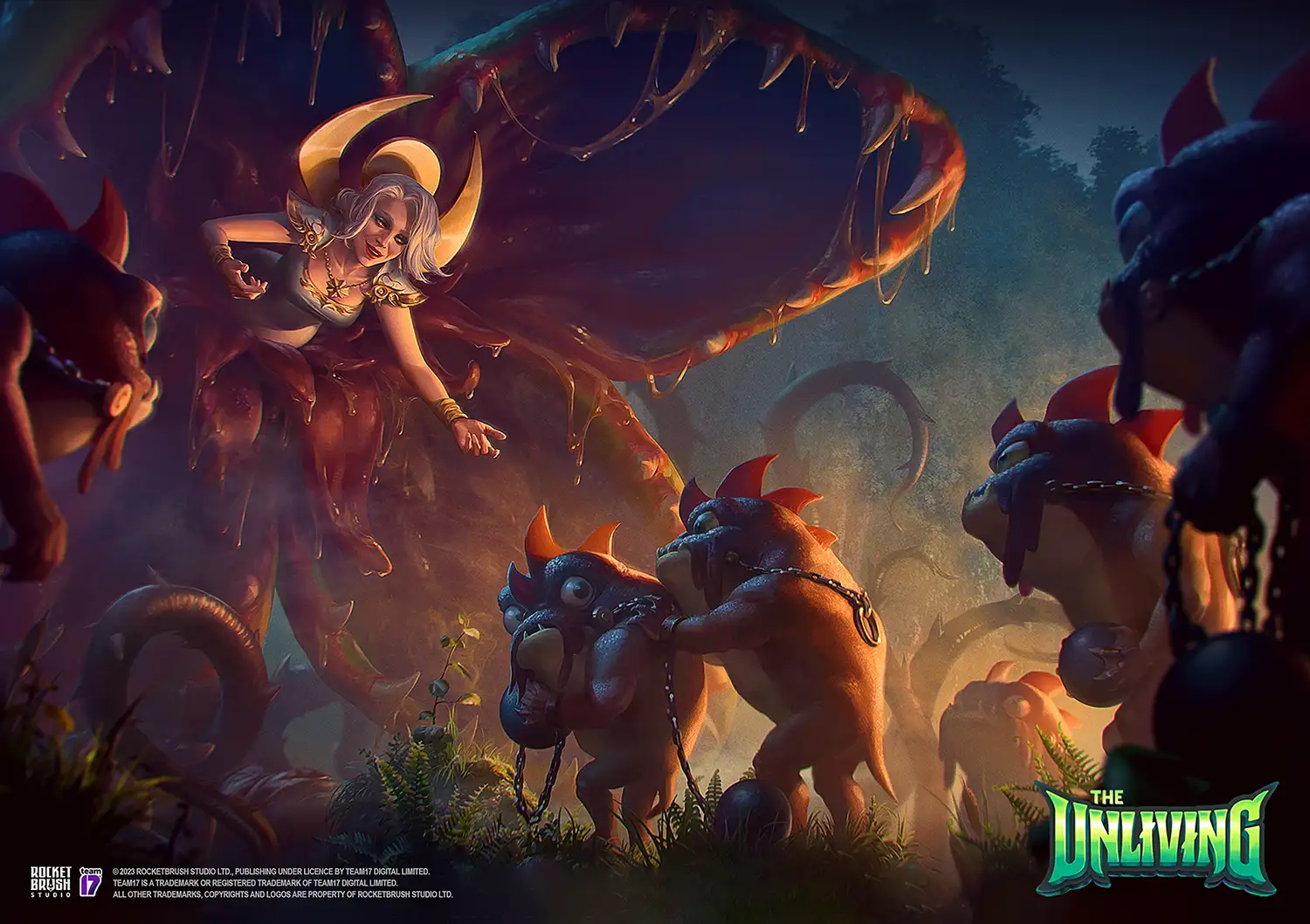
2D illustration in painterly semi-realistic style created by our art team for the role-playing action game The Unliving
When it comes to game art styles, 2D art can be split into three broader categories:
Realistic. This style aims for lifelike detail and grounded environments. Artists often rely on photo references, scans, or even 3D-assisted workflows, which can significantly increase production complexity.
Semi-Realistic. This style strikes a balance between believable proportions and simple forms. It allows for more artistic control and, as a result, it’s more flexible and easier to scale.
Casual. This style prioritizes stylization, shape language, color, and exaggeration over realism. It’s the most adaptable category for different pipelines and production needs.
Each of the three styles dictates cost requirements and fits specific game genres.
Art Style
Main Qualities
Cost
Popularity
Common Genres
Realistic
High detail, lifelike, grounded
High
Niche
Hidden object, sim, narrative, strategy
Semi-Realistic
Balanced detail, simplified realism
Medium
Widely used
RPGs, card, strategy, midcore
Casual
Simplified, exaggerated, strong visual identity
Low–Medium
Most popular
Casual, mobile, platformers
There are pros and cons to each, but there is a reason semi-realistic and stylized 2D game styles are overtaking the charts on Steam and other platforms. Stylization allows for better scalability and flexibility, but more importantly, it creates an opportunity for brand recognition.
While broader terms might be enough for a general idea of the direction, there is a more specific list of popular game art styles and techniques, some of which are listed below.
The Most Popular Visual Styles in 2D Games
2D game art styles solve different production constraints around budget, scalability, and visual clarity. Every style defines how the game performs across gameplay, animation, and development pipelines.
Pixel Art: Retro Aesthetics in Modern Game Design
Pixel art is easily recognized by images constructed on a fixed grid with deliberately visible pixels. Instead of being smoothed, the edges in this style remain rough.
There are two main approaches:
Retro pixel art mimics the technical limits of early hardware (very low resolution, minimal colors)
Modern pixel art keeps the pixel aesthetic but uses higher resolutions, richer palettes, and more complex animation.
The style doesn’t lose popularity over time because it offers a nostalgic appeal. It provides a clear, readable visual language that works well across platforms.
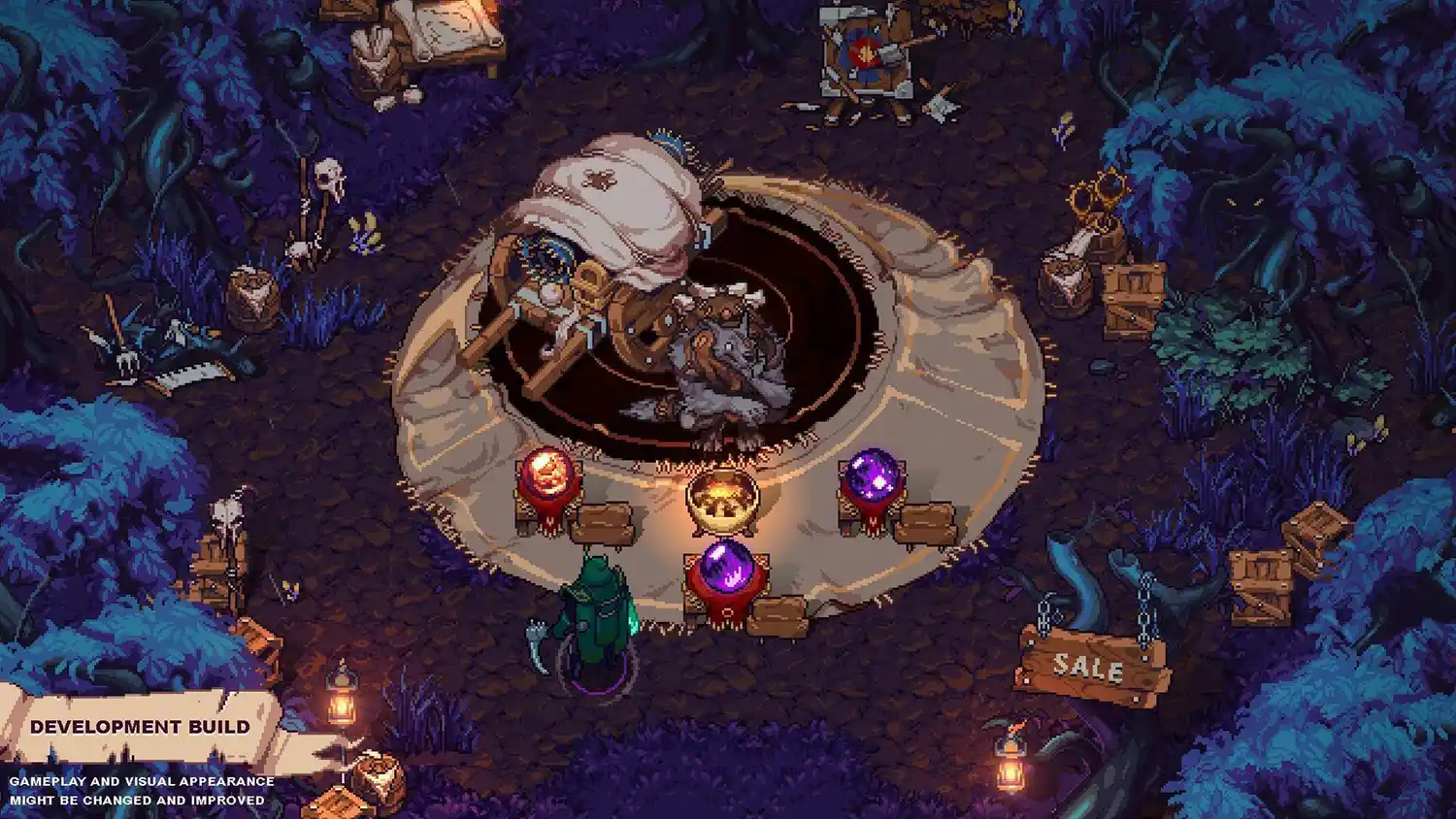
2D pixel art for The Unliving game, a project fully developed by our team at RocketBrush Studio.
Best For
Retro-inspired games
Stylized indie titles
Controlled-scope projects
Production Risks / Challenges
Highly dependent on execution quality
Requires precision and experienced artists
Risk of jagged edges, poor readability, and inconsistent asset quality
Scaling is difficult in animation-heavy games
Cartoon Art: Enhancing Expression in Character Design
The defining feature of cartoon art is a stylized visual approach. Objects are simplified into bold, exaggerated, and often colorful forms. Inspired by traditional animation, the goal is to bring that look into games.
Cartoon flat art is especially common in mobile games because it is lightweight, readable on small screens, and less demanding on hardware.
Cel-shading is one of the techniques that helps achieve a cartoon look. It is widely used in action-adventure games, RPGs, anime-inspired adaptations, and stylized shooters. It is built on 3D geometry and real-time lighting, but intentionally flattened to mimic 2D illustration.
Cartoon art fits fast development cycles, it’s scalable, and can develop into a unique brand style.
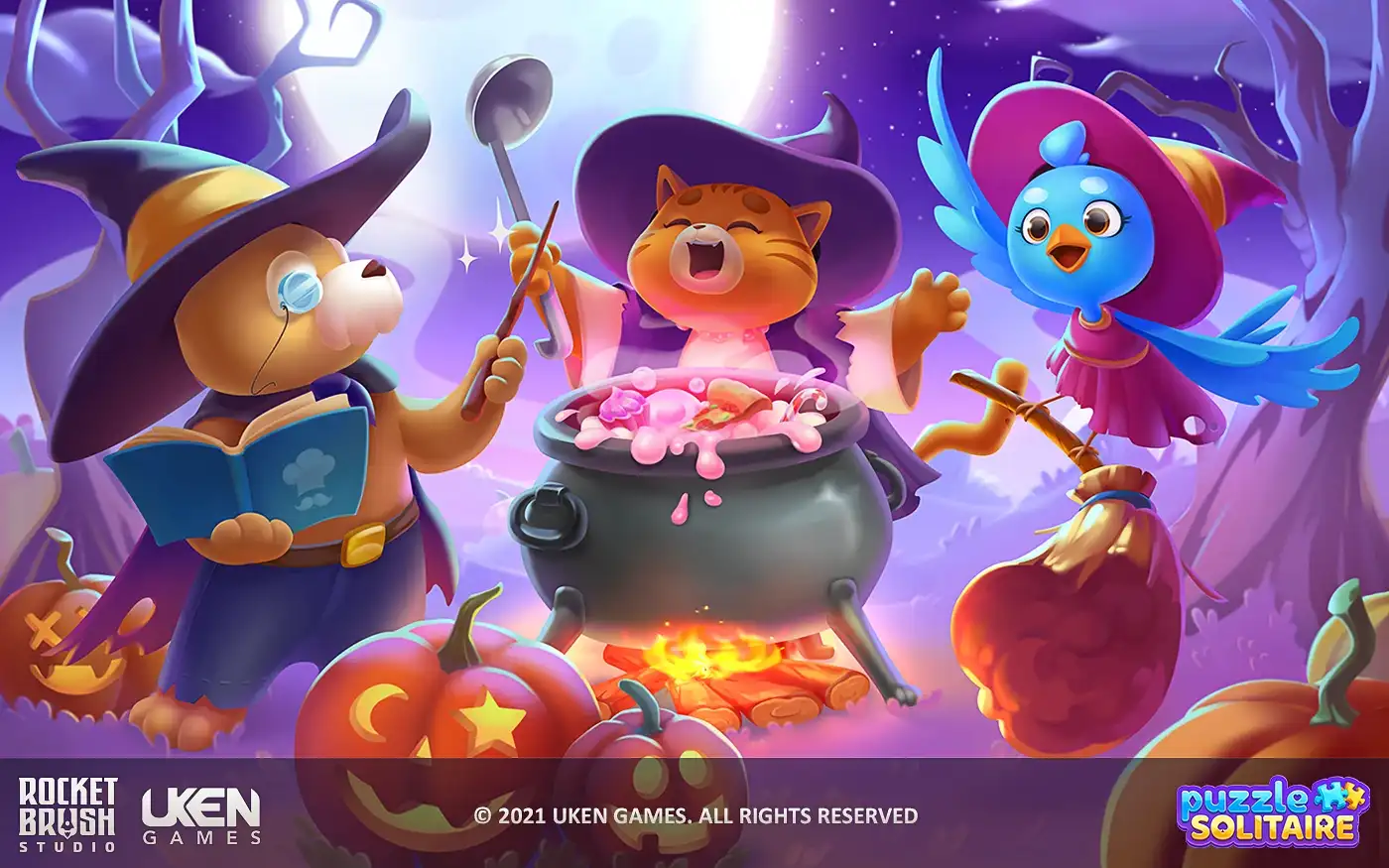
An example of cartoon 2D art with exaggerated animals, developed for the game Puzzle Solitaire, by the RocketBrush Studio design team.
Best For
Casual puzzle games
Platformers
Endless runners
Narrative-driven mobile titles
Production Risks / Challenges
Potential lack of depth for serious narrative projects
Risk of visual similarity to other projects
Complexity of maintaining line art quality
Painterly Art: Bringing Brushstroke Aesthetics into Games
One of the most popular 2D game styles includes painterly visuals, where characters and environments look like standalone artworks rather than functional assets. Illustration art resembles images from books or concept art. This “handmade” aesthetic is common in narrative RPGs, visual novels, indie adventures, and fantasy titles, where atmosphere and emotion are central.
The main challenge is consistency. When multiple artists work in a painterly style, variations in tone and detail can make it difficult to maintain a unified visual identity.
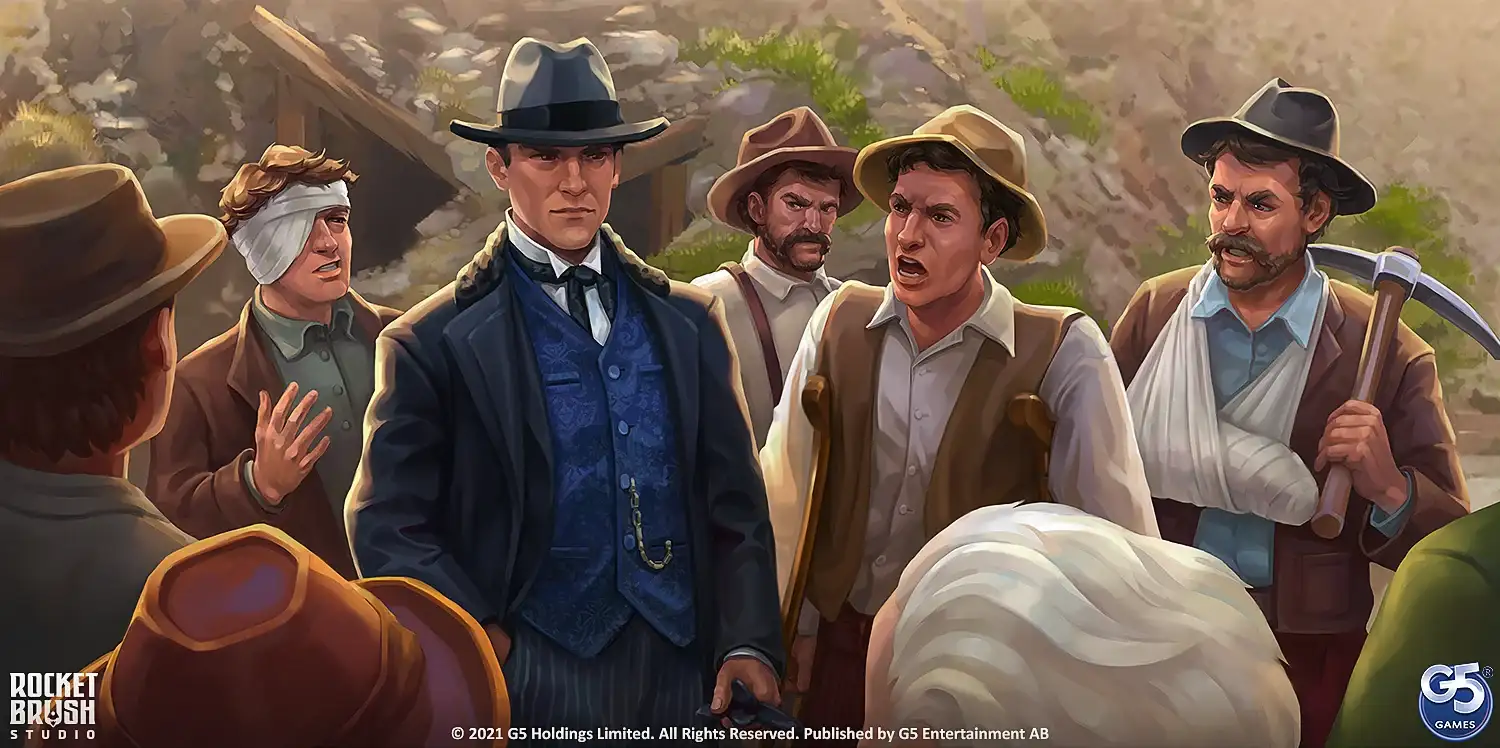
2D art in painterly style with an emphasis on brush strokes, designed by the RocketBrush Studio team for the game Jewels of the Wild West.
Best For
Narrative-driven games
Immersive worlds
AAA-style indie projects
Loading screens and backgrounds
Production Risks / Challenges
Higher complexity due to lighting, anatomy, composition
Slow production speed
Higher price compared to other styles
Low scalability and difficulty maintaining consistency across teams
Vector Art: Clear Lines and Bright Visuals
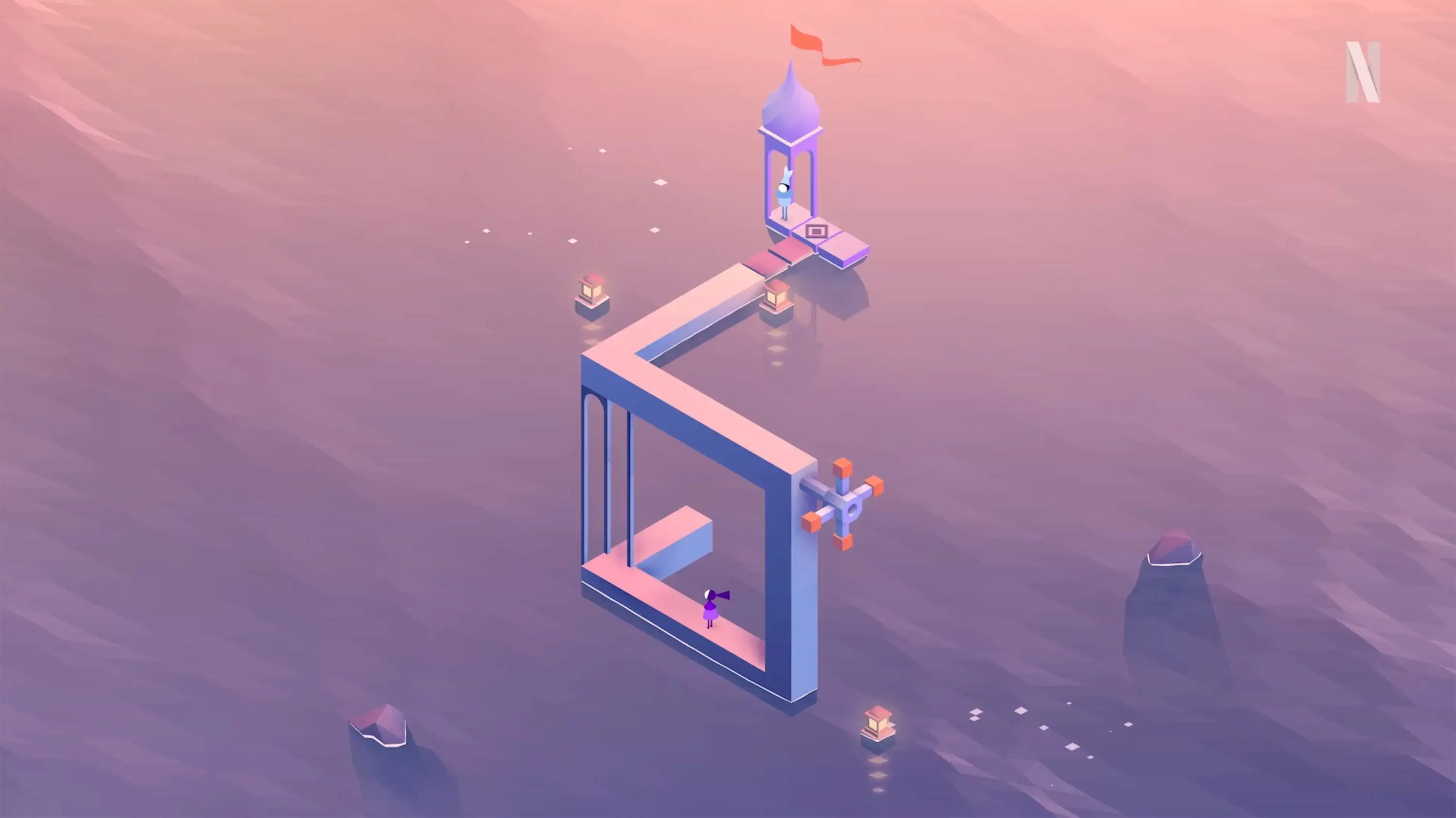
Vector art in the game Monument Valley, where gameplay requires zooming in and out without losing quality
Vector art is built using mathematical shapes. This simplifies scaling of the assets without loss of quality. Vector art is efficient for UI-heavy games and projects that require frequent resizing across platforms.
Its clean structure supports fast iteration and consistent output, so it is a practical choice for mobile games, casual titles, and interface-driven experiences. However, maintaining visual richness can be challenging, as overly simple vector assets may feel flat or repetitive without strong art direction.
Best For
Mobile and casual games
UI-heavy designs and interface systems
Cross-platform projects requiring scalability
Clean, minimal visual styles
Production Risks / Challenges
Risk of overly sterile appearance
Limited texture and detail complexity
Risk of repetitive or generic visual language
Matte Painting: Complex Technique for a Refined Look
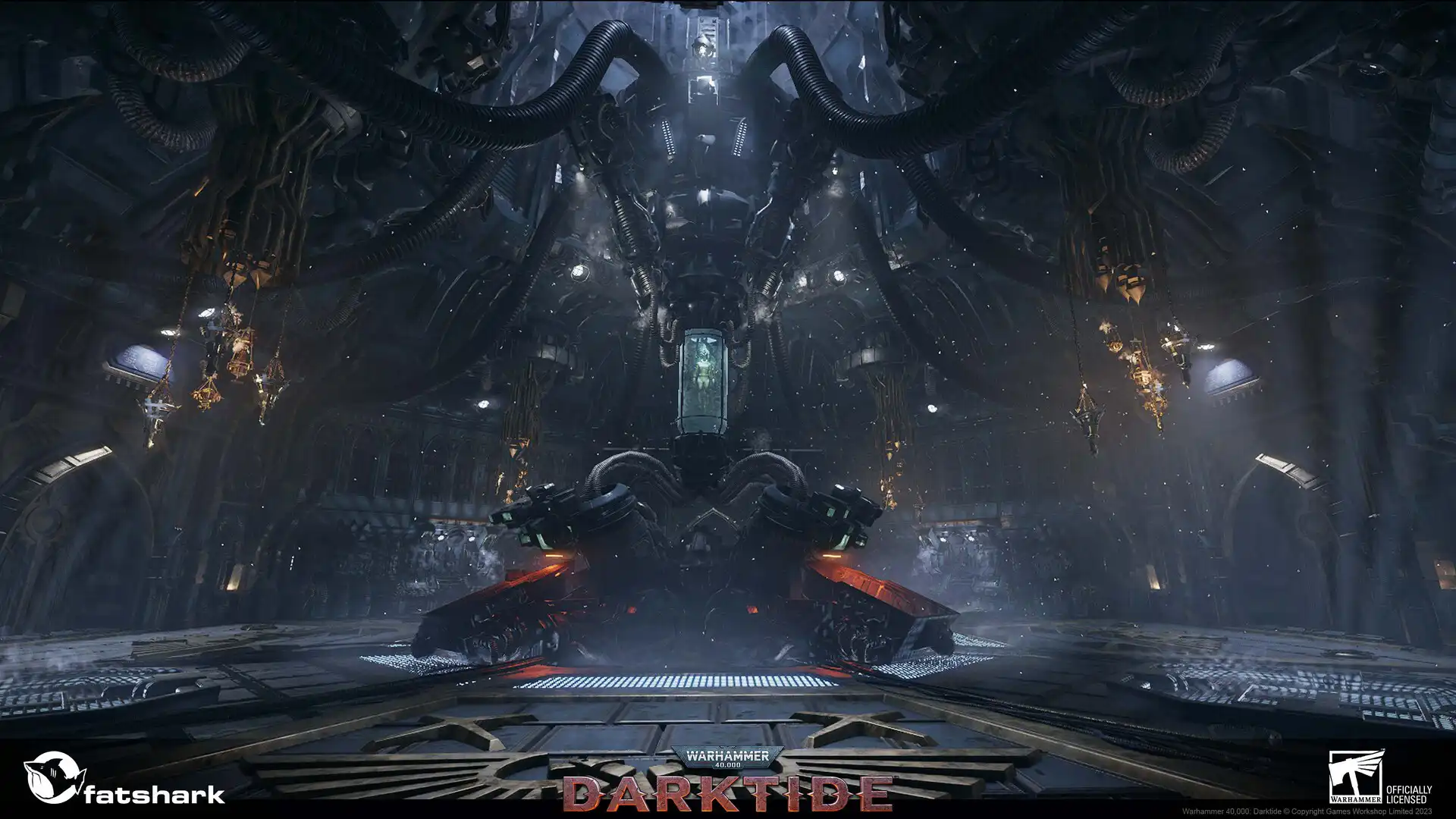
Detailed hyperrealistic environment for the game Darktide in the world of Warhammer 40,000.
Matte painting is a hybrid illustration technique for creating highly detailed cinematic environments. It combines hand painting, photo manipulation, and digital composition to produce backgrounds that feel large-scale and atmospheric.
In game design, it is commonly used for cutscenes, loading screens, background vistas, and story-driven environments where realism and depth are more important than interactivity.
Best For
Cinematic backgrounds and key visuals
Story-driven scenes and environments
Loading screens and promotional art
High-detail fantasy or realistic settings
Production Risks / Challenges
Very high production complexity
Difficulties animating or adapting for gameplay use
High cost and long production time per asset
Limited scalability for large content sets
How to Choose the Right 2D Game Art Style
Choosing the right 2D game art style comes down to balancing creative intent with practical constraints:
Start with genre and audience. Casual games favor readability and simplicity, midcore titles need clarity with depth, while narrative games benefit from more expressive, illustrative styles.
Platform matters next. Mobile demands lightweight, highly legible visuals, while PC and console allow for greater detail and complexity, though genre usually matters more than platform in setting the visual direction.
Content volume is critical. Live service games require scalable, repeatable styles, whereas premium titles can afford more bespoke assets.
Production needs matter too. The style should fit the budget timeline and team structure.
The most common mistakes made by studios, when it comes to selecting a style, are not considering the budget in advance and underestimating the complexity of the style’s implementation.
While graphics are rarely the sole reason for a project’s failure, they can be a contributing factor even for AAA titles. That’s why it’s best to decide early on the style that works for a specific game.
The best style is one your team can consistently deliver. Looking at references and competitors helps align with market expectations, but they should guide rather than limit. They are best followed if and when clarity and familiarity are needed, and ignored when differentiation is essential.
FAQ Section
What are the most common 2D game art styles?
The most common 2D game art styles fall into three main categories: realistic, semi-realistic, and stylized. Within these, popular approaches include pixel art, isometric, cartoon/vector, cel-shaded, and illustrative styles.
How do I choose the right 2D game art style for my game?
Choose based on genre, platform, content volume, and production constraints. The best style is one your team can deliver consistently while meeting player expectations and maintaining scalability.
Are casual or realistic 2D art styles better for indie games?
Casual styles are usually better for indie games because they are more flexible, scalable, and cost-efficient, while realistic styles require more time, budget, and specialized skills.
Is pixel art still relevant in modern video game art styles?
Yes, pixel art remains highly relevant due to its nostalgic appeal, readability, and cross-platform compatibility, though high-quality execution can be time-consuming and costly.
Which 2D game styles are the most cost-effective?
Casual styles, such as vector and cartoon, are generally the most cost-effective because they allow for faster production, reusable assets, and easier scaling.
What is the difference between casual and semi-realistic art?
Casual art simplifies and exaggerates shapes for clarity and identity, while semi-realistic art keeps believable proportions and materials but reduces complexity for better flexibility.
Can one game use multiple game art styles?
Yes, but it requires strong art direction. Mixing styles without consistency can lead to visual confusion and lack of cohesion.
How does art style affect game performance?
Art style affects performance through asset complexity and optimization. Simpler styles (like vector) are lighter on hardware, while detailed or layered styles can increase memory and rendering demands.
Key Takeaways:
Choosing a 2D game art style is a strategic decision that affects production speed, cost, scalability, and player experience.
Casual and semi-realistic styles dominate because they balance visual appeal with production efficiency, while realism offers immersion at a higher cost.
Visual appeal isn’t a sign of the most effective style. Preference should be given to a style that’s designed to scale, matches the game’s genre, and fits the team’s capabilities.
If you are selecting an art style for your next project, contact RocketBrush Studio to help assess visual approaches, develop the assets, and estimate the scope of work.
Create with us
Contact us, and we'll craft the perfect game art for your project