menu
Close

GET IN TOUCH
Check what other game developers say about working with RocketBrush Studio:

BLOG
A common rule in visual art suggests that around 70% of a design’s impact comes from its silhouette, with only 30% coming from details, which makes shape language a fundamental part of effective character design in games.
More than that, shape is a practical tool for making characters readable, especially in real-time gameplay. It directly affects how quickly players understand what they are looking at, how they react, and how they navigate the game space.
From a production standpoint, it is a consistency system. It helps ensure that multiple artists, whether internal or external, produce characters that feel like they belong to the same world. In this article, we explore the clearly defined shape rules we rely on as a game art studio.
Shape language in character design is about using basic forms (circles, squares, and triangles) to communicate personality, function, and visual intent in character design.
It works because each shape carries inherent associations: rounded shapes are considered more friendly or safe. Square forms convey a sense of stability and heaviness, while triangular shapes suggest danger or aggression. These associations are used deliberately to guide player perception before any details are added.
In production, we treat shape language as a foundation layer. Before materials, textures, or fine details are introduced, the character must already communicate its role through its primary forms.
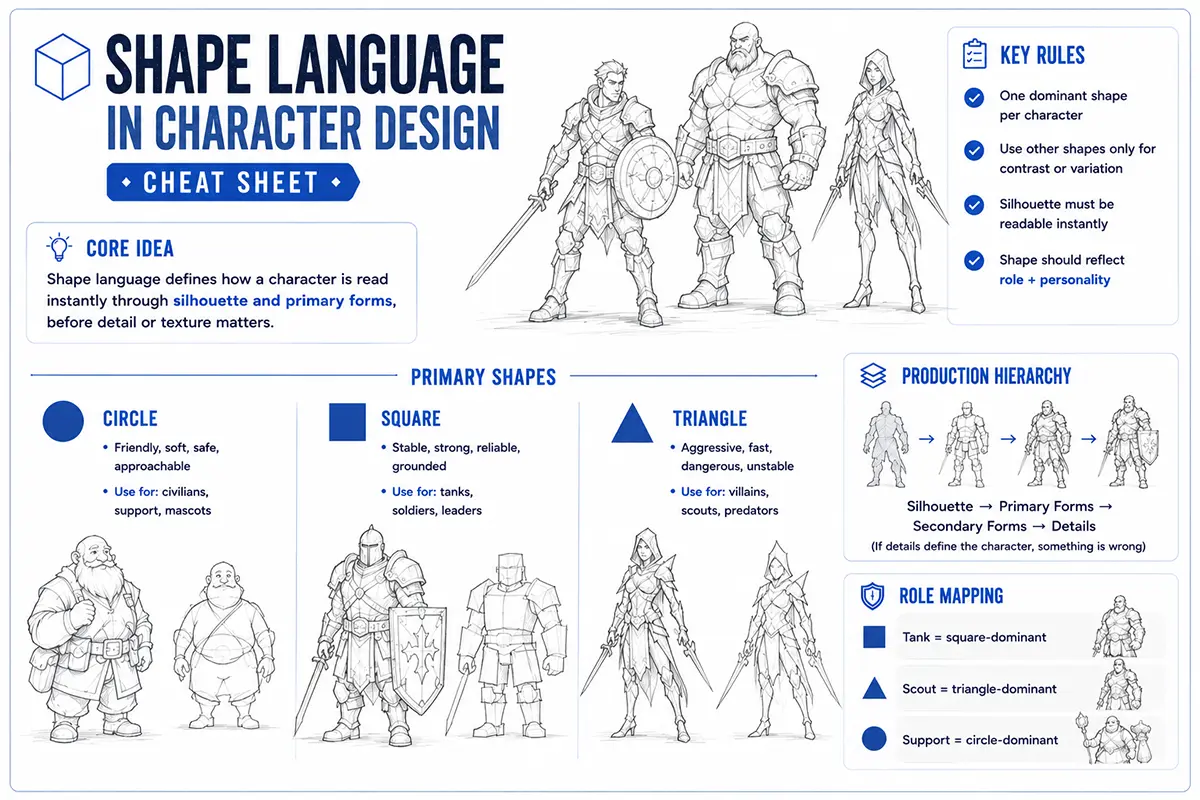
Readability is where shape language proves its value. Players rarely have the time to analyze detail, so they rely on silhouettes, motion, and quick visual cues. This is why readability should be tested early, before the team moves into detail, texturing, or animation.
A strong silhouette allows a character to be recognized instantly, even at a distance or in low lighting. This is especially important in fast-paced or camera-restricted games.
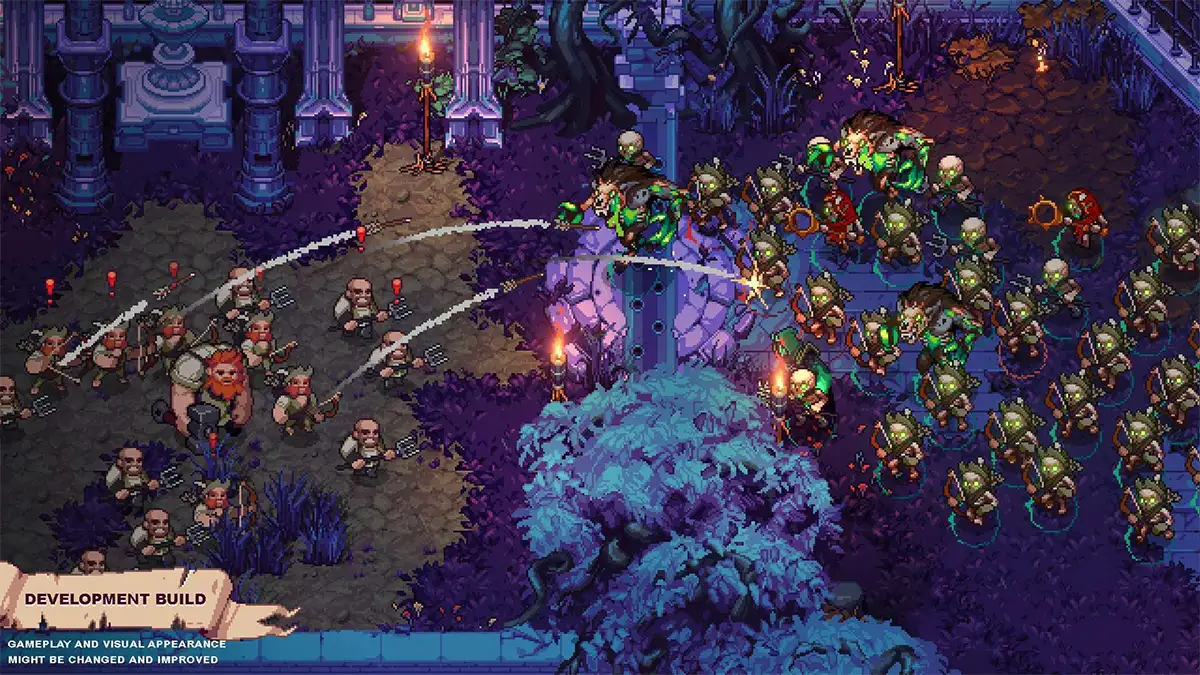
Character shape language also supports differentiation. Tanks, ranged units, support characters, and enemies should not only behave differently but look different.
For example, in a combat game, we might design:
Even in greybox or early blockout, these differences should already be visible. If they are not, adding detail later will not fix the problem.
Shape language is not a single decision. It is a system made up of multiple interconnected elements:
In production, we always evaluate these elements together because each one can affect how the others read. A good silhouette can be weakened by poor proportions, and strong forms can be lost under overdone textures or excessive visual detail. To avoid this, the team needs to keep the primary forms clear before adding details, textures, or color accents.
Color plays the same supporting role. It should enhance readability, not replace it. If a character only reads correctly because of color, the underlying shape system is likely too weak. When it comes to color theory, character design often presents structured guidelines for using color to reinforce role, readability, and visual hierarchy without relying on excessive detail.
Our rule during production is simple: the character should remain readable in grayscale, at a distance, and in motion. You can learn more about creating concept art and 3D character models from our article.
[[ref:3d-character-modeling-create-3d-characters]]
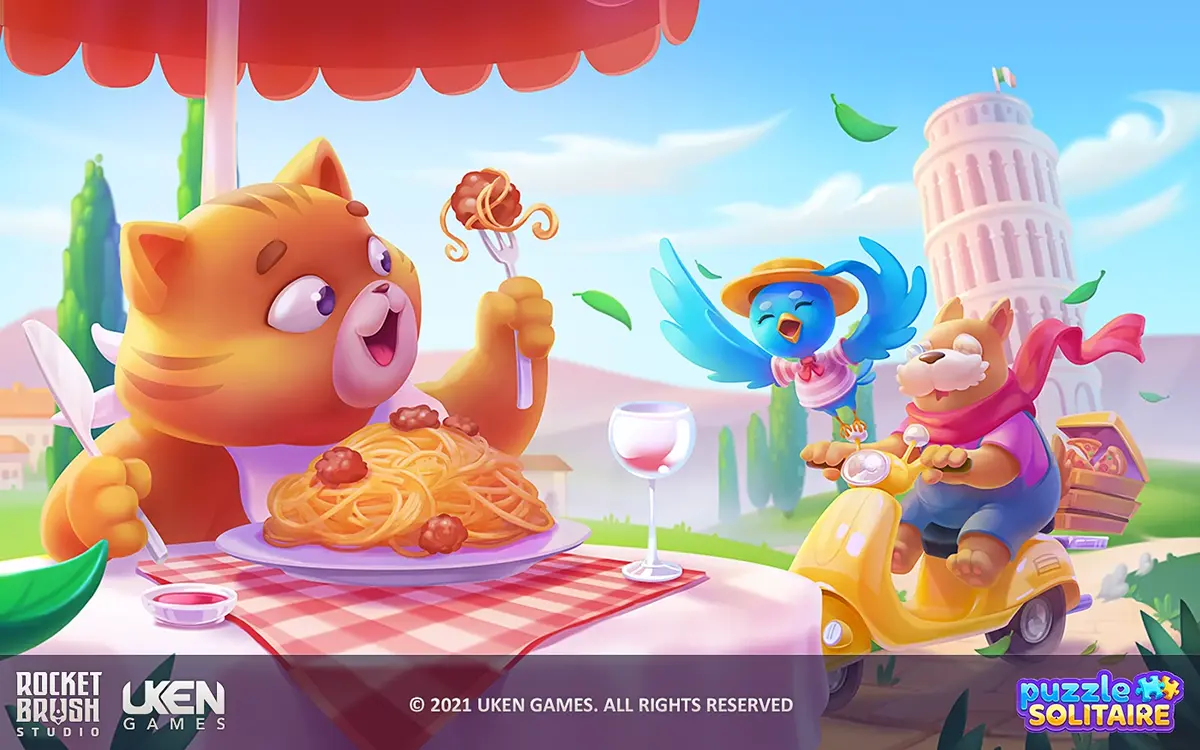
Shape language in character design is one of the fastest ways to communicate a character’s gameplay role. Players intuitively associate visual weight, sharpness, and structure with behavior. We use these character design tropes to define threat level, faction identity, and gameplay function.
For example:
These are not strict rules, but controlled conventions you should consider implementing. The production goal shouldn’t be achieving visual originality at all costs — the art team should be aiming at clarity with variation.
Consistency is also an essential part, especially in a full character roster. When developing a visual style for a game with several factions, each faction has to have defining features: if one uses angular shapes, that logic should apply across all its units. If heroes follow a different proportion system than enemies, that difference should be deliberate and maintained.
When several artists or an external team work on the same character roster, defined archetype rules become especially important early in production. They help avoid redesign later and make it easier to keep characters consistent across different artists, factions, and production stages. If your project needs a clear visual system for characters, RocketBrush Studio can help define shape rules and develop a cohesive roster.
[[cta:Need game art for your next project?:Tell us about your game, and we’ll assemble a production-ready art team with a pipeline tailored to your style, platforms and deadlines.]]
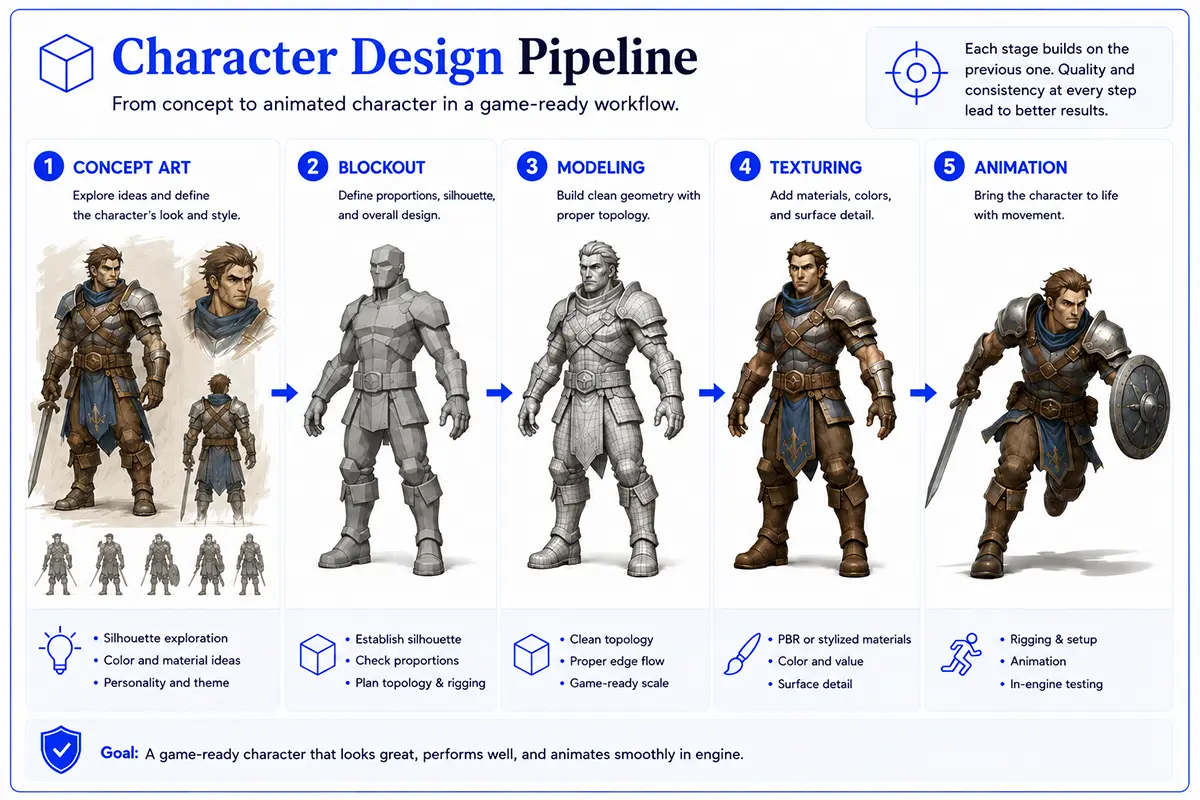
Shape language is usually defined early, but it has to stay consistent through every stage of character production. The original silhouette, proportions, and visual role should remain clear as the character moves from concept to blockout, modeling, texturing, and animation.
In practice, this means checking shape clarity at each stage:
Throughout all these stages, communication between the project team and the art team is continuous. As a game art outsourcing studio, we rely on feedback loops, visual benchmarks, and clear approval checkpoints to maintain consistency.
Character shape language is not just a visual technique. It is a production tool that helps teams create characters that are readable, consistent, and aligned with gameplay needs.
When applied correctly, shape rules reduce iteration, improve communication between teams, and ensure that characters remain clear across different stages of development. This has a direct impact on the final quality of the character roster, project timeline, and production cost.
For both internal teams and external game art vendors, a well-defined shape language system creates a shared visual framework. This is what allows large teams to produce cohesive character sets without losing clarity or control.
If your project needs support with character design, art direction, or a full character roster, contact RocketBrush Studio to discuss the production scope.