With the right partner, teams can scale up production in a matter of weeks, handle high-volume asset work more efficiently, and access specialized talent such as character artists, animators, and UI/UX designers that are difficult to maintain in-house.
It’s most effective during pre-production for rapid style exploration, throughout production for asset delivery at scale, and in live ops for ongoing content updates and seasonal releases. In this article, we explore every step of video game art outsourcing to help you navigate the process with confidence.
What Does Game Artwork Include?
Game art doesn’t begin and end with character designs and backgrounds. It includes every visual asset that shapes how the game looks, reads, and feels:
Characters from stylized 2D sprites to fully rigged 3D models
Production
Environment Art
Game worlds (terrain, interiors, and structures), and set dressing
Production
Props & Assets
Weapons, furniture, and objects, modular pieces, and reusable assets
Production and live ops
Animation
Movement for characters and objects, UI elements, and gameplay interactions
Production and integration
UI/UX Visuals
Menus, HUDs, interface screens, and icons
Production and implementation
Understanding where each asset type fits into production helps teams outsource the right work at the right stage and avoid bottlenecks later in the pipeline.
When Game Art Outsourcing Makes Sense
Outsourcing works best when it solves a clear production need: increasing asset volume, adding specialized skills, or supporting the team during tight production stages.
Most studios start outsourcing game art when:
Production volume exceeds internal capacity
Specialized skills are required temporarily
Deadlines demand parallel production streams
Teams need to reduce long-term hiring overhead
It is less effective when visual direction is unclear, core gameplay systems are still changing rapidly, or there is no internal art lead to maintain consistency.
How to Prepare for Video Game Art Outsourcing
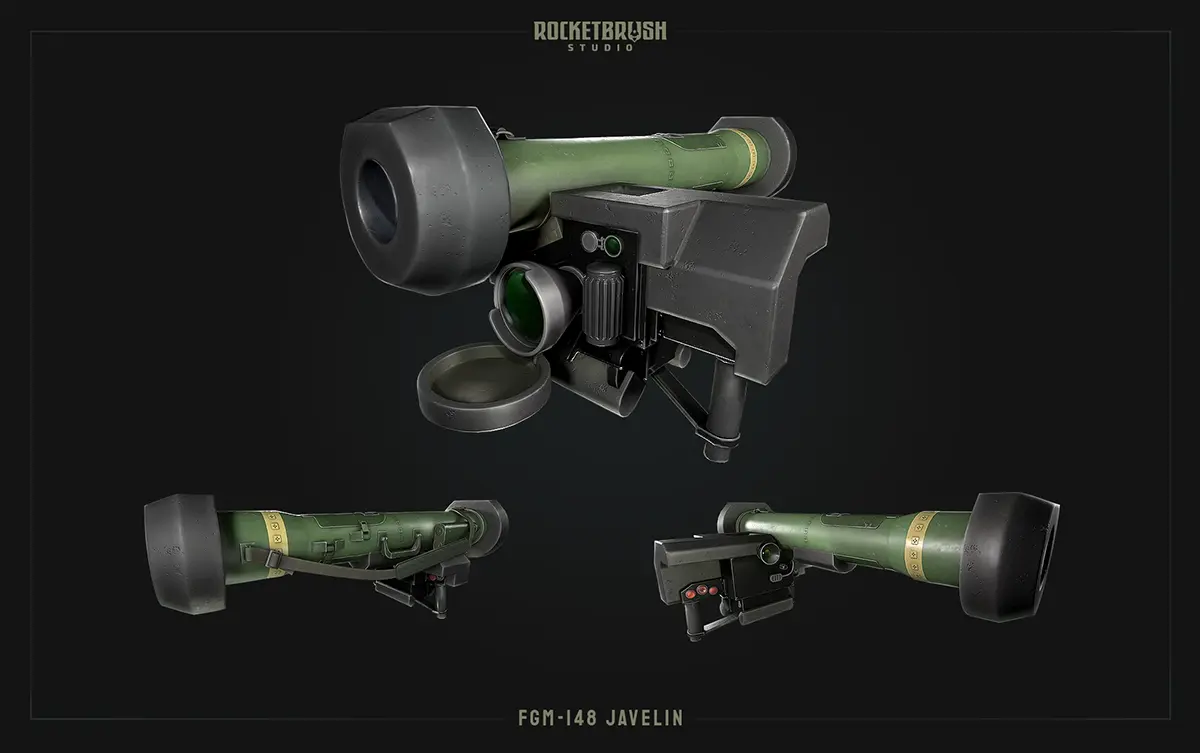
Stylized 3D weapons designed by the team of artists at RocketBrush Studio.
The single biggest predictor of outsourcing success is how well-defined your direction is before work begins. A vendor can help refine the style and suggest production solutions, but unclear direction usually means more iterations, longer timelines, and a higher budget. That is why the first step is to prepare the core inputs the team will need for estimation and production.
1. Define Style, Genre, and Platform Requirements
Define genre, style, and platform before production starts. These three inputs affect the asset list, level of detail, technical requirements, and how accurately the vendor can estimate the work:
Visual direction and project context. A painterly mobile RPG has completely different art requirements than a photorealistic PC shooter. Style, genre, camera view, and gameplay needs affect tool choices, asset priorities, poly budgets, texture resolutions, shader complexity, readability, and the level of polish expected from each asset..
Style consistency and level of polish. Stylized art often depends on consistent shape language, color rules, proportions, and rendering conventions, while realistic art usually requires more polish, material accuracy, and technical validation.
Platform constraints. Platform requirements matter from day one. A mobile project may require smaller texture sizes, tighter atlas usage, fewer draw calls, and stricter polycount limits, while PC and console projects often allow higher-resolution textures, more complex shaders, PBR materials, and heavier environment detail.
Defining these requirements early helps the vendor build assets for the right production context and reduces costly rework later.
2. Align Scope, Budget, and Timeline Expectations
The scope-quality-time triangle applies directly. Compressing timelines usually means a higher cost, a larger production team, or a narrower scope. Cutting the budget usually means longer timelines, fewer assets, or less room for iteration. Problems start when teams treat all three as fully flexible.
Build revision cycles into your budget from the start. A practical setup is to include 2 revision rounds in the base scope, with additional rounds billed at a defined rate. Revision cycles are not failures, they're part of the process, and underestimating them is what interrupts schedules.
3. Prepare Relevant References
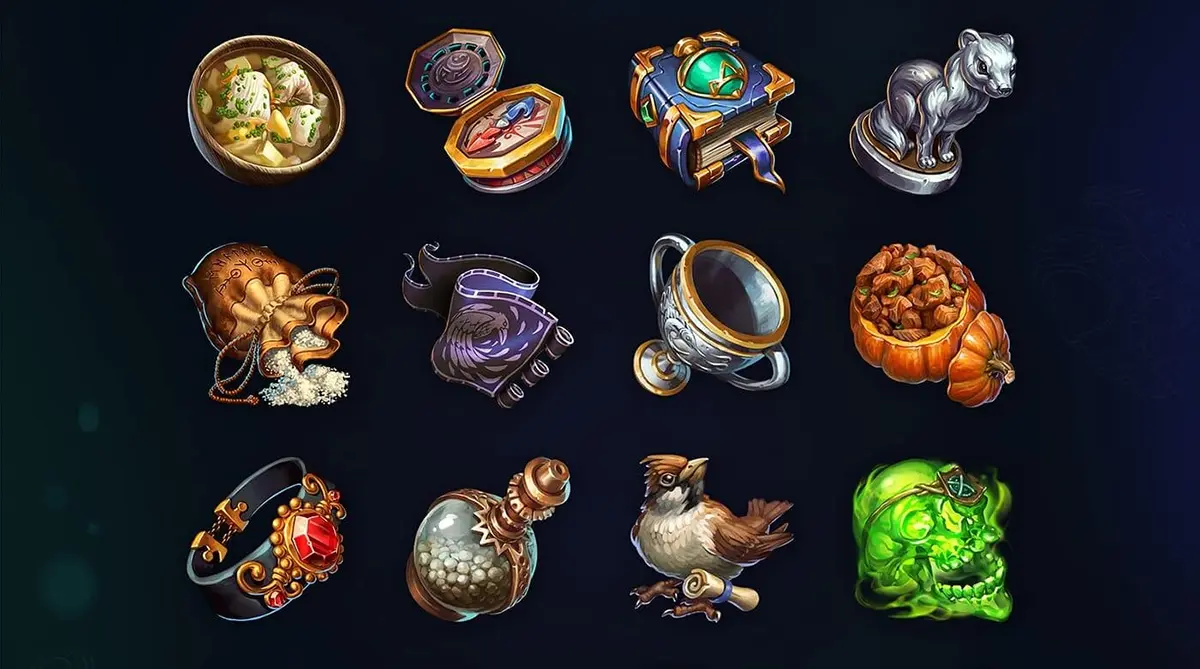
Stylized 2D icons designed by RocketBrush artists for the game Kingdoms at War.
Vague directions like “kind of dark, but not too dark” are difficult to turn into consistent production decisions. A curated reference board works better when it shows the target lighting range, material quality, color palette, and overall mood.
The best references are games, films, or artworks that closely match your target quality and style. Mixing references from very different visual directions can confuse priorities and create conflicting expectations.
For example, if a reference board for mobile game art outsourcing includes a photorealistic RPG, a cel-shaded platformer, and an anime JRPG without clear notes, the vendor has to guess which direction matters most. That usually leads to more revisions.
4. Create a Clear Outsourcing Brief
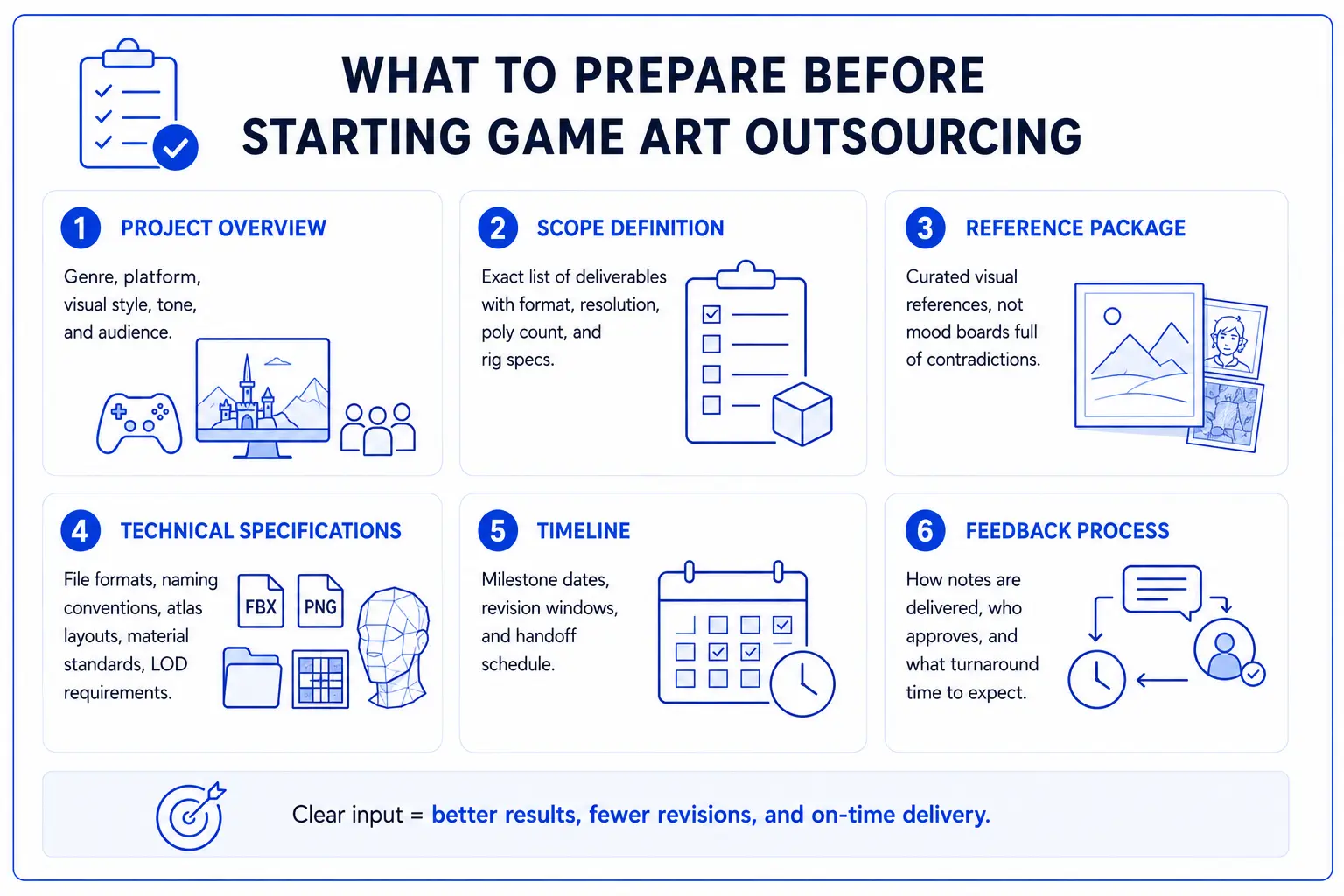
A strong outsourcing brief should help the vendor understand not only what needs to be created, but also how the assets will be reviewed, delivered, and integrated into the project. The checklist below covers the core inputs that make estimation and production more predictable.
The most important elements you need to prepare before outsourcing.
When it comes to collaboration, pipeline compatibility deserves particular attention — align the tools used before production starts.
For a closer look at how production requirements can be structured, see our article on preparing a 2D game art brief, from references and asset scope to technical details and review expectations:
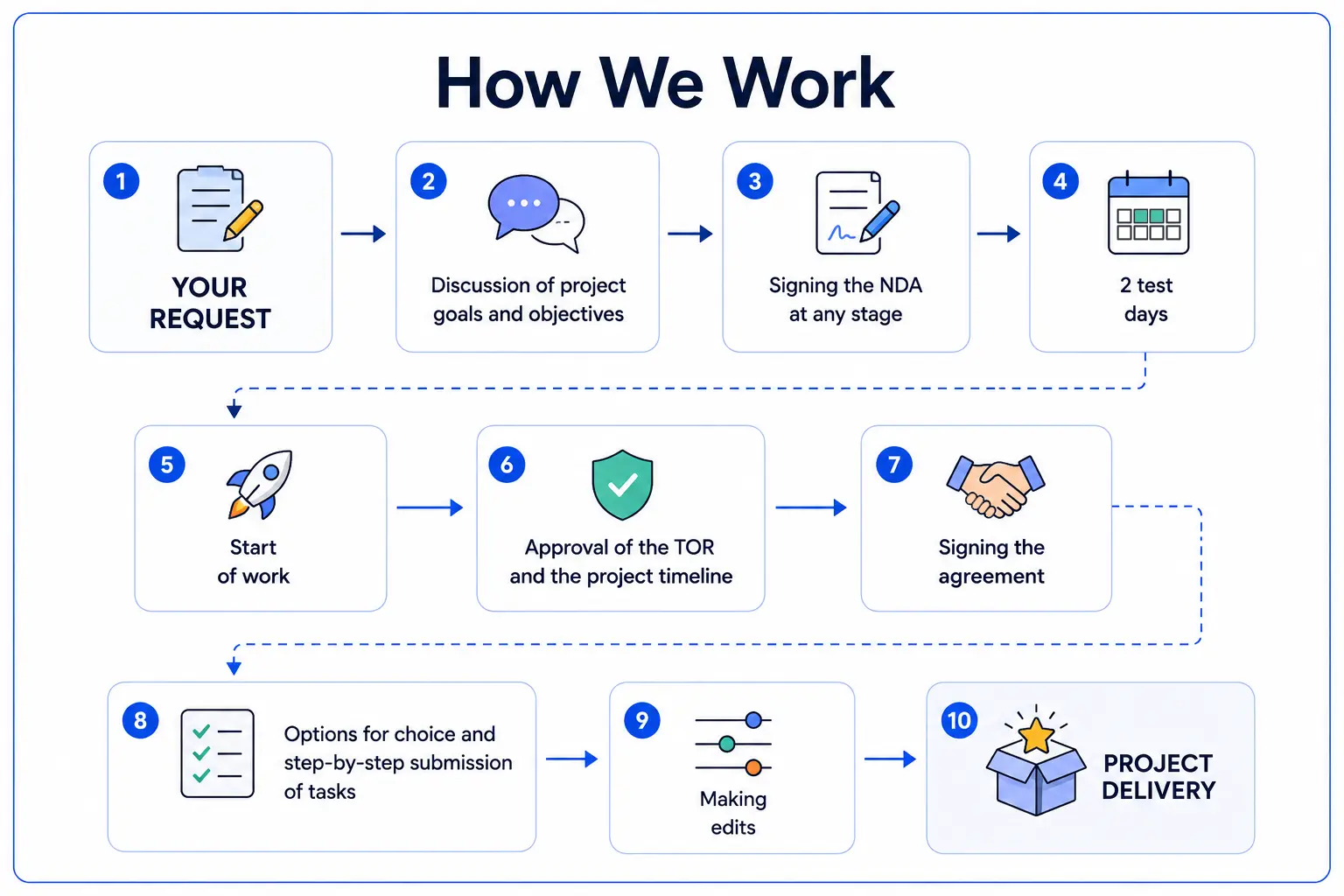
A well-run outsourcing workflow depends on clear stages, review points, and responsibilities on both sides. At RocketBrush Studio, the process usually starts with a request, project discussion, NDA if needed, scope approval, production, feedback rounds, and final delivery.
The process we use at RocketBrush Studio.
In general, a well-run outsourcing engagement moves through six stages:
Discovery — the vendor reviews your brief, asks clarifying questions, and audits your references and technical requirements.
Estimation — scope is broken into tasks, each with a time and cost estimate. This produces the production schedule and payment structure.
Test / pilot — one to three assets are produced to validate style alignment, technical compliance, and workflow compatibility.
Production — full-scale asset delivery begins. Assets move in batches, and feedback is returned on each batch before the next begins.
Feedback and Iteration — structured revision rounds based on agreed-upon notes. Written feedback is better than verbal, and annotated screenshots are better than written descriptions.
QA and handoff — final technical validation (poly counts, UV errors, texture size compliance), file packaging, and delivery in your required format.
At RocketBrush Studio, we structure every collaboration around a clear, production-ready pipeline. Our team focuses on consistency, transparent communication, and seamless integration into your workflow. If you’re looking for a partner who treats outsourcing as an extension of your team, reach out to us.
[[cta:Need game art for your next project?:Tell us about your game, and we’ll assemble a production-ready art team with a pipeline tailored to your style, platforms and deadlines.]]
How to Keep the Workflow on Track
Like any collaborative process, outsourcing works best when both sides remain in close contact. Maintaining a healthy communications structure, exchanging feedback in time, and coordinating accordingly are all important parts of the process. Here is a list of issues you would need to consider:
Communication and feedback loops: Establish a single point of contact on each side. Use async-friendly channels (shared project boards, annotated PDFs, Loom videos for complex feedback) and set clear turnaround expectations — e.g., feedback within 48 hours of delivery.
Version control and asset management: Define your naming convention and folder structure in the brief. Require vendors to follow it. For larger projects, use a shared repository (Git LFS, Perforce, or a structured cloud folder) rather than email attachments.
Time zone coordination: If your vendor is 8 hours ahead, structure your workflow so you send notes at the end of the day and receive deliveries when you start your morning. This creates a natural 24-hour feedback cycle rather than a 48-hour one.
Scaling up or down: Good vendors can flex team size to match your production peaks. Build this expectation into your contract — specify the minimum lead time required to scale (typically 2–4 weeks for experienced teams).
If you are still comparing vendors, see our list of the best game art outsourcing studios for a broader overview of companies and their strengths:
[[ref:top-10-game-art-outsourcing-studios]]
Choosing a Vendor: Criteria and Red Flags
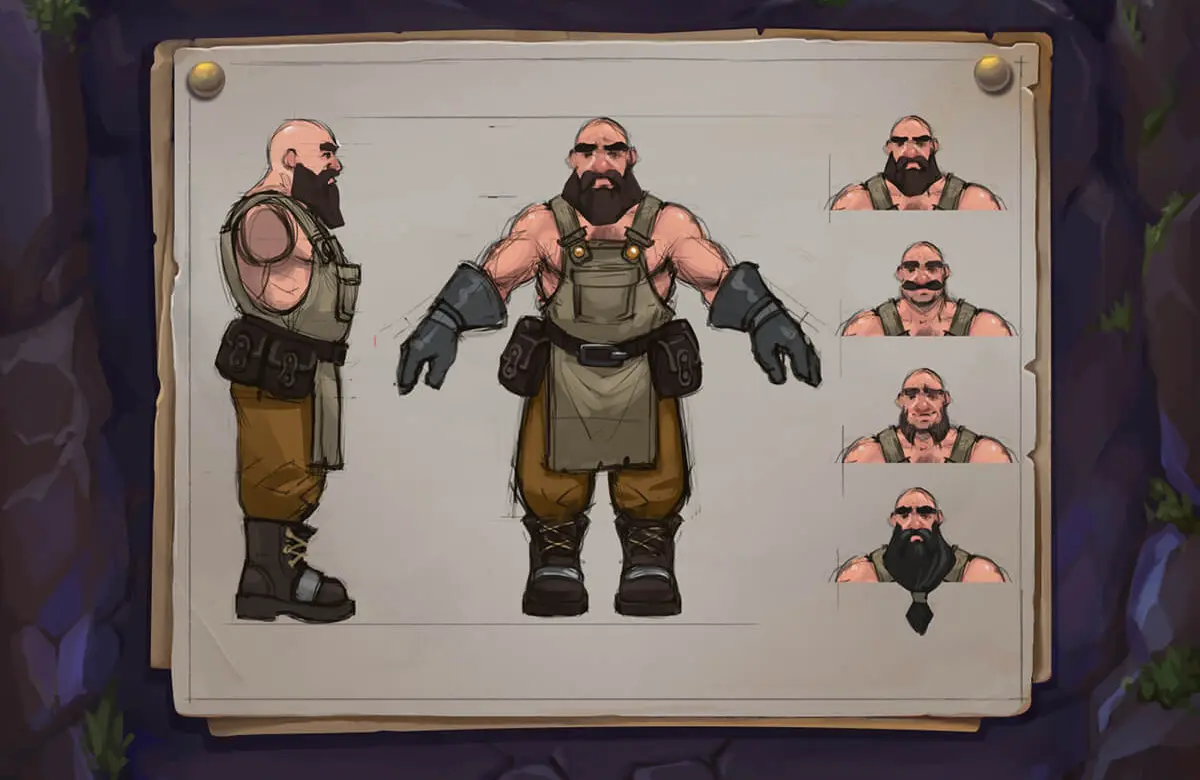
A character sketch by RocketBrush artists for the mobile game Treasureland.
Portfolio quality and consistency. Consistent quality across multiple assets shows the studio can deliver reliably in production, not just in isolated examples.
Specialization. Studios that focus on a specific style or asset type (e.g., stylized characters, realistic weapons) tend to produce better results than generalists trying to cover everything.
Communication and pipeline compatibility. Clear communication, structured feedback loops, and alignment with your tools and workflow ensure smoother collaboration and fewer integration issues.
Common red flags to look out for include inconsistent portfolio quality, refusal to do paid test tasks, vague pricing, unclear production processes, and poor responsiveness during the pitch phase.
Once you understand how outsourcing works, the next step is choosing the right vendor. This guide will help you navigate the market and select an art outsourcing studio that aligns with your production goals.
[[ref:how-to-choose-game-art-outsourcing-studio]]
Terms to clarify before production
Before you begin production, you should be certain that the vendor understands and agrees with your terms: what will be delivered, how feedback is handled, who owns the final assets, and how payments are structured.
Ownership and IP rights: Confirm that all assets become your studio's property upon payment. This covers not just final files but intermediate files and concepts.
NDA: Standard NDAs should cover the game concept, unreleased assets, technical pipeline details, and business terms. Don't start sharing sensitive materials before an NDA is signed.
Payment model. Choose the format that fits the scope: milestone-based for large well-scoped projects, hourly/T&M for exploratory or evolving work, or fixed scope for clearly defined asset batches.
Common Outsourcing Mistakes and How to Avoid Them
Most outsourcing problems don’t come from execution — they come from unclear expectations and planning gaps. Identifying these early helps prevent costly rework, delays, and quality issues later in production.
Issue
Fix
Starting without a clear art direction
Lock the visual direction with a pilot asset before committing to full production
Underestimating revision cycles
Build 2–3 revision rounds into your contract and budget for them explicitly
Poorly defined scope
Create a detailed brief with exact asset counts, specs, and constraints to reduce back-and-forth
Choosing vendors based only on price
Evaluate quality, communication, and process alongside cost to avoid higher total production expenses
Weak feedback structure
Give specific, actionable feedback using references and annotated screenshots instead of vague comments
Remember that the most expensive mistake isn't choosing the wrong vendor — it's starting production without being ready.
FAQ: Common Questions Before You Start
What is the quickest way to get an estimate for my new project?
For a faster estimate, prepare a clear game art outsource project brief with an asset list, short descriptions, technical requirements, references, and, if available, an art style guide. A rough ballpark estimate may be possible with only a style reference and a general scope, but detailed briefs make the estimate more accurate, especially for 3D modeling tasks.
Highly variable. The ranges below are rough market estimates: the final cost depends on visual style, asset complexity, production volume, technical requirements, and the number of iterations needed. For individual assets, low-poly props may cost around $300–$850, mid-complex assets like vehicles or furniture range from $850–$2,100, and high-poly or hero assets can reach $2,100–$4,100+.
Larger scopes are usually estimated as asset batches or full production packages: a mobile casual pack of 30–50 assets may fall between $20,000–$42,000, mid-size indie or AA production can range from $50,000–$155,000, and a full AAA art package may start from $205,000+.
At RocketBrush Studio, we use a flexible rate system, with hourly rates typically ranging from $35–39/hour; for larger volumes, the effective price per asset may decrease. For more details, see our game art outsourcing pricing guide.
When should a studio outsource game art?
When you have defined specs, high asset volume, or need a skill set not available in-house. Also, when production timelines require more throughput than your internal team can deliver without burnout.
When should a studio NOT outsource art?
When art direction is still undefined, the work depends on constant back-and-forth with internal teams, or the assets are central to the game’s unique visual identity. In these cases, it is usually better to keep the work in-house or start with a smaller pilot phase before outsourcing full production.
How long does production usually take?
A single character from concept to rigged, textured delivery can take 2–6 weeks, depending on complexity. A 100-asset prop library with defined specs might take 6–10 weeks at a steady production pace. Build in a buffer for feedback and QA.
How do you ensure consistent quality across outsourced assets?
Through tight specs, a strong pilot phase, regular in-production reviews (not just end-of-batch), and a designated internal art lead who owns vendor communication and QA.
Is outsourcing suitable for indie developers?
Yes, with some caveats. Indie studios benefit most from outsourcing when they have a clearly defined visual direction and can provide precise specs. Outsourcing concept development without a strong creative brief is high-risk for smaller teams with limited revision budgets. Some outsourcing teams offer their services to large companies as well as indie studios. However, in our experience, outsourcing works best as a way to scale production for an existing mobile or PC game that requires a consistent stream of new content.
Do I necessarily need to have a call with a game art outsourcing studio to get my project reviewed and estimated?
No, the calls are not necessary, although it depends on your way of getting things done. In our experience, the most efficient initial stage was when we got the project brief with all the needed information for an estimate right away.
How is working with a game art outsourcing company different from a freelance artist?
A game art studio usually provides a more structured production setup than a single freelancer. Besides artists, the team may include a project manager, art lead, or art director who handles communication, tracks progress, and checks consistency with the style guide.
Freelancers can be a good fit for smaller tasks, but larger projects often require more coordination. If one artist becomes unavailable, a studio can usually replace them without disrupting the whole pipeline, while with freelancers, that responsibility stays on the client side.
Key Takeaways for Planning Game Art Outsourcing
Outsourcing works best when your internal art direction is locked. Invest in visual development before commissioning production work.
A detailed, well-structured brief is the foundation of every successful outsourcing engagement.
Always run a paid pilot or test task before committing to full production with a new vendor.
Build revision cycles into your budget and schedule from day one.
Match your vendor to your production type — portfolio quality, specialization, and communication style all matter more than hourly rate. Outsourcing workflow is a system: treat communication protocols, version control, and feedback loops as infrastructure, not afterthoughts.
If your team needs external art production support, RocketBrush Studio can help you plan the scope, set up the workflow, and create assets that fit your game’s visual direction.
Create with us
Contact us, and we'll craft the perfect game art for your project